





Tired of flipping your pillow over to find the elusive cool side and still waking up in a sweat? Maybe it’s time to invest in a cooling pillow. These pillows are a step up from your regular old feather ones, covered in cool-to-the-touch covers, infused with gel, or other cooling technology to wick away excess heat and moisture.
Choosing the right one for your needs, however, can be a bit of a pickle. There are a lot of options out there, but our sleep experts have whittled down the competition to the top performers. Below is our hand-picked list of the best cooling pillows on the market. We have options for just about every sleeper type, whether you prefer latex or foam, adjustable or simply constructed, etc—all of them should excel in one thing: providing a super-cool night’s rest.
Our Verdict: What’s the Best Cooling PIllow?
According to our testers, the best cooling pillow is the Nectar Tri-Comfort Cooling Pillow, thanks to its cool-to-the-touch feel, adjustable firmness, and overall comfort. It offers three support levels, each designed to accommodate all sleeping positions, though our testers especially loved the firm setting for stomach sleeping and the softest one for side sleeping. It also comes with a 30-day trial and a 1-year warranty.
The Best Cooling Pillows
- Nectar Tri-Comfort Cooling Pillow – Best Cooling Pillow Overall
- Coop Sleep Goods Adjustable Pillow – Best Cooling Pillow for Side Sleepers
- Cozy Earth Silk Pillow – Best Cooling Pillow for Stomach Sleepers
- Brooklyn Bedding Talalay Latex Pillow – Best Firm Cooling Pillow
- LUXOME LAYR – Best Cooling Memory Foam Pillow
- Saatva Latex Pillow – Best Cooling Latex Pillow
- Cariloha Gel Pillow – Best Luxury Cooling Pillow
How We Tested and Selected These Pillows
Obviously, it’s important that your cooling pillow keeps cool while you sleep. To evaluate whether a pillow can properly regulate temperature, we take a look at both its construction and how it performs. We look for shredded materials rather than block-style pillows. Also, we find that latex typically offers more breathability than over memory foam. . Gel infusions and phase-change material are also popular cooling materials. Similarly, a cooling cover should use textiles known for wicking heat and moisture away, such as bamboo or GlacioTex.
It’s not enough for these features to simply exist in the bed’s construction—they have to work. Aside from judging how they feel right out of the box, our testers spend several nights on each of these pillows to get a feel for how much heat they hold onto throughout the night. By the end of it, we have an idea of whether or not the pillows will work well for hot sleepers.
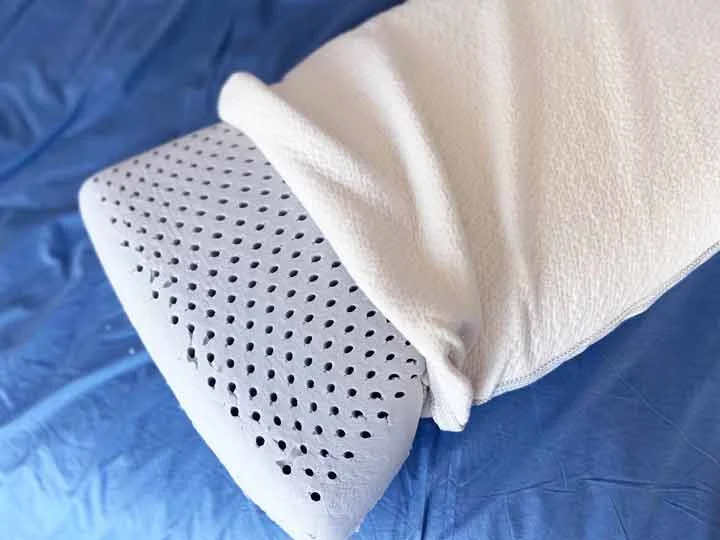
These materials shouldn’t just be cooling but also high-quality and durable. A pillow is something that you use every night, so you’re going to want something that’s built to last. Our testers take a look at these pillows inside and out, inspecting everything from the stitching to the zippers. Based on what they find, they then rate the materials overall out of 5. For this list, we included pillows that received at least a 4/5 materials score.
We also consider any care directions and rate the process out of 5. This is for the sake of keeping your pillow fresh and clean, of course—but also to understand how much “rough treatment” it can handle. A pillow that can go in the washing machine may be more robust than one that’s spot clean only, for example. (But note that stringent washing requirements aren’t the end-all-be-all of a quality pillow. Some materials, while high-quality, just require special treatment: like silk, for example.)
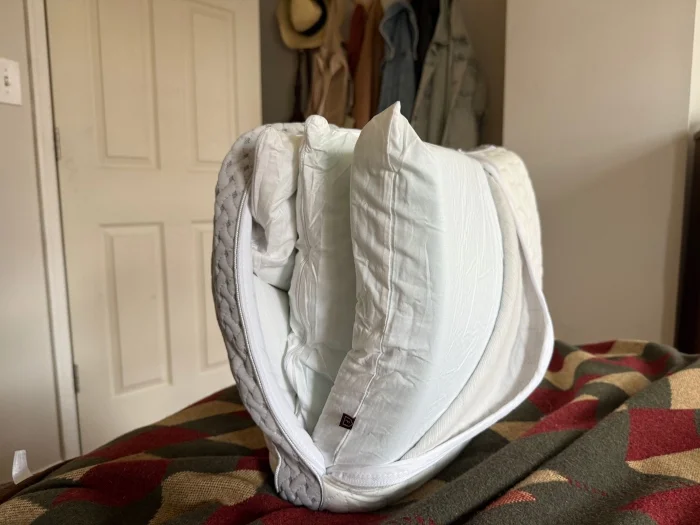
A cooling pillow is an investment, but you may be curious about just how much money you should spend on a new one. Most high-quality pillows fall within the $100 –$200 price range. This usually comes with extra features, like adjustability or a specialized cooling cover, both of which are beneficial for achieving comfortable, cool sleep.
Our testers pitted the experience they had with each pillow against the price tag, rating the overall value out of 5. To identify the best cooling pillows, we included only those with a score of at least 4.
The pillows on this list range from $89 to $198 for a standard-size pillow. This makes the average price about $141. You’ll find both super luxurious options and more reasonably priced picks on this list, but all of which have been vetted to prove they’re worth the money.
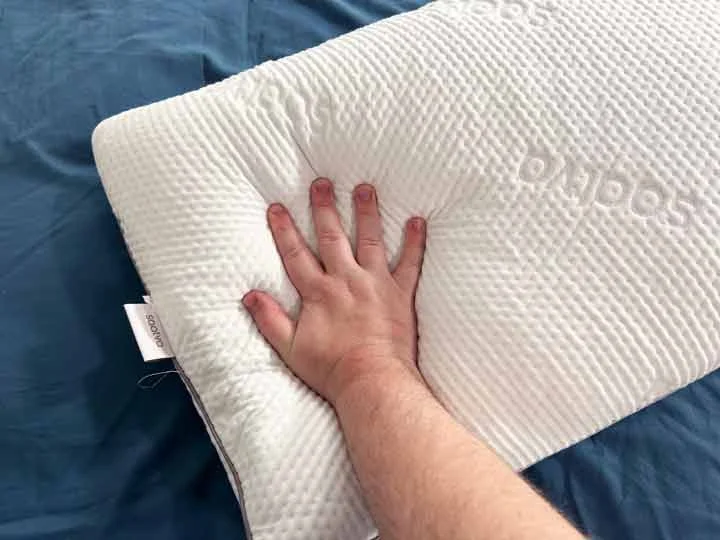
Our team of Certified Sleep Science Coaches selected the best cooling pillows by looking for top performers in the categories above: temperature regulation, quality construction, and overall value.
But our full process involves testing several aspects of a pillow’s performance, including care, extra features, and more. We evaluate and score these factors using specialized technology as well as firsthand accounts of how a pillow feels to testers with different body types.
Once we have all those scores, we calculate the overall score using a weighted formula. This overall score is a good indicator of a pillow’s general quality, and is always a number out of 5.
As we decide which pillows to feature on any roundup, we only include those with an overall score of 3.5 out of 5 or higher. Even if a pillow does certain things well, we won’t point you towards it if it falls below this baseline.

- 500+ mattresses and 100+ sleep accessories tested in person
- 30+ data points collected for each bed
- 7 Certified Sleep Science Coaches on staff
- Expert input from our Chief Medical Advisor Dr. Raj Dasgupta (MD, FACP, FCCP, FAASM) and our Chief Medical Product Tester Dr. Hannah Habeeb (DPT)
- 40,000+ readers who bought a new bed based on our recommendations
Learn more about Mattress Clarity.
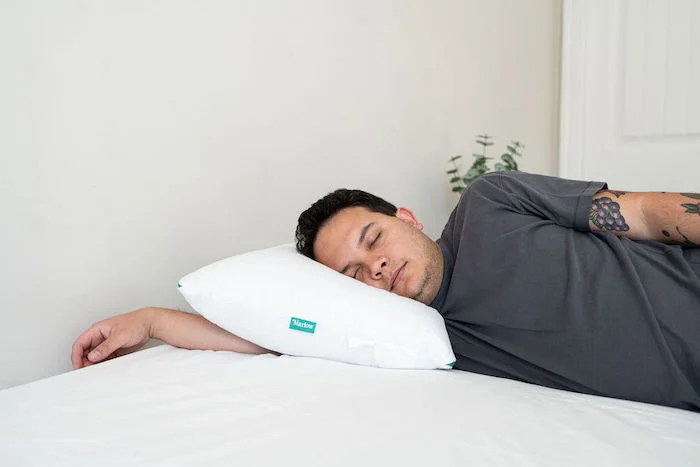
Nectar Tri-Comfort Cooling Pillow – Best Cooling Pillow Overall
Nectar Tri-Comfort Cooling Pillow
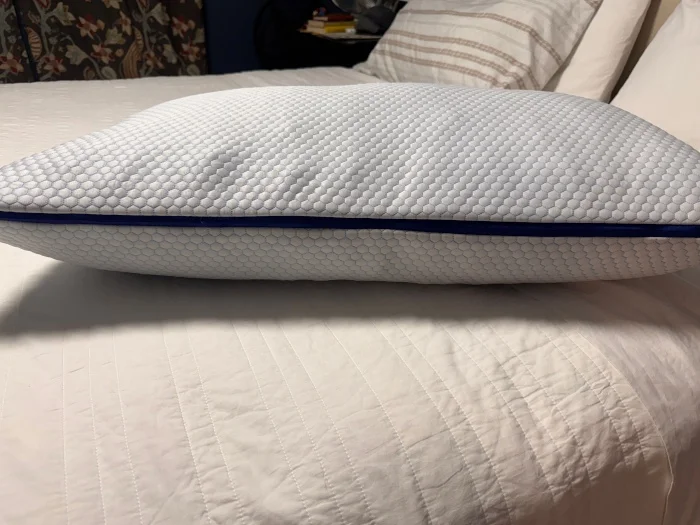
Nectar’s Tri-Comfort Cooling Pillow lives up to its name with its cool-to-the-touch cover, but it also features adjustable firmness thanks to its side zippers.
Mattress Clarity Score
4.6 / 5
The Nectar Tri-Comfort Cooling Pillow caused an all-out war between tester Sosha Lewis and her husband, thanks to how comfortable and cool it was. Thus, it’s no surprise that it earned our top spot. It’s a shredded memory foam pillow with adjustable firmness, making it a versatile option for multiple sleep styles. Sosha ultimately rated her experience with this pillow at a perfect 5/5, also awarding it high marks for materials and customer service.
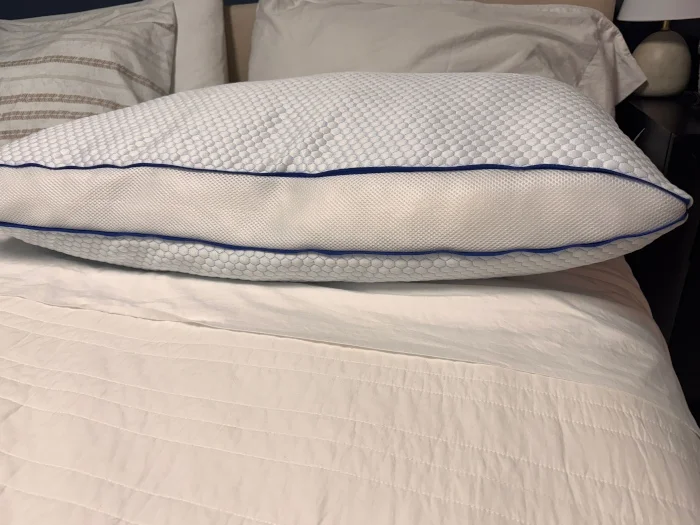
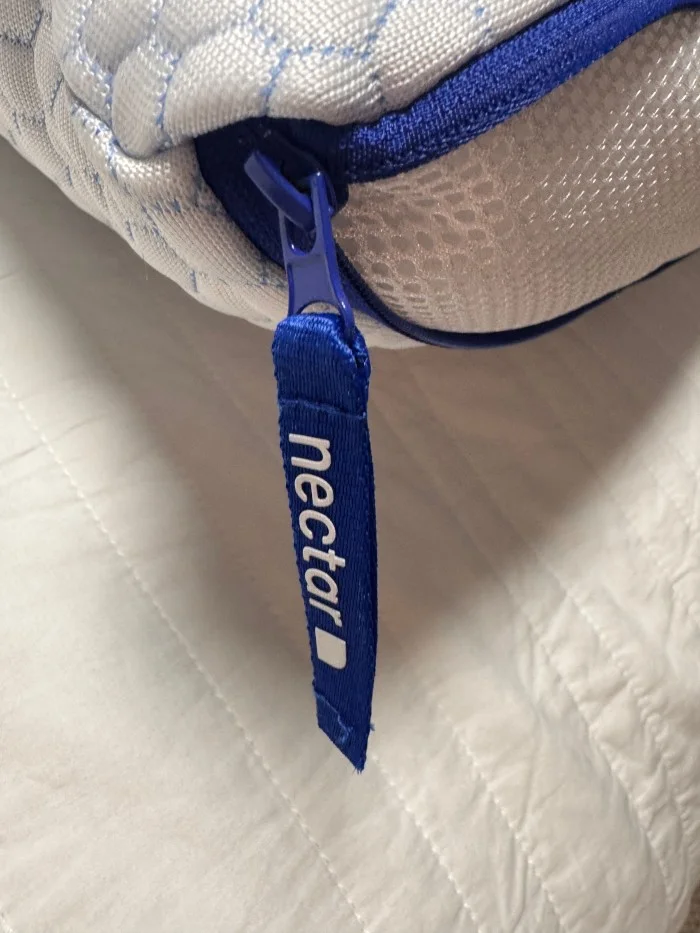
While Sosha doesn’t often opt for memory foam pillows, the combination of foam clusters and microfiber fill gave the pillow a bit more give. “It sank in just the right amount, keeping my spine aligned and my neck comfortable,” she said. Of course, this feeling can be modified using the adjustable zippers on either side.
“Zipped all the way down provides a firm pillow, zipped halfway is medium firm, and unzipped is softest,” Sosha explained. “I loved this pillow in its softest setting, while my husband, a back sleeper, preferred it on medium. Stomach sleepers will probably want to stick with firm, as that gives the lowest loft.” Sosha did notice that sometimes the zippers would get caught on the ample fill inside, so she deducted half a point for materials, but was overall impressed by the level of quality.
Where this pillow really stood out, though, was in the cooling department. “I loved that you could feel its coolness even when it was in a pillow case,” Sosha said. “But even the outer cover is smooth and durable. Most importantly, it’s truly cool-to-the-touch.” Her husband agreed, with Sosha saying she worried about him stealing it: “I thought we were going to have to arm wrestle for the rights to it. He loves how cool it is.”
Since the cover is built into the pillow, the pillow is unfortunately only spot-clean. While Sosha didn’t foresee a problem with this, thinking the material “wouldn’t easily stain,” it may pose an issue for folks who like to regularly wash and refresh their bedding. However, you can always invest in a pillowcase or pillow protector. (But if you want a fully washable pillow, check out the Coop Adjustable Pillow.)
A standard-size Nectar Tri-Comfort Cooling Pillow will run you about $129, which is a fine deal for a 3-in-one pillow with exceptional cooling. Moreover, Nectar offers a 30-night home trial with this pillow, plus a year-long warranty if you decide to keep it.
Mattress Clarity Test Results: Nectar Tri-Comfort Cooling Pillow
Coop Sleep Goods Adjustable Pillow – Best Cooling Pillow for Side Sleepers
Coop Sleep Goods Original Adjustable Pillow
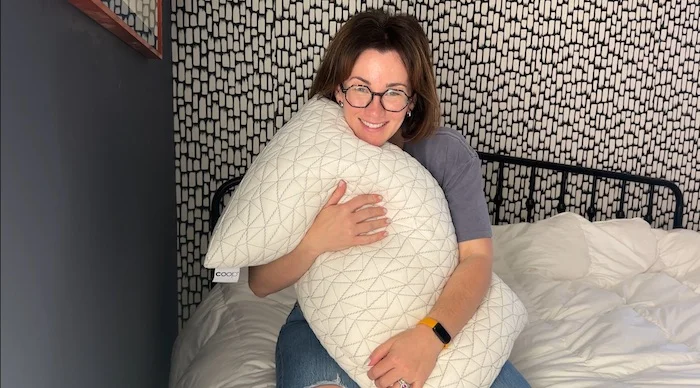
With its customizable fill, this pillow allows sleepers to tailor loft and firmness to their exact preference.
Mattress Clarity Score
4.5 / 5
The Coop Sleep Goods Adjustable Pillow is a favorite to recommend at Mattress Clarity; I know a few folks who have owned and loved this pillow for years—my mother being one of them. As an adjustable pillow, it can be customized to fit just about any sleeper, but side sleepers should most appreciate the generous fill and loft.
My colleague Nicole Davis tested this pillow and found that her neck pain dissipated once she found the “sweet spot” in this pillow’s configuration. She awarded the pillow a number of accolades, including high marks for its affordable price and straightforward care.
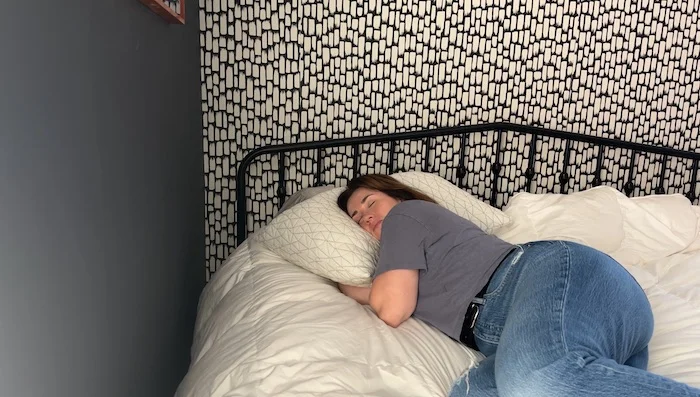
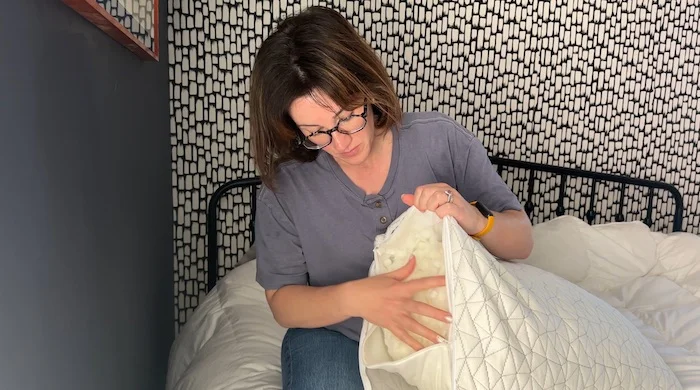

The Coop Adjustable Pillow comes stuffed with removable microfiber fill, plus an extra bag for those looking for extra-high loft. It gives the pillow a plush-but-supportive feel, and the clusters allow for air to flow through the pillow. It’s also swaddled in a bamboo-blend cover,a fabric known for its crisp and cool texture. While Nicole didn’t describe the pillow as having a super-cold, actively chilly feel, she didn’t think that hot sleepers would overheat on it.
Nicole said what drew her to trying the pillow out was its adjustability, since she wanted to ensure she could find “a pillow that could provide support in all the right areas.” This adjustability is great for combination sleepers or folks who need a medium-to-high loft. The adjusting process is fairly straightforward: simply unzip the pillow and take out or add as much fill as you need.
However, this adjustability may not work for dedicated stomach sleepers. These folks need a low-loft pillow to keep their neck from craning, and buying the Coop pillow just to take out a ton of filling may not be worth it. (If you don’t think you’ll need the adjustability, check out our pick for stomach sleepers, the Cozy Earth Silk Pillow.)
On top of adjustability, I was impressed to find out that the Coop pillow is completely machine-washable. Nicole thought the entire pillow felt “durable and well-made,” only bolstered by the fact that it can go for a tumble in your laundry machine. She was unsure of how well it’d hold up, but my mother’s had this pillow for 2 years and still sleeps with it every night without complaint.
The Coop Adjustable Pillow retails for just $89, which Nicole thought was more than generous for the quality of pillow she received. Coop also offers a generous 5-year warranty for this pillow, which is rare for sleep accessories. You can also return it within 100 days of purchase if you decide it’s not for you—but with the level of personalized customization you can achieve, it’s unlikely you will.
Find out more in our Coop Adjustable Pillow review.
Mattress Clarity Test Results: Coop Sleep Goods Adjustable Pillow
Cozy Earth Silk Pillow – Best Cooling Pillow for Stomach Sleepers
Cozy Earth Silk Pillow
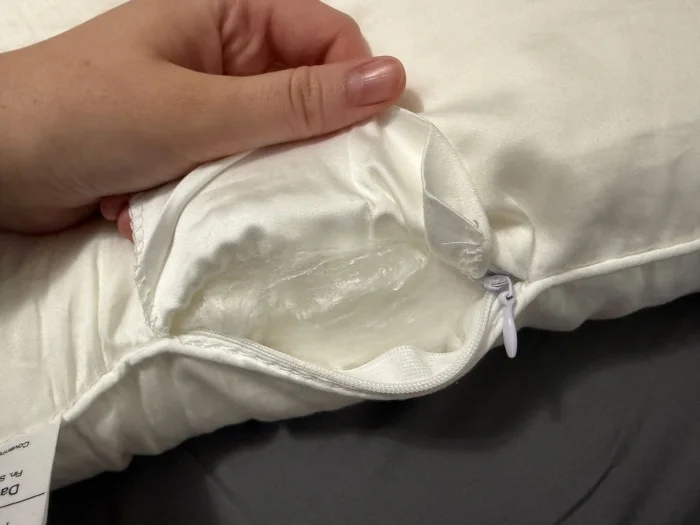
Filled with long-strand mulberry silk and encased in bamboo viscose, this pillow offers a soft, low-loft option for stomach and back sleepers.
Mattress Clarity Score
4.1 / 5
Stomach sleepers need to be careful about choosing the right pillow. A too-firm pillow or one with too high a loft can cause your neck to fall out of alignment with the rest of your body, leading to discomfort or pain.
Thankfully, the Cozy Earth Silk Pillow seems made with these folks in mind. My colleague Riley Otis praised its low profile and super malleable feel for that reason. She also awarded the pillow a perfect score for the materials, thanks to its silky-smooth, luxurious construction. On top of that, it features a bamboo-based cover to up the cooling ante.
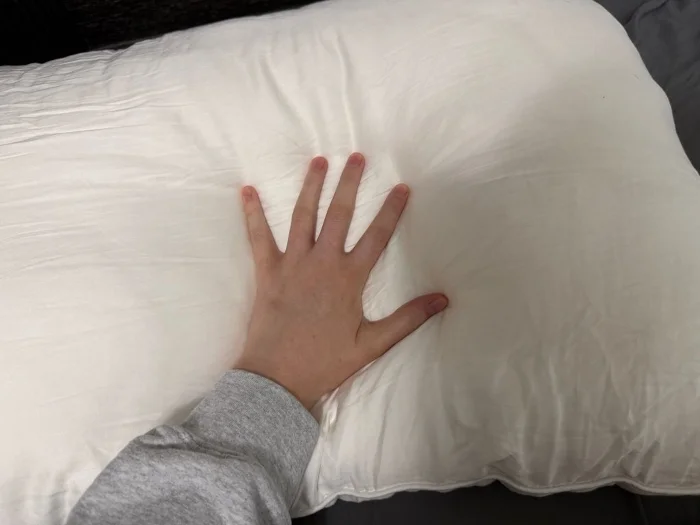
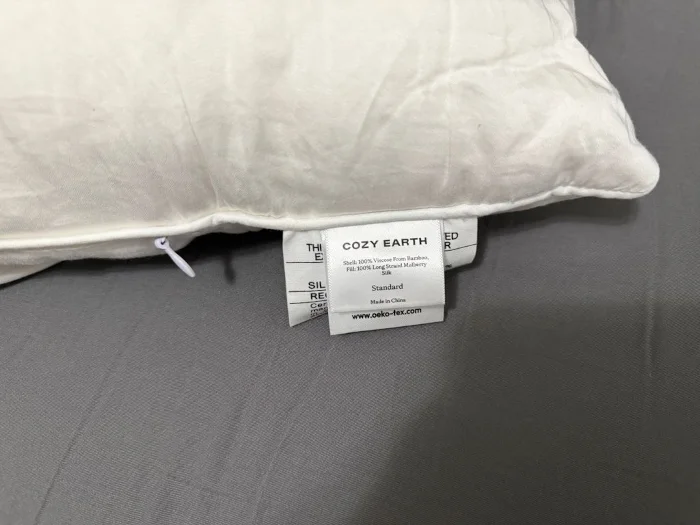
The Cozy Earth pillow is filled with 100-percent long-strand mulberry silk, a luxuriously soft fiber had Riley sinking deep into the pillow’s surface. “This pillow can basically be folded in half, and offers very minimal support—but it’s not lightweight,” she explained. This gave the pillow a hefty, durable feel despite its softness. “It’s heavier than most pillows I own,” Riley added.
The low loft, while not to Riley’s personal taste, was the perfect fit for stomach sleepers. “They won’t crane their necks or compromise alignment resting on this pillow,” she said. Even though she’s not a stomach sleeper herself, she liked the weighted feel for other reasons: “It makes a great cuddle pillow to snuggle up with, like a weighted stuffed animal!”
Riley found the pillow’s cover was just as silky as the inside of it, too. “It’s made of 100-percent premium bamboo viscose, which feels super-soft,” she said. “It has a crisp feeling, too, so you could skip a pillow case if necessary.” However, this pillow is spot-clean only, and Cozy Earth recommends using a cover to ensure your pillow remains fresh and clean, a sentiment Riley echoed. Hot sleepers may want to opt for a super-thin pillowcase to keep things smooth and cool.
The Cozy Earth Silk Pillow currently retails at $198 for a standard-size, though we’ve seen it go for higher in the past. “These are very luxurious materials, and I know long-strand fibers are more durable, but it’s definitely for a higher budget,” Riley said. If you’re looking to ball on a budget, you might prefer something like the Coop Adjustable Pillow.
But this investment is definitely backed up by Coop’s policies—the pillow is covered by a 10-year warranty, and the brand offers a 100-night return policy if you decide it isn’t for you. Interested? You can read more about this pillow in our dedicated Cozy Earth Silk Pillow review.
Mattress Clarity Test Results: Cozy Earth Silk Pillow
Brooklyn Bedding Talalay Latex Pillow – Best Firm Cooling Pillow
Brooklyn Bedding Talalay Latex Pillow
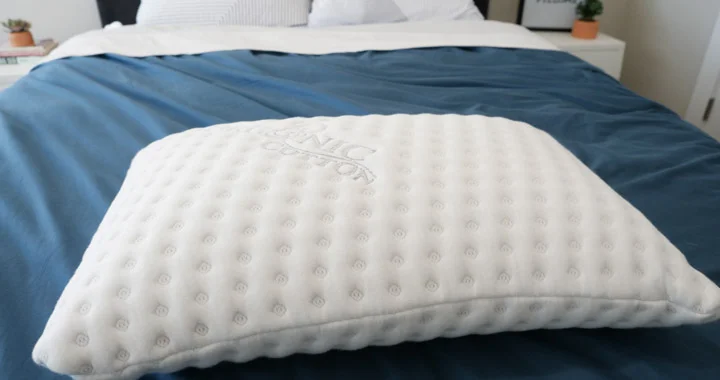
Crafted from natural Talalay latex, Brooklyn Bedding’s Latex Pillow offers responsive support and breathability to satisfy combination sleepers and those looking to sleep cool.
Mattress Clarity Score
4.8 / 5
Some sleepers like to sink deeply into a soft, downy pillow—but if you’re looking for a firmer, more supportive pillow, you might like a latex pillow. Brooklyn Bedding’s Talalay Latex pillow is made from a solid chunk of latex, yielding a dense, thick sleep surface that’s great for back and side sleepers seeking maximum lift. It was a favorite of my colleague Cait Giddings, who gave the pillow 5/5 scores for materials, experience, and customer service.
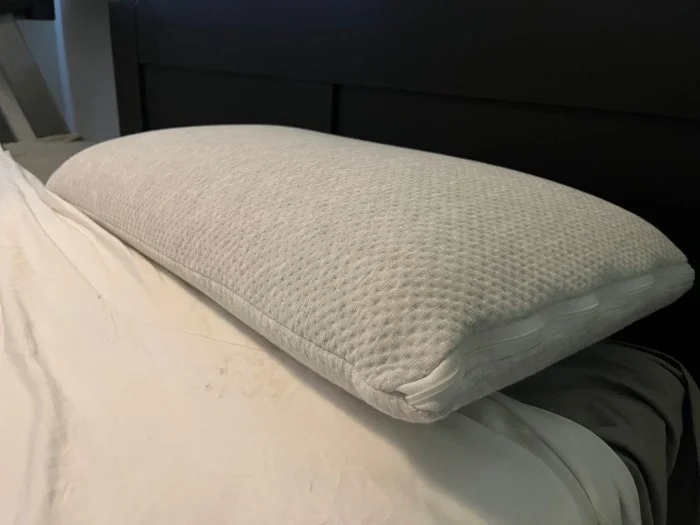
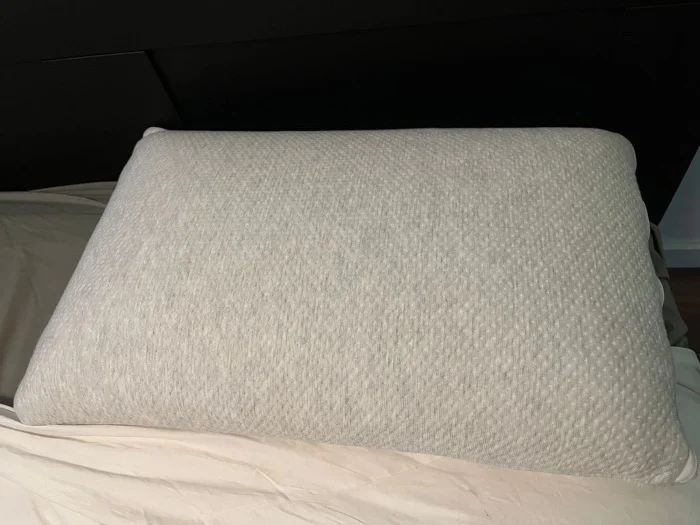
Latex has an inherently springy and buoyant feel, which Cait loved as soon as she lay her head down on this pillow for the first time. “I’m a side sleeper, and this really fills in the gap at my neck and shoulder,” she said. “But it still collapses enough to remain comfortable on my back. Plus, the bounce makes it easier to move your head around when switching positions.”
Cait tried an older version of the pillow, which didn’t feature Brooklyn Bedding’s new fancy cooling cover, and even then, she found that the pillow didn’t overheat. “It doesn’t feel stuffy at all,” she added. Unlike foam, latex has more breathability, which should keep air moving through the pillow. The new cover, made with TENCEL lyocell fibers, should only enhance its temperature-regulation benefits.
The cover is also easily removed and entirely machine-washable, which Cait appreciated. The interior of the pillow is a solid chunk of latex foam, so it makes sense that it can only be spot-cleaned if necessary. The provided cover is plenty thick to prevent staining, and if you add a pillowcase on top, you should be set.
If you’re interested in purchasing the Brooklyn Bedding Talalay Latex Pillow, it retails for about $129 with frequent discounts and comes with a generous 3-year warranty. Cait called it “beyond reasonable” for the quality and comfort, and I also agree that it’s quite affordable for pure latex.
I’ll note that latex’s dense, springy nature may be too firm for stomach sleepers. These folks are welcome to take advantage of the brand’s 30-day trial period to give the low-loft option the college try (or check out the Cozy Earth Silk Pillow for a truly soft pick). Otherwise, check out our Brooklyn Bedding Latex Pillow review for more information.
Mattress Clarity Test Results: Brooklyn Bedding Talalay Latex Pillow
Luxome LAYR – Best Cooling Memory Foam Pillow
LUXOME LAYR Customizable Pillow
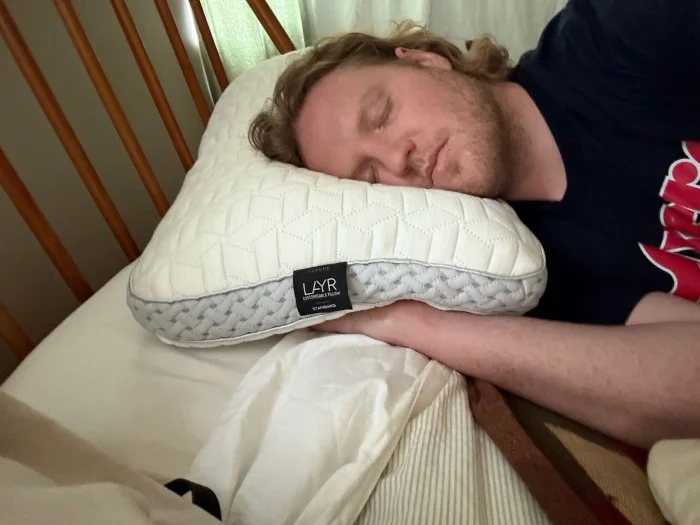
The Luxome LAYR Pillow can be tailored to your specific needs with multiple foam inserts and adjustable fill.
Mattress Clarity Score
4.8 / 5
Memory foam pillows are a popular choice for their classic cushioning feel, but their styles and firmnesses vary. The Luxome LAYR pillow is an adjustable pillow made up of multiple inserts; inside, there’s both shredded foam and solid foam chunks, all infused with cooling gel. My colleague Matt Schickling was wowed by the sheer level of customization, awarding the pillow perfect scores for both materials and overall experience.
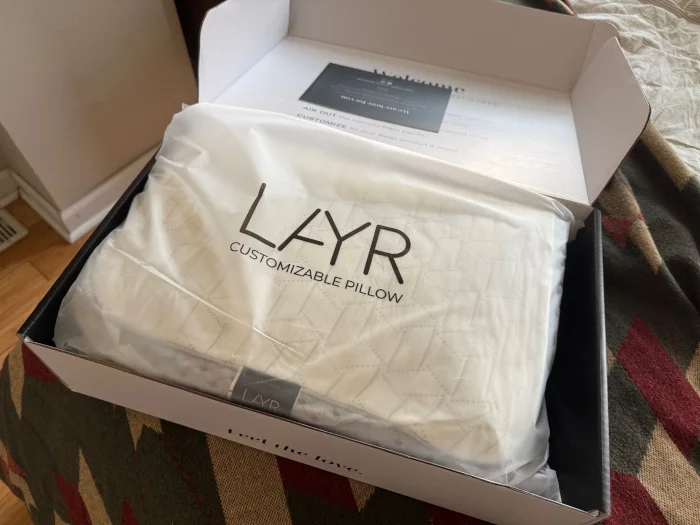
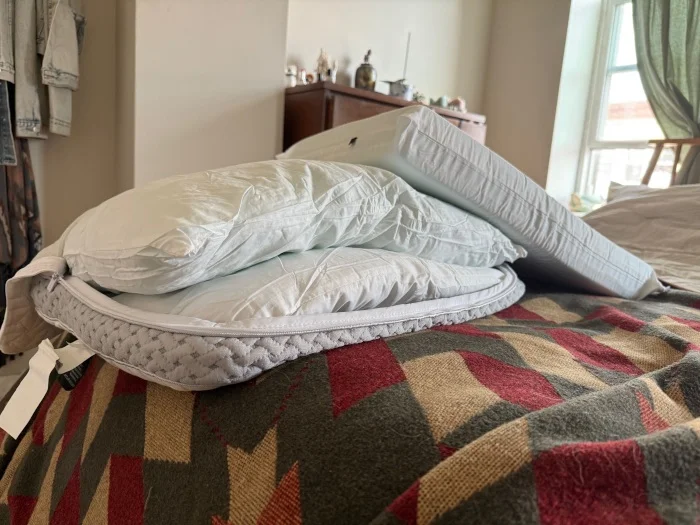
The Luxome LAYR pillow is an “adjustable inception,” per Matt. Inside, you’ll find three inserts: a soft, medium, and firm insert. The soft insert is made with down alternative fill, while the medium features both shredded memory foam and microfiber fill. The firm insert is actually two more inserts, each a different-size slab of denser memory foam.
Matt found this pillow “pretty comfortable right away,” even without much tinkering. But he eventually found the configuration that worked best for him, and he hasn’t looked back since. “It’s only become more comfortable the longer I’ve used it,” he said. “The quality of construction is great too—everything feels well-stitched and durably made, and the zippers are jacket-style, none of the cheap stuff.”
The entire pillow is also encased in a cooling bamboo cover, something Matt appreciated as a hot sleeper. “It’s also stretchy, even with all that you can stuff inside the pillow,” he added. You can also remove it to wash in your laundry machine, alongside each of the insert’s covers. Matt added, “You can really see the level of care and consideration that went into designing this pillow.”
A standard-size LAYR pillow will run you about $150, with extra markdowns if you choose to buy two. Matt called it “a value at the cost,” describing it as “a luxury option at a fairly decent price point.” Still, it might be a bit much for budget shoppers, especially if they don’t want to contend with all the moving parts of this adjustable pillow. If it sounds like you, take a look at Nectar’s Tri-Comfort Cooling Pillow, which is a bit cheaper and has a simpler adjustability mechanism.
Read more about this pillow in our Luxome LAYR pillow review.
Mattress Clarity Test Results: Luxome LAYR
Saatva Latex Pillow – Best Cooling Latex Pillow
Saatva Latex Pillow
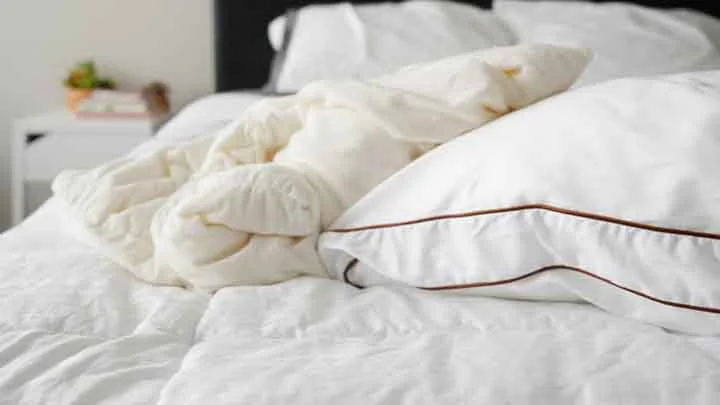
Combining plush comfort with responsive support, the Saatva Latex Pillow features a shredded latex core and an organic cotton cover.
Mattress Clarity Score
4.8 / 5
While feather and foam pillows are some of the most popular picks, they’re not always the coolest—temperature-wise, I mean. Latex pillows are a great alternative if you’re seeking a more breathable material.
The Saatva Latex pillow takes this up a notch with shredded latex, which not only increases airflow within the pillow but gives it a fluffier feel that can rival down. My colleague Cait Giddings awarded it 5/5 in almost every category and recommended it for side and back sleepers seeking a luxurious, pressure-relieving pillow.
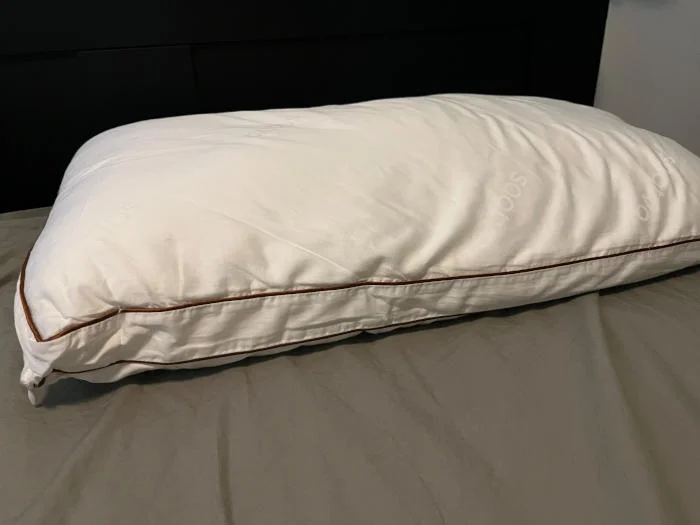
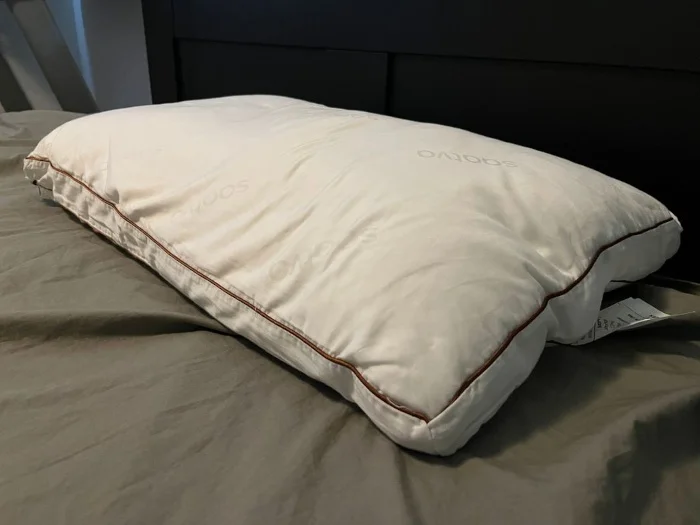
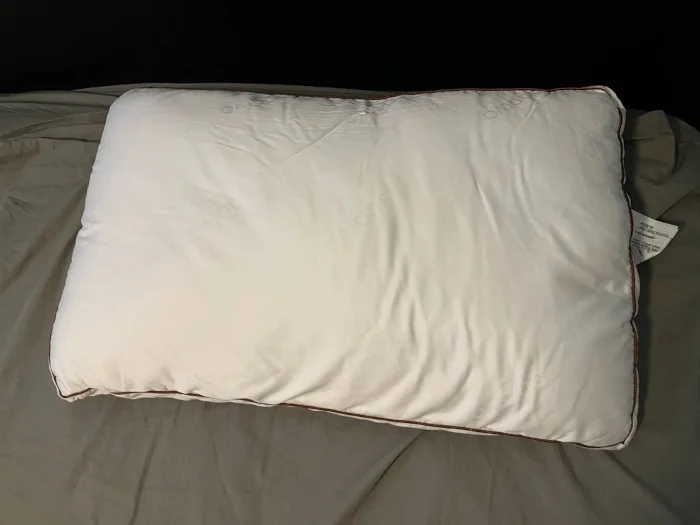
Cait loves the bouncy, springy feel of traditional latex pillows, but noted that the Saatva pillow deviated from the norm. “You sink in a little bit, but the overall feel is more supportive. The fill doesn’t clump together or separate, so there’s no uncomfortable ‘pillow cleavage’ to get stuck in,” she said.
The pillow is made up of two layers inside the cover: an adjustable outer fill of organic cotton and microfiber, then the shredded latex core within. Cait likened it to a “pillow turducken.” You can take out as much fill as you like and even remove the inner core if you so desire, but Cait found that with everything inside, the loft was a perfect fit for side sleeping, and pretty good for back sleeping. “The low loft might be better for back and stomach sleepers who don’t need as much lift,” she added.
Even with its plusher feel, Cait never felt that it was trapping any heat. “I wouldn’t call it a particularly icy-cool pillow, but hot sleepers should like the breathability you get from all the moving parts,” she explained. These moving parts are also machine-washable (save for the shredded latex core), so long as you take care to secure the zippers before tossing them into the wash. Cait thought that was particularly impressive for an adjustable pillow.
The Saatva Latex Pillow usually retails for $165 for the standard size, which Cait noted was “definitely a luxury price tag.” But she praised Saatva’s policies and top-notch customer service. You get 45 nights to try out this pillow, and after that, it’s backed by a 1-year warranty.
For a cheaper latex pillow that also has a bouncier feel, check out the Brooklyn Bedding Talalay Latex pillow. But you can find out more about this pillow in our Saatva Latex Pillow review.
Mattress Clarity Test Results: Saatva Latex Pillow
Cariloha Gel Pillow – Best Luxury Cooling Pillow
Cariloha Gel Pillow
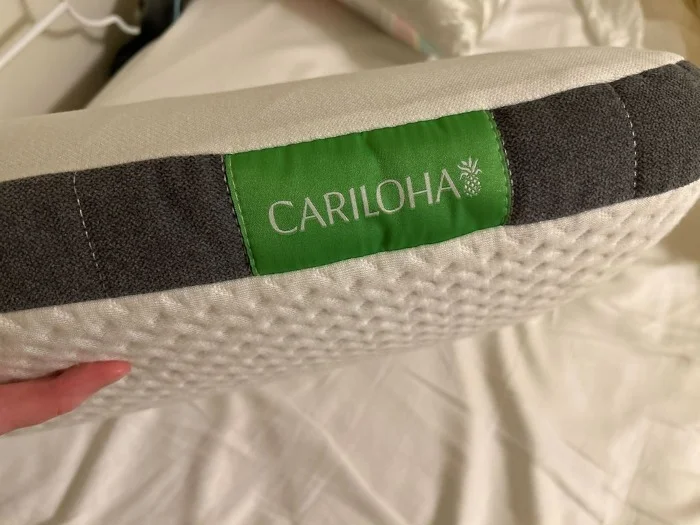
This graphite-infused memory foam pillow provides soothing support and icy-cold cooling thanks to its gel infusion.
Mattress Clarity Score
4.3 / 5
The Cariloha brand aims to bring the feel of a 5-star resort to your bedroom at home, and it’s no different with the brand’s Gel Pillow. As the name suggests, this luxury pillow has cooling gel right at the surface, strategically placed in a head shape within the graphite-infused foam.
Coincidentally, I have this pillow on my bed, where it’s remained since the first round of testing. I love its dense, supportive feel, and that cooling gel infusion always feels crisp around my neck and shoulder. After testing this bad boy out, I awarded it 4.5/5 for both materials and experience.
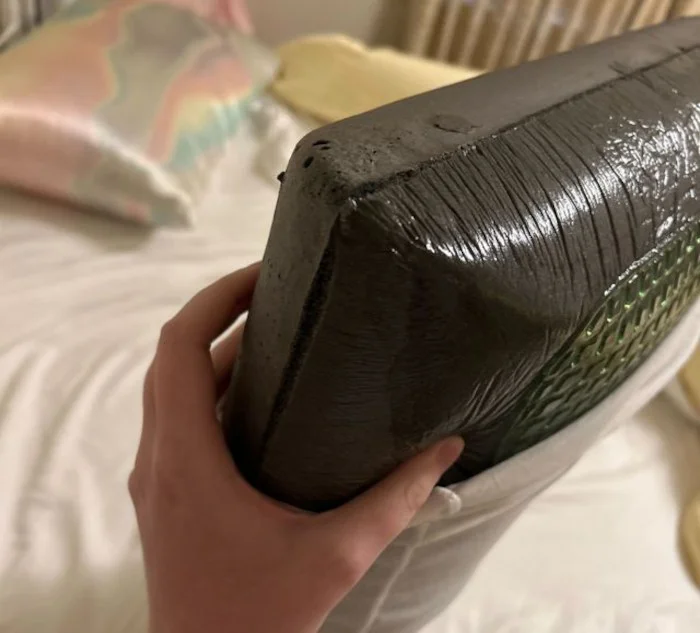
This pillow is quite large, even in its standard size, and rather thick. Even my largest pillowcase still has some give around it. But as someone who moves around a lot in my sleep, it gives me plenty of wiggle room to get comfortable. It’s also great for side and back sleeping, since there isn’t too much sinkage, and I’d call the loft fairly generous. Sometimes, if I scooch my head down to the very edge, I can rest on my stomach, but I wouldn’t recommend sleeping like this long-term.
The provided cover, a thick bamboo one, is soft and machine-washable, but it does put a damper on the pillow’s cooling effect. Since I also prefer using my own silk pillowcase, I tried this pillow with and without its included cover.
For hot sleepers, I definitely recommend going without it. The cooling gel was much more noticeable; it was almost like holding an ice pack against my neck and the back of my head. I will note that it’s only on one side of the pillow—but sometimes it even gets too chilly, so I like the option of flipping it over during the colder season.
This pillow retails for $125, which I’d consider acceptable for a luxury pillow. Moreover, I think you get a lot of pillow for the price, even as a standard size. I think this pillow could sit on a king-size bed and not look out of place.
However, Cariloha only offers a 100-night sleep trial, and there’s no warranty to speak of. While I don’t consider warranties necessary for sleep accessories, it’d be nice to have for a higher-end item. If you’re looking for a pillow with more generous policies, check out the Cozy Earth Silk Pillow.
Mattress Clarity Test Results: Cariloha Gel Pillow
Other Cooling Pillows We Considered
Didn’t find quite what you were looking for? Here are some other cooling pillows we’ve tested and reviewed that you might want to check out instead:
- TEMPUR-Cloud Cooling Pro – TEMPUR-Pedic’s Cloud Cooling Pro features the brand’s proprietary TEMPUR material, surrounded by a layer of gel to prevent heat retention. It stays cool to the touch because of the amount of gel beneath the cover. It’s a medium-firm pillow, meaning you’ll be able to sink into the foam, but still get some solid support. This pillow also comes in two loft sizes, making it a great match for most back and side sleepers. However, it may be too firm or tall for dedicated stomach sleepers.
- Sleep Number True Temp Pillow – Sleep Number’s True Temp Pillow features 37.5 active particle technology that adjusts to your body temperature. When you start to get too hot, the pillow will pull body heat away from you. This pillow comes in three different models, but my favorite of the bunch is the standard, which features a plush down alternative surrounding a perforated memory foam core. This gives the pillow a soft, plush feel. While you can remove the foam insert, this pillow isn’t really designed to be adjusted to your specific tastes. Because of that, when it’s all put together, the pillow is too tall for stomach sleepers.
- Birch Organic Pillow – The Birch Organic Pillow features a soft cotton cover and, on the inside, New Zealand wool that surrounds a crushed latex core. Both the wool and latex are breathable; the wool is also moisture-wicking, so you won’t sleep hot and sweaty. The crushed latex core provides a good amount of support, which is ideal for back sleeping. Most pillows have a way to either machine-wash at least some parts of the pillow. Unfortunately, Birch recommends spot cleaning this pillow, which can make regular refreshing difficult.
What Goes into a Good Cooling Pillow
Our testing process, whether in the studio or at home, involves a range of tests to evaluate the performance, construction, policies, and price of a pillow. For cooling pillows, it’s especially important to pay attention to factors that will appeal to hot sleepers, alongside folks wanting to invest in a quality product.
Cooling Features
The number one priority in a cooling pillow is its cooling features. Before we even get to sleeping on the pillow, we take a look at what’s inside the pillow, both on the manufacturer’s website and in person. Here are some common cooling technology buzzwords that raise green flags:
- GlacioTex: These synthetic fibers are designed to draw excess heat away from the body. They’re often found in the covers of pillows or other sleep products and create that cool-to-the-touch feel.
- TENCEL: This material comes from wood pulp, a man-made but eco-friendly fiber known for its breathability.
- Phase-Change Material: As the name implies, this material absorbs and releases heat when changing phases—like from a solid to a liquid, for example. In mattresses and bedding, it has been found in some studies to lower skin temperature and produce a cooling sensation.
- Gel: Cooling gels can be infused into already existing materials that may not be the most conducive to thermal regulation. That’s why they’re popular infusions for foams, which tend to trap heat.
- Graphite: Graphite is a mineral made of pure carbon, used in bedding for its ability to absorb and dissipate heat quickly, helping to move it away from the body.
- Copper-Infused: Studies show that copper has natural thermal conductivity, as well as an inherent antimicrobial property for cool, fresh bedding.
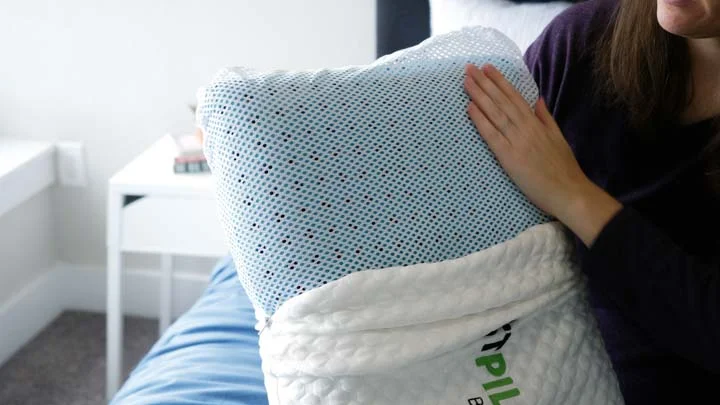
While some cooling pillows are advertised as such and include the materials to boot, it doesn’t always pan out that way in the testing process. Our testers will nap or sleep on these pillows for an extended time to see if there’s truly an active cooling process. Sometimes, that cool-to-the-touch feel dissipates the longer you lie on it. Other times, it’ll keep you chilly throughout the night.
Quality Construction
Upon receiving a pillow, we take a close look at the materials to ensure the pillow is carefully and intentionally made. The last thing you want is a pillow that isn’t durable, especially since you’re sleeping on it (presumably) every night. The construction of a pillow doesn’t just include what’s inside; we also look at the cover, stitching, zippers, or other adjustable components. Drawbacks like fraying or poor-quality zippers getting caught will bring down the materials score, which our testers rate out of 5.
For some, the quality of a pillow is directly related to its upkeep. It might be beneficial for you to look at the care instructions. We take a look at these ourselves and give a rating out of 5 for how easy or difficult they seem to follow.
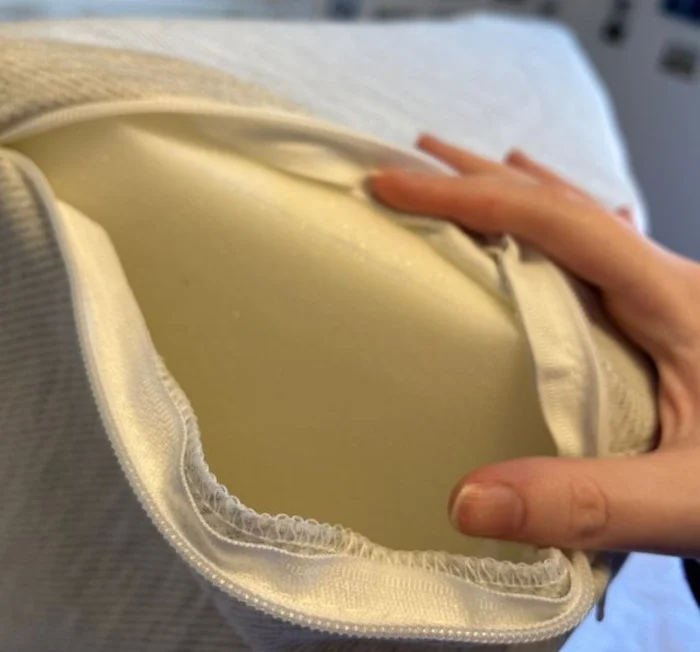
Most pillows have removable covers that are machine-washable, which makes regular refreshing simple, also increasing the overall longevity. Some pillows are even entirely machine washable; it follows that if they can get tossed around in your laundry machine, they’re pretty tough. Other pillows are dry-clean or spot-clean only. It’s a pain for recurrent cleaning, but might also mean the material is more delicate. While this doesn’t always spell a low-quality product, it’s certainly something to keep in mind—even more so if your pillows are well-loved.
Price
Cooling pillows are definitely going to be more expensive than your average pillow because of the technology and quality of materials used. You should expect to pay somewhere around $100 for a specialized pillow that will keep you cool throughout the night. We included a variety of options on this list that fall below, at, or above this threshold to accommodate multiple budgets.
But as we’ve found through years of testing, a higher price doesn’t always mean a higher-quality product. This is why we rate the price of every pillow we test out of 5 after going through the whole rigamarole. The price should reflect the quality of the pillow’s construction and the hopefully luxurious experience we had with it. We’ve found pillows that aren’t super expensive to be fan-favorites, and those that have a higher price tag to be a bit of a let-down.
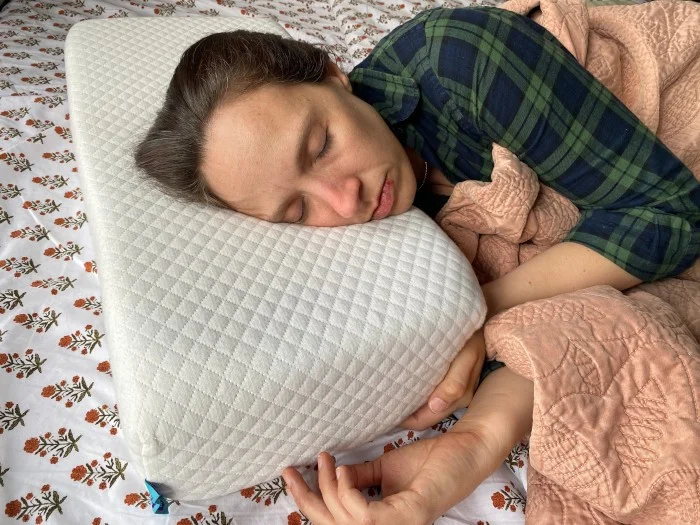
For this list, we only included pillows that we believe live up to the hype. Moreover, every pillow received a 4/5 rating for price—aside from the Cozy Earth Silk Pillow (thanks to the exorbitant price of pure mulberry silk, which Riley thought was a bit much for traditional budgets, but better for the luxury spender).
What Else Is Important When Buying Cooling Pillows?
Whether a pillow’s going to run hot or cold is important for achieving quality sleep, but a lot more goes into it than that. Before making the final purchase, you’ll want to consider what’s inside your pillow, but also if it’s well-suited to how you sleep.
Type of Pillow
Pillows can be filled with just about anything if you’re brave enough, but some pillow types are more conducive to sleeping hot than others. Here’s a brief overview of the most common pillow types out there, so you can get a feel for which might be the ones for you.
Memory Foam Pillows
Memory foam pillows can be made with shredded or a chunk of foam, which provides a dense, cushy feel. In general, foam pillows are known to trap heat easily, so a typical foam pillow might not be the best fit for hot sleepers. However, companies have figured out ways to overcome this while still keeping the plush, comfy feel that so many people love. A cooling effect is often achieved by infusing another substance into the foam, such as graphite or even copper.
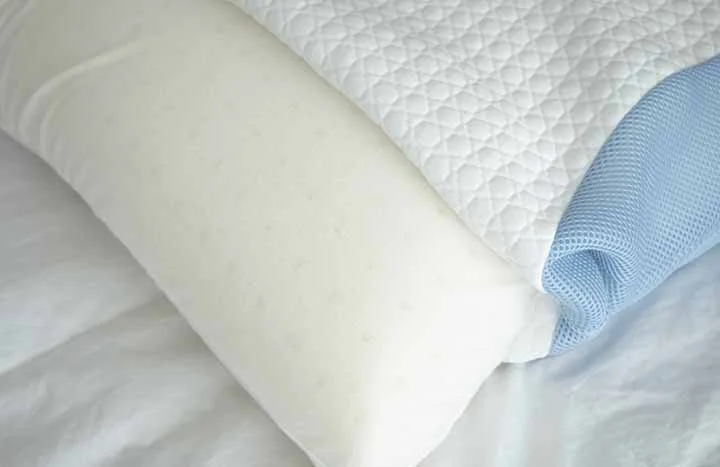
Perhaps the most common cooling foam you’ll see out there is gel-infused memory foam. With gel infusions, the pillow is able to maintain a cooler surface. So, your head, neck, and shoulder areas should remain cool as well. This should help keep you from overheating.
Down and Down Alternative Pillows
Down pillows are made with the super-soft underlayer of feathers from certain fowl, like ducks or geese. “I like down pillows for stomach sleepers, since they’re quite soft and allow for plenty of sinkage,” says Dr. Dasgupta.
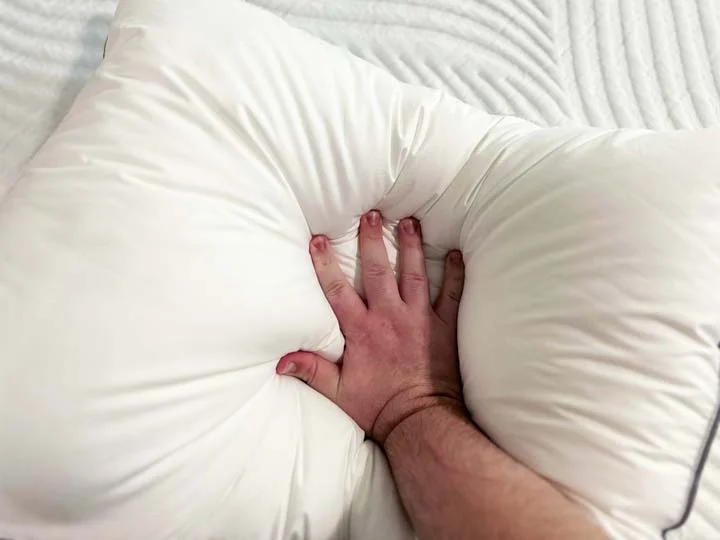
Although they are breathable, authentic down pillows are known to trap quite a bit of heat. That’s why down alternatives are a great material for cooling pillows; they tend to be far less insulating while still maintaining a similar feel to true down pillows. Moreover, if you also have allergies, you might prefer a product that isn’t made with animal products.
Latex Pillows
“Eco-conscious shoppers and those with allergies should love the option of natural latex because it’s non-toxic, chemical-free, antimicrobial, and hypoallergenic,” says Dr. Dasgupta. “These pillows also offer plenty of support and contouring, which could benefit sleepers dealing with neck pain.”
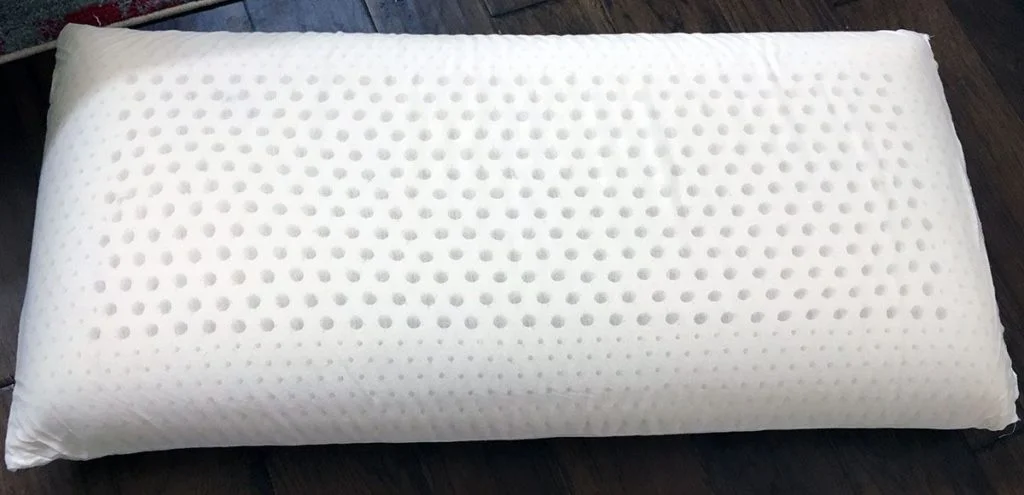
Hot sleepers should appreciate this material primarily because latex itself is naturally cooling and breathable. Though some studies tout latex as more breathable and pressure-relieving than foam, it should be noted that latex pillows often have a totally different feel than foam pillows. With latex pillows, you should get a bouncier feel that’s great for combination sleepers who like to change positions at night.
Fiber Fills
You might also encounter pillows stuffed with other fibers like cotton, wool, silk, or bamboo. Cotton and wool are breathable materials, but can also act as insulators in warmer environments, so tread carefully. Some studies show that silk has heat-wicking properties that could be beneficial for hot sleepers, which is part of the reason the Cozy Earth Silk Pillow made our list. Bamboo is another popular fabric for cooling sheets; its crisp feel and moisture-wicking ability could also work great inside a cooling pillow or its cover.
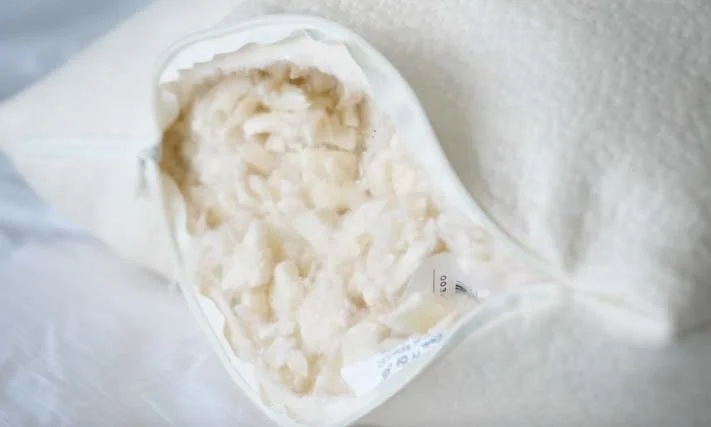
Less-Common Pillow Types
One pillow type you’re less likely to encounter are buckwheat pillows, which contain the outer protective shells, or hulls, of buckwheat seeds. These give pillows a firm, dense feel, but we wouldn’t call them particularly cooling or breathable. In a similar vein, some pillows use synthetic microbeads to create this heavy, interlocking effect—almost like a beanbag for your head—but I’ve yet to encounter one myself.
Sleeping Position
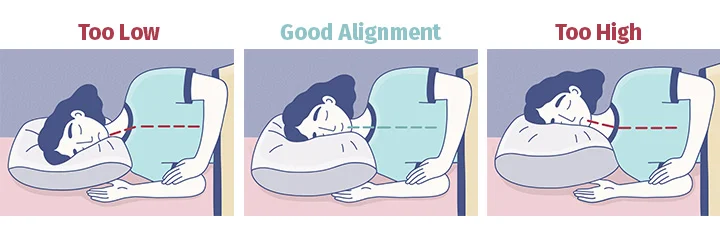
The proper pillow firmness and loft for your comfort depends primarily on your sleeping position. If you have the wrong height for the way you sleep, it can affect your spinal alignment and cause pain. Below, I’ll go over what we recommend each sleeper type look for in their ideal pillow.
- Side sleepers: To keep the neck aligned with the rest of the spine, we definitely recommend a pillow with a higher loft. These pillows will often seem fluffier and have a firmer feel.
- Stomach sleepers: On the other end of the pillow firmness scale are pillows for stomach sleepers. Unlike side sleepers, stomach sleepers do not want their neck craned upwards at night. Therefore, these sleepers should opt for a softer pillow and a lower loft.
- Back sleepers: These sleepers are likely going to need something in between the lower loft of stomach sleepers and the higher loft of side sleepers. Back sleepers are often most comfortable with a balanced feel, and because of this, they have some room to lean one way or the other in terms of loft and firmness.
If you’re still unsure about what pillow best matches your sleeping style, then we highly recommend an adjustable pillow. That way, you can customize the loft to whatever feels the most comfortable.
Other Cooling Accessories
“A too-warm sleep environment can cause interference with your body’s natural thermal regulation while you sleep,” says Dr. Raj Dasgupta. “Therefore, it’s important to maintain a cool sleep environment, which can be achieved not just with the thermostat, but also outfitting your bed with cooling products.” Essentially, if a new cooling pillow isn’t quite enough to keep you from overheating, there are many other accessories out there that should help.
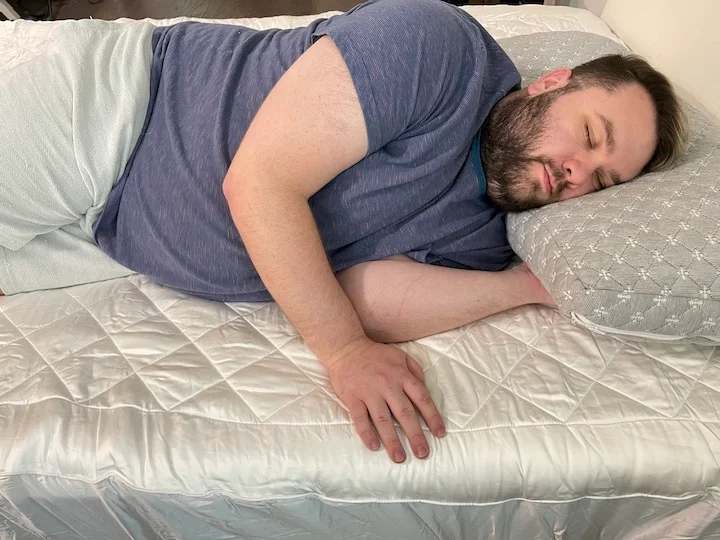
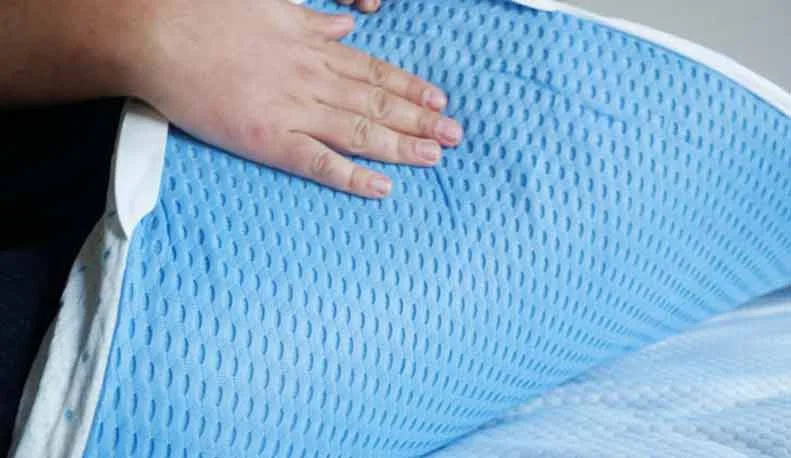
- Cooling pads: Pads infused with gel or other substances are a fantastic option for those who don’t want to spend money on yet another pillow. Just slip the pad into a regular pillowcase (it goes on the side where you’ll lay your head), and the pad should help cool down the surface and consequently keep you cool as well.
- Cooling sheets: Cotton, bamboo, and Tencel are our favorite materials for cooling sheets because they’re naturally breathable. These materials are far better than flannel and linen, which are better for insulation but might make you overheat at night.
- Cooling toppers: If your mattress is so hot that even a cooling pillow can’t help, you can try to change the feel of it with a cooling mattress topper. Foam toppers, though comfortable and cozy, can trap quite a bit of heat. That’s where cooling technology comes into play—look for cooling gels, latex layers, or other additions to help change your sleep surface into something crisp and breathable.
If you’re willing to spend the money and need a major game-changer, then we recommend investing in a cooling mattress. Like pillows, mattresses are often made with cooling technology or have a very breathable construction. Some even come with the option to add on a specialized cooling cover to an existing bed. When used in tandem with cooling bedding, you shouldn’t have any problems overheating at night.
FAQs
Is there a cooling pillow that actually works?
Yes, cooling pillows that work are out there! We especially love the Nectar Tri-Comfort Cooling Pillow for its cool-the-touch cover. You can also look for pillows that have specialized cooling technology, whether that be cooling gel, moisture-wicking fabrics, Phase Change Material, or fills made of more breathable materials like latex.
Is a cooling pillow good for you?
If you’re overheating at night, a cooling pillow can be good for ensuring you remain cool and get quality sleep. Our chief medical advisor, Dr. Raj Dasgupta, asserts that maintaining a comfortable temperature is essential for falling asleep and remaining asleep. Proper sleep hygiene usually favors a colder environment for deeper sleep, so you may want to accompany your cooling pillow with cooling sheets or bedding.
What type of pillow is the coolest?
In our opinion, the coolest pillow is one that will feature cooling technology, like gel, Phase Change Material, or a breathable construction. Opt for latex or shredded memory foam over memory foam block pillows. Some pillows also have a cooling cover, which may offer more active cooling than what’s on the inside. Look for covers that contain Glaciotex, copper, or bamboo, as these can create that crisp, cool-to-the-touch feel.
References
- Zhu, J., Huang, S., Xie, Z., Guo, H., & Yang, H. (2022). Thermal Conductance of Copper–Graphene Interface: A Molecular Simulation. Materials, 15(21), 7588–7588. https://doi.org/10.3390/ma15217588
- Low, F.-Z., Chua, M. C.-H., Lim, P.-Y., & Yeow, C.-H. (2017). Effects of Mattress Material on Body Pressure Profiles in Different Sleeping Postures. Journal of Chiropractic Medicine, 16(1), 1–9. https://doi.org/10.1016/j.jcm.2016.09.002
- Das, B., Padaki, N. V., Jaganathan, K., & Ashoka, H. M. (2021). Comparative Studies on Thermal Comfort Properties of Eri Silk, Mulberry Silk, Wool and Linen Fibres. Journal of the Institution of Engineers (India): Series E, 102(1), 145–154. https://doi.org/10.1007/s40034-021-00208-2
- Solorio-Ferrales, K., Villa-Angulo, C., Villa-Angulo, R., & Villa-Angulo, J. R. (2017). Comparison of regenerated bamboo and cotton performance in warm environment. Journal of Applied Research and Technology. JART, 15(3), 205–210. https://doi.org/10.1016/j.jart.2017.02.002