


You’ve likely seen a body pillow before and thought it was just a giant, cuddle-friendly cushion. However, these extra-long pillows can actually help maintain spinal alignment, relieve stress, and ease pressure buildup.
Unlike standard pillows that only support your head and neck, body pillows offer an excellent, versatile alternative for sleepers who use multiple standard pillows to prop up their hips, elevate their legs, evenly distribute their weight, or get more full-body comfort and support.
In this guide, I’ll break down some of the potential benefits of adding a body pillow to your bedroom and life, plus tips for using them to improve sleep, spinal alignment, and comfort.
Types of Body Pillows and Which Sleepers They Can Help Most
Body pillows are generally most beneficial to side sleepers. However, in some cases, back, stomach, and especially combination sleepers can also find a type that helps them stay comfortable, relieve stress, feel supported, aid injury recovery, or sleep better.
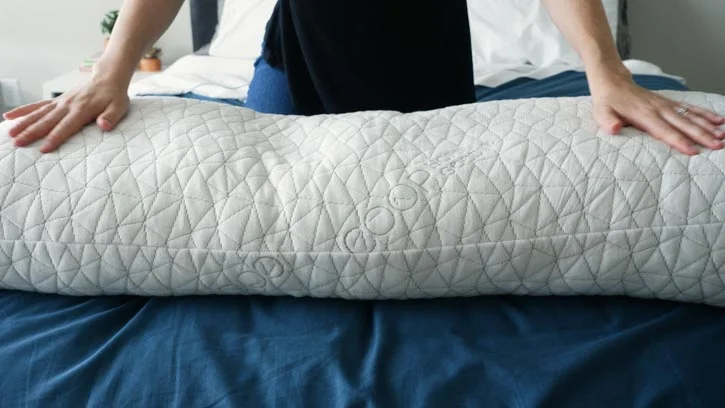
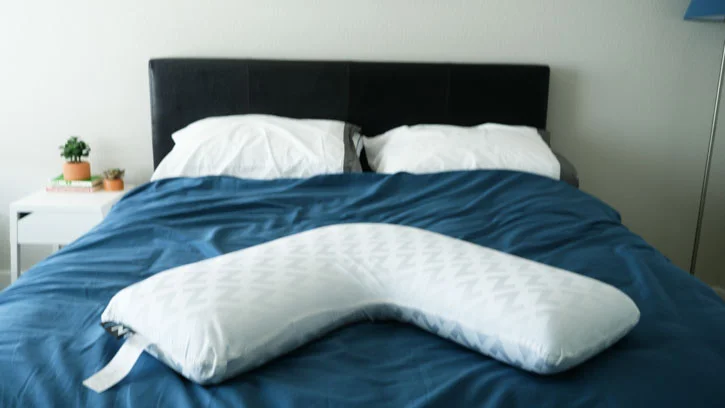
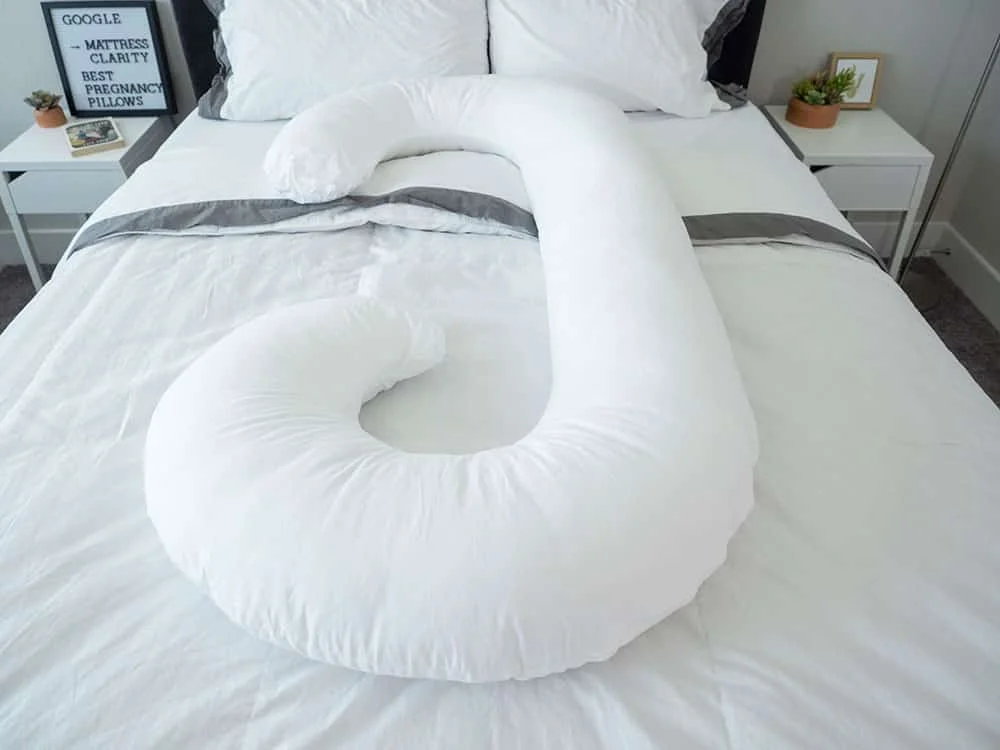
Below, I’ll go through the types of body pillows out there and who they work best for.
- Straight/rectangular body pillows look like a longer version of a standard pillow. These pillows can be an excellent choice for side sleepers as they promote alignment by keeping the hips, shoulders, and spine in a more neutral position.
- U-shaped body pillows wrap around your entire body like an arch. These provide support on both sides of the body and, like straight body pillows, help with spinal alignment and pressure relief. However, combination sleepers may appreciate these pillows because they don’t have to move them when switching positions.
- C-shaped body pillows are also great for side sleepers. They provide partial wraparound support to create a neutral body position, and by placing it along the back and between the knees, they may give sleepers additional lumbar support.
- J-shaped body pillows can be used by all sleepers for lounging, stress relief, or therapeutic cuddling, but for sleep, they are most beneficial for side sleepers. This is because, like with most body pillows, they help reduce pressure buildup and promote a more aligned spine.
Overall, sleepers benefit the most from body pillows because they can help improve even weight distribution, spinal alignment, and pressure relief during sleep. Some body pillows can help train sleepers looking to switch to sleeping on their backs for better posture. They can also provide excellent general comfort for long-term back sleepers. But for stomach sleepers, only a very thin rectangular body pillow placed under the hips is likely to offer real benefit.
How to Use a Body Pillow According to Your Sleeping Needs
I’ll go through how to best set yourself up with a body pillow.

Side sleepers: A body pillow is particularly useful. If using a standard body pillow, align the pillow so it is parallel to your body. Then hug it with your arms bent at the elbows and place it between your legs to keep the weight off your hips and knees so they don’t push down on each other.
Depending on the body pillow’s length and your size, you may want to add a standard pillow for your head, but if you’re using a J-shaped, U-shaped, or C-shaped body pillow, you likely won’t need one. When you feel your spine is aligned with the pillow’s help, adjust it for comfort as needed.

Combination sleepers: If you toss and turn, you can start your night by using a body pillow in the side-sleeping position, following the guidance I wrote above on how to best align your body with the pillow. Body pillows are great for combination sleepers because, while they work best for side sleepers, they are versatile and can be moved around and used all over your body as you change sleeping positions. So, they are certainly a good tool to have in your pillow arsenal for better sleep.

Back sleepers: You can use a body pillow to elevate your limbs above your heart during injury recovery or as a stress-relief tool by hugging it. U-shaped body pillows can benefit back sleepers, as they offer a full, cocoon-like arch for resting their elbows.

Stomach sleepers: If you sleep on your stomach, you can use a very thin, soft standard body pillow under your hips to help align your hips with your upper body. However, body pillows are likely best for stomach sleepers trying to switch to side or back sleeping positions, which are healthier for sleep posture.
As mentioned, those trying to switch out of the stomach sleeping position can benefit from a U-shaped body pillow, as it can prevent them from rolling onto their stomachs when trying to stay on their back or side. Furthermore, stomach sleepers, like all sleepers, can benefit greatly from the stress relief of hugging the pillow.
For general lounging: While not sleep-related, body pillows are great for watching television on your couch and should generally be seen as a tool for comfort and coziness when trying to wind down or relax.


Experiment: The most important thing to remember is to keep your spine aligned while using a body pillow. You will also want to make sure you’re using a mattress that supports proper spinal alignment, since your mattress’s support is key to maintaining good posture and comfort. In addition, consider trying out your body pillow after a hard day’s work for stress relief or utilizing multiple long body pillows for extra support.
It may take some time to find the best way to use a body pillow for pain relief, comfort, or lounging, but as long as you’re mindful of your spine, adjust your use accordingly for maximum comfort and benefit.
Matching Your Body Pillow’s Material with Sleeping Needs
Hot sleepers: If you tend to sleep hot, aim for a body pillow made with shredded memory foam or one that includes cooling features like cooling gel foam.
Fans of firm support: If you enjoy firmer support, or have a larger body type, it’s best to seek a body pillow made of solid foam or latex. However, these may not be as effective at dissipating body heat as perforated memory foam, so make sure to pair your body pillow with a cooling or breathable cover.
Hypoallergenic pillows: If you’re prone to allergies and need a more hypoallergenic body pillow, consider a cotton-based pillow that is GOTS-certified (Global Organic Textile Standard), a natural latex body pillow that is GOLS-certified (Global Organic Latex Standard), or foam-based pillows that are GREENGUARD Gold and CertiPUR-US certified.
Pillows that have these certifications tend to be less volatile and more hypoallergenic. Furthermore, getting a pillowcase that is antimicrobial, dust-mite resistant, or moisture-wicking can also keep your body pillow fresher and more hypoallergenic over time.
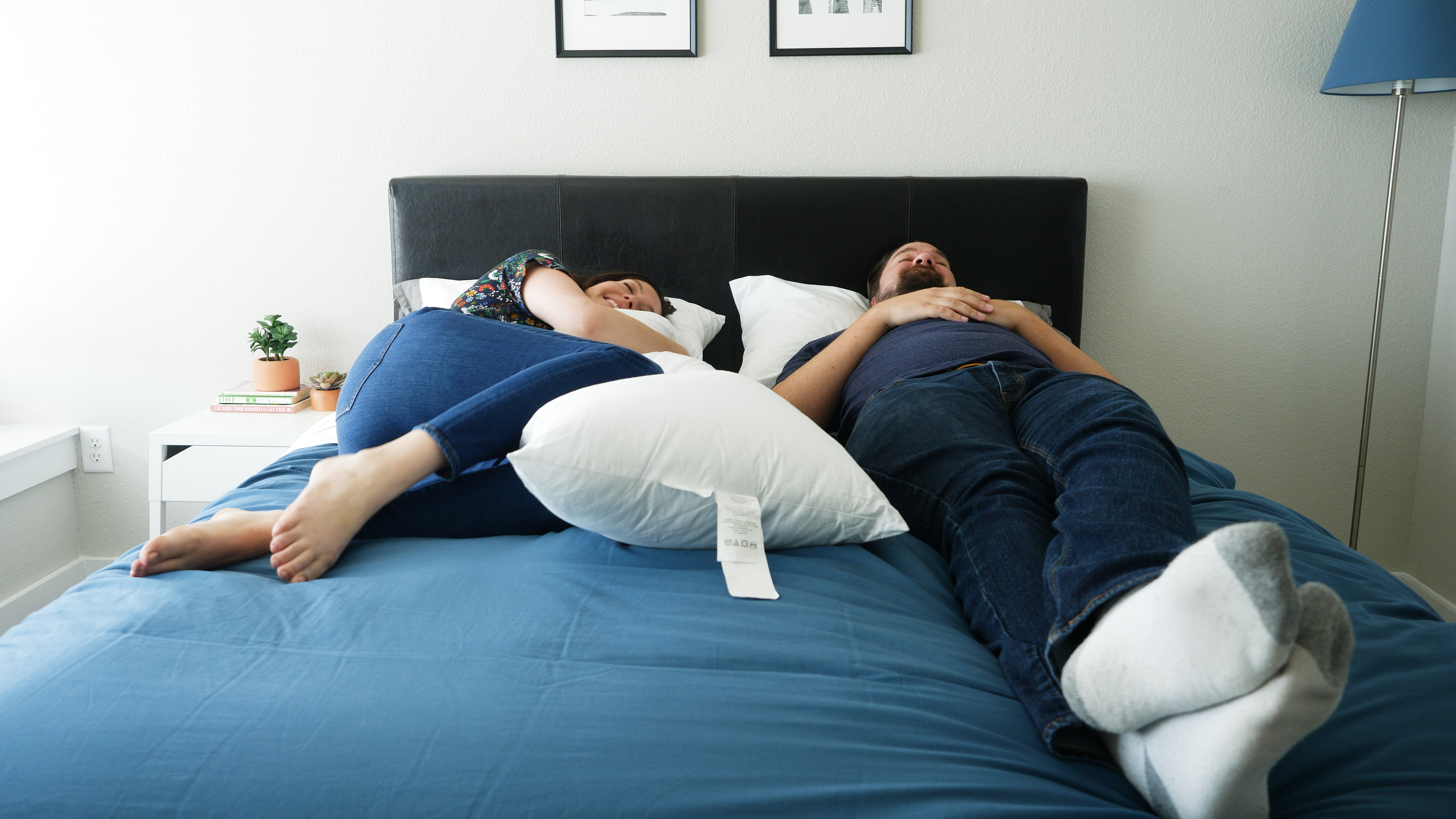
You can check out our reviews of the AllerEase Hypoallergenic Cotton Body Pillow or the Snuggle-Pedic Body Pillow, both of which are hypoallergenic-friendly options, while still delivering the benefits of using a body pillow for pain relief, sleep quality, or general calm.
Key Takeaway Benefits of Sleeping with a Body Pillow
Some of the biggest benefits of using a body pillow are:
- Top-tier side-sleeper support: Body pillows are an excellent tool for side sleepers to experience proper spinal alignment, enhance comfort, and get better full-body support. Furthermore, enhanced pressure-point relief for lower back, hip, or head and neck pain is one of the health benefits that side sleepers, in particular, can expect from most body pillows.
- Back-sleep training: Helps stomach and side sleepers (especially with U-shaped body pillows) get into sleeping on their backs by providing a cocoon-like or “nested” feeling while sleeping within the pillow. Back sleeping is considered by some studies to be the best sleeping position for general spinal alignment; however, for lower back pain, it is best paired with a secondary pillow to elevate the knees.
- Side-sleep training: Body pillows can also help non-side sleepers (back and stomach sleepers) who may have issues with snoring to stay on their side (for the benefit of their partner) by delivering the enhanced support for side sleepers I mentioned above. In addition to snoring, body pillows helping sleepers rest better on their left side in particular may help with digestion and acid reflux relief.
- Stress relief: Hugging your body pillow has been shown to offer stress relief and therapeutic benefits. One study found body pillows could be a “non-pharmaceutical anxiety aid for students during examination periods,” suggesting many could experience similar stress-relief benefits from body pillows.
- Recovery: Body pillows offer versatile support for elevating limbs during injury recovery. This could come in handy for reducing inflammation buildup while you sleep, making body pillows a practical tool for surgery recovery or people experiencing chronic pain.
- Daily life and lounging: Beyond bedtime, body pillows are also just fun and easy to use for relaxation while watching movies or reading a book around the house. They’re a particularly great fit for resting on your side on the couch, especially if you’re not used to it.
- Pregnancy: Body pillows can better adapt to a changing body and help pregnant women sleep better on their side. This may also help maintain blood flow for pregnant women during the night and prevent some of the most common issues of sleeping on your back or stomach while pregnant, such as sciatica, hip pain, or lower back pain.
Overall, body pillows are a great level-up from your standard pillow, and a potentially versatile tool for better sleep and comfort. If you’re looking for guidance on choosing one of the best options out there today, consider checking out our 2026 best body pillow review.
References
- Haynes AC, Lywood A, Crowe EM, Fielding JL, Rossiter JM, Kent C. A calming hug: Design and validation of a tactile aid to ease anxiety. PLoS One. 2022 Mar 9;17(3):e0259838. doi: 10.1371/journal.pone.0259838. PMID: 35263344; PMCID: PMC8906645.
- “The Best — and Worst — Sleep Positions for Back Pain”. Keck Medicine of USC. Everyday Health. Last updated. October 22, 2025.
- Park, Insung & Suzuki, Chihiro & Suzuki, Yoko & Kawana, Fusae & Yajima, Katsuhiko & Fukusumi, Shoji & Kokubo, Toshio & Tokuyama, Kumpei & Yanagisawa, Masashi & Satoh, Makoto. (2021). Effects of Body Pillow Use on Sleeping Posture and Sleep Architecture in Healthy Young Adults. Sleep Medicine Research. 12. 57-63. 10.17241/smr.2021.00878.
- Saini Y, Rai A, Sen S. Relationship Between Sleep Posture and Low Back Pain: A Systematic Review. Musculoskeletal Care. 2025 Jun;23(2):e70114. doi: 10.1002/msc.70114. PMID: 40338112.
- Simadibrata DM, Lesmana E, Amangku BR, Wardoyo MP, Simadibrata M. Left lateral decubitus sleeping position is associated with improved gastroesophageal reflux disease symptoms: A systematic review and meta-analysis. World J Clin Cases. 2023 Oct 26;11(30):7329-7336. doi: 10.12998/wjcc.v11.i30.7329. PMID: 37969463; PMCID: PMC10643078.
- Joffe, N. E., Cohen, L. L., & Masuda, A. (2014). Evaluation of a Body Pillow to Aid Pediatric Spinal Fusion Recovery. Children’s Health Care, 43(1), 72–86. https://doi.org/10.1080/02739615.2014.850886
- Anderson NH, Gordon A, Li M, et al. Association of Supine Going-to-Sleep Position in Late Pregnancy With Reduced Birth Weight: A Secondary Analysis of an Individual Participant Data Meta-analysis. JAMA Netw Open. 2019;2(10):e1912614. doi:10.1001/jamanetworkopen.2019.12614