
Say you enjoy a long, productive workout, whether that be running through the park or lifting at your friendly neighborhood YMCA. When the workout is over, do you feel so drained that you’re ready to crash into your bed? Or is your heart pumping so fast, sleep is absolutely out of the question?
This scenario brings up the very real, but complicated, relationship between sleep and exercise. Exercise is a critical component of sleep hygiene, but both the timing and the nature of your workout matter a great deal.
Jump to:
Effects of Exercise on Sleep | Is It Good to Exercise Before Bed? | Sleep & Athletic Performance | Do Athletes Need More Sleep? | Tips to Maximize Performance | Sleep & Weight Loss | Bottom Line
Johns Hopkins Medicine puts this relationship into sharp relief: “Working out is great for your body and mind – and it can also help you get a good night’s sleep. But, for some people, exercising too late in the day can interfere with how well they rest at night.”
Let’s take a closer look at the nature of the relationship between daily physical exertion, and quality of sleep.

The Effects of Exercise on Sleep
According to one doctor from Hopkins, daily exercise “does, in fact, help you fall asleep more quickly,” and may also improve the quality of that sleep. Researchers still have plenty of questions about why this is the case, but one thing that’s certain is that exercise can help stabilize mood and decompress the mind, both of which allow the body to more naturally transition into a restful state. Additionally, scientists have found that exercise increases “slow wave sleep,” which is the deep, restorative state of sleep that allows the body and brain to feel refreshed.
One of the big considerations is timing; while some daily physical exercise may make it easier to fall asleep, exercising later in the day may actually be counterproductive.
A Harvard study confirms this, noting it is best to avoid vigorous exercise within an hour of bedtime. One explanation is that aerobic exercise releases endorphins, or brain chemicals that stimulate mood and alertness. These endorphins may make you feel “keyed up,” and in turn make it harder to find peace and quiet. Additionally, exercise raises the core body temperature, which sends a signal to the brain that it’s time to be up and awake.
Both the Hopkins and Harvard articles note that the timing of exercise matters, and that most individuals will want to allow themselves an hour or two to “unwind” between exercise and going to bed. Beyond that, the scientific consensus is pretty clear: Exercise can help you sleep better, and it really doesn’t matter what time of the day you do it.
As for the amount and type of exercise required, Hopkins advocates for aerobic exercise, and posits that only half an hour of daily exercise is needed to achieve positive effects come bedtime.
Is It Good to Exercise Before Bed?
For years, there’s been a common belief that exercising in the hours leading up to bedtime can make it harder to fall asleep. Now, a new review challenges this long-held sleep hygiene recommendation by suggesting that moderate exercise before bed might actually make it easier to fall and stay asleep.
The study, which was conducted by researchers from the Institute of Human Movement Sciences and Sport at ETH Zurich, also distinguished between the effects of moderate vs vigorous exercise. While moderate exercise before bed had a small yet positive impact on sleep, vigorous exercise did impair people’s ability to fall asleep as well as their total sleep duration.
These results have potential ramifications both for athletes and the general public.
“I believe the science is strong on the fact that improved sleep is more powerful for the body than diet and exercise,” Dr. Bo Babenko, PT, DPT, head physical therapist at Halevy Life, told Mattress Clarity via email. Mattress Clarity also reached out to the study’s authors but has yet to hear back.
Moderate Exercise Before Bed Might Benefit Sleep
Conventional wisdom has long held that exercising before bed can inhibit sleep because exercise raises heart rate and nervous system activity at a time when people’s bodies should be winding down, Babenko says.
“Cortisol is a major hormone that the body produces in response to stress,” he says. “Normally it should be quite high in the morning and lower throughout the day leading into sleepy time. A bout of exercise can elevate your cortisol (which also blocks melatonin production) and thus can significantly disrupt your quality of sleep (in theory).”
But this new review suggests this may be truer for vigorous physical activity than more moderate exercise.
The study, which was published in the journal Sports Medicine, investigated how evening exercise might affect sleep and whether exercise or intensity moderated these effects. This investigation consisted of a comprehensive review of studies from major research databases— namely PubMed, Cochrane, EMBASE, PsycINFO, and CINAHL. The authors included studies that evaluated sleep after a single session of evening exercise compared to a control group that did not exercise.
In total, the researchers reviewed 23 studies. In order to distinguish between moderate and vigorous activity, they defined vigorous exercise as training during which a person is unable to speak — such as high-intensity interval training. Moderate activity — which includes endurance training such as running or biking — was defined as physical activity during which a person could speak but not sing.
Compared to control groups, the researchers found that moderate evening exercise within four hours of going to bed increased the amount of time that people spent in REM sleep and slow-wave sleep. This increase was small but statistically significant. Moderate evening exercise also decreased the duration of stage 1 sleep. These findings held true even if moderate activity was performed up to 30 minutes before bedtime.
In contrast, vigorous exercise within an hour of going to bed was associated with reduced sleep efficiency and higher rates of waking back up after falling asleep. The researchers speculated this might be because vigorous exercise increased body temperature at bedtime, thereby inhibiting the body’s natural wind-down process before sleep. This data was based on observations from a single study.
Moderate vs Vigorous Exercise Impacts
Babenko says several factors might explain the discrepancy between moderate and vigorous exercise.
“One thought would be moderate exercise does not activate enough cortisol to disrupt the hormone pathways,” he says. “Another theory that I would suspect we will learn more about soon is a genetic component. Just as some folks are caffeine sensitive (enough caffeine after 3 p.m. and they are up at 3 a.m…), I would bet there are genetic variations to exercise along with how healthy your body is in general — providing an appropriate amount of cortisol for the amount of exercise we impose versus not enough or too much.”
As for why moderate exercise before bed might actually improve sleep quality, Babenko offers a few additional thoughts.
“There may be some effects on the breathing rate and getting the body tired but not too wired,” he says. “That is the trick, to not do too much but just the right amount like Goldilocks and the three bears. Anecdotally, I have also seen foam rolling/massage with some intensity provide for improved sleep, as well as deep breathing practice… The body needs to get signals to recover and sleep — these all may be triggering enough of an ‘exhausted’ feeling without crossing the threshold of too intense and triggering the hormone cascade of fight or flight.”
Of course, every body is different, and it’s important for people to observe what works best for them when it comes to exercising before bed. As Babenko puts it, “Better understanding of your own personal triggers for sleep are vital.”

Sleep and Athletic Performance
For athletes, sleep takes on a heightened level of importance. Studies have shown that a lack of good, sound sleep can have a corrosive impact on an athlete’s mental clarity and physical performance.
The issue here pertains to muscle recovery. While your body sleeps, it produces human growth hormone, which helps repair damaged muscle as well as build healthy new muscle. Without seven to nine hours of good, deep sleep, this process doesn’t take place, which means athletes are much slower to recover from injury or to develop real muscle strength.
So what happens to those who don’t get sufficient rest each night? Studies show that athletes who don’t get the level of sleep they need each night become exhausted more rapidly, as their bodies didn’t enjoy the full effects of human growth hormone production.
Additionally, athletes who don’t get enough sleep at night have their metabolic processes disrupted, which can lead to changes in their insulin resistance as well as the way their body metabolizes carbohydrates and other nutrients. According to the research, “The role of growth hormone in mediating altered carbohydrate metabolism may be of particular relevance as to how sleep deprivation alters the supply of energy substrate to the muscle.”

Five Sleep Tips for Runners
If you’re a frequent runner, or you like to partake in any kind of endurance and distance running, sleep is crucial for your success. Let’s go over five sleep tips that runners should keep in mind:
- Don’t stress about sleep: Worrying about sleep can cause you to stay up. So, it’s best to go to bed the night before a big event as if the next morning were any other day. Even if the night before a big event isn’t your best night of sleep, if you are prioritizing sleep in the days and weeks leading up to it, you’ll be better rested when it’s time to perform.
- Try to avoid sleeping pills: On paper, taking sleeping pills sounds great. However, not everyone reacts to sleeping pills the same way, and for some, it could lead to a dependency. There’s still more research and data to be collected about how sleeping pills impact athletic performance, but it’s best to consult your doctor before getting anything over the counter.
- Get a supportive mattress: It’s no secret that having a supportive mattress is a big part of getting a good night of sleep. There are even some mattresses, like the Bear mattress, that incorporate a material called Celliant, which can help with muscle recovery.
- Take naps if needed: Naps are a runner’s best friend. If you find yourself in a lull in the middle of the day and can take a nap, by all means, take that nap.
- Use a sunrise or natural light alarm clock: The main goal of a sunrise alarm clock is to wake you up in a more gentle way than a loud alarm sound. The light tells your body it’s time to start waking up, unlike an alarm which can jerk you out of a deep slumber and make you feel groggy.
Benefits of a Sleep Coach for Athletic Performance
Athletes commonly rely on a personal trainer or fitness coach to help them achieve their fitness performance goals. Similarly, a sleep coach is a professional who provides tailored services to improve a person’s sleep quality using behavioral techniques and sleep science. A study conducted by luxury fitness club Equinox, in collaboration with the David Geffen School of Medicine at UCLA, aimed to discover a possible link between sleep coaching and improved athletic performance.
The study’s 32 participants received athletic training from a fitness professional for 12 weeks. During this time, they had key athletic performance measurements taken, including metabolic rate, maximum oxygen intake, and body composition. Some of the participants also received individual sleep coaching to improve their sleep hygiene.

The study results show that participants who received sleep coaching saw a vast improvement in their aerobic performance. These participants also had higher metabolic thresholds and higher maximum oxygen intakes compared to the control group. This means they were able to burn more calories for a longer period of time because their endurance had increased. The sleep coaching group also saw their fat content drop over twice as much with the same athletic training compared to the control group.
The study aimed to demonstrate the importance of regenerative sleep for maximized athletic performance. By making small lifestyle changes to better their sleep, participants had an easier time meeting their performance goals.
Do Athletes Need More Sleep?
Athletes, professional or otherwise, require a lot more food and exercise than the average person. So, do they also need more sleep?
According to the National Sleep Foundation, the answer is likely yes. “Lots of physical activity puts more demand on muscles and tissues, and the body repairs itself during slumber,” their website explains. “Sleep not only helps your body recover, it’s also a surefire performance booster.”
RELATED: How Does Sleep Impact Muscle Recovery?
A study of elite soccer players concluded that “sleep deprivation may be detrimental to the outcome of the recovery process after a match, resulting in impaired muscle glycogen repletion, impaired muscle damage repair, alterations in cognitive function and an increase in mental fatigue.”
Studies have also shown that extra sleep can improve athletic performance. One small study found that college basketball players improved their sprint times and shooting accuracy when they got more sleep each night.
RELATED: Best Mattresses for Athletes
Another found that many athletes experience sleep disturbance the night before a game or competition, which negatively affects their moods (though may not necessarily impact their performance). A review of existing research concluded that sleep deprivation harms athletic performance, whereas sleep extension improves it.
As such, experts believe that coaches and trainers should ensure that the athletes they work with are getting enough rest as part of their training schedules, through sleeping for a reasonable time at night or adding in a daytime nap.
“Athletes have been found to demonstrate poor self-assessment of their sleep duration and quality,” wrote Dr. Andrew Watson, a sports medicine specialist. “In light of this, athletes may require more careful monitoring and intervention to identify individuals at risk and promote proper sleep to improve both performance and overall health.”

What Is It Like to Sleep Like an Olympic Athlete?
We all know Olympic athletes train like crazy. But getting enough sleep is something that’s just as important as their time in the gym and their well-rounded diets.
“As athletics become more and more competitive to where a millisecond can be the difference between a gold and silver medal, everyone is looking for any possible edge they can get — sleep is that edge,” Olympic sleep expert Dr. Mark Rosekind told The Huffington Post.
Elite athletes say that regular sleep schedules are important to their performance, and most of them get more than the recommended minimum of seven hours each night.
Olympic gymnast Gabby Douglas sleeps eight hours a night. Sam Ojserkis, Olympic rower, and coxswain for the United States men’s eight boat, sleeps nine hours, from 8 p.m. to 5 a.m. Olympic alpine skier Mikaela Shiffrin said she is typically in bed by 9 p.m., and sleeps around 10 hours each night in an NBC report.
Something else Olympians rely on? Naps.
Former Olympic gymnast Shannon Miller told Van Winkle’s that naps were a crucial part of her schedule. “I pretty much took a nap every day from the time I started intensive training to the time I retired, which was about a decade,” she said. “While traveling, it was important to get even more sleep. I was a pro at it. People would find me catching a power nap in all sorts of places on a bus or plane and even in the splits. I learned early on that sleeping was just as important to my training as conditioning, stretching, and skills. I had to give my body and my mind time to recover.”
Shiffrin relies on a daily nap for recovery, as do athletes like beach volleyball player Phil Dalhausser and alpine skier Travis Ganong.
“After the morning lift, I try and squeeze in a nap as often as possible,” Ganong says. “It’s good to shut down after a tough session.”

Tips for Maximizing Sleep and Performance
For those looking to make the most of their daily exercise, and to optimize each night’s sleep, here are a few tips to keep in mind:
Consume Protein Before Bed
Nutrition can play a significant role in sleep quality. In particular, it may be helpful to consume some lean proteins, which aid in the body’s muscle-building and muscle recovery processes. In other words, protein can help you make the most of those human growth hormones.
Avoid Excess Alcohol
One thing to avoid? Drinking excess alcohol before bed. While alcohol may initially make you sleepy, it’s been linked with sleep disturbances during the second part of the night, which may cause you to wake up feeling poorly rested.
Create the Right Sleep Environment
Make sure you have everything you need to get comfortable and to transition from wakefulness to sleep, starting with a good mattress. Ensure the bedroom is cool and dark. Remove electronic devices that emit blue light, which can interfere with your body’s internal clock.
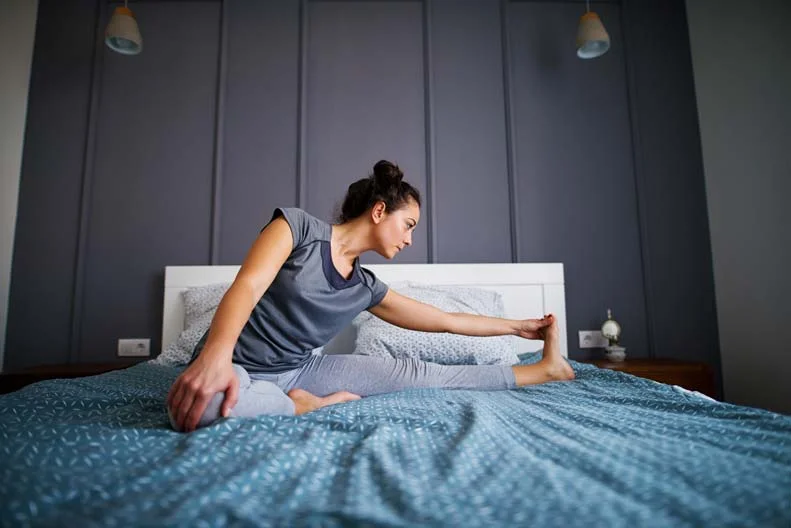
Do Some Yoga
Pre-bedtime yoga can help clear your mind, release tension, and help you feel ready for bed… both mentally and physically. Specifically, yoga can help minimize the production of stress hormones called cortisol.
Have a Consistent Routine
Finally, note that many sleep experts say keeping a consistent bedtime and wake-up time is key. “Keeping a regular sleep schedule—even on weekends—maintains the timing of the body’s internal clock and can help you fall asleep and wake up more easily,” says one Harvard report.
Sleep and Weight Loss
We all know that diet and exercise are crucial to losing weight. But there’s a third piece of the puzzle that is just as important — sleep.
Health brand Forza Supplements looked at the sleep habits of 1,000 people across the UK aged 18 to 65 who are trying to lose weight. According to Business Insider, “74 percent of the participants who slept for 7.5 to 8 hours each night said that they didn’t struggle to stick to a diet or lose weight.”
People who got less sleep were more likely to snack between meals — specifically, 64 percent of people who slept less than seven hours a night reported snacking between meals, compared to 17 percent of their well-rested counterparts.
Previous research on sleep and weight loss have had similar findings. One study linked insufficient sleep with weight gain, and a study on obese adolescents related sleep deprivation to “lower responsiveness to weight-loss treatment.”
Dr. Michael Breus, clinical psychologist and both a Diplomate of the American Board of Sleep Medicine and a Fellow of The American Academy of Sleep Medicine, explained the connection to WebMD: “It’s not so much that if you sleep, you will lose weight, but if you are sleep-deprived, meaning that you are not getting enough minutes of sleep or good quality sleep, your metabolism will not function properly.”
Good sleep is important when you are exercising or playing sports — and regular movement is a crucial part of successfully losing weight.
“When you look at the research, regular physical activity is important for high-quality sleep, and high-quality sleep is important for physical performance,” Cheri Mah, a sleep medicine researcher at Stanford University and the University of California, San Francisco, told TIME Health.
So if you’re looking to lose weight, make sure you are scheduling your regular workouts around a healthy sleep schedule. Depriving yourself of sleep in order to make it to the gym could hamper your efforts in the long run.
The Takeaway
Daily exercise, when timed properly, can help you sleep better at night; and at the same time, a good night’s rest can help you get more out of each workout. Take some time to consider your own daily routines, and how your physical exertion and sleep hygiene play into one another.
Featured image: Alena Ozerova/Shutterstock