





Side sleepers need a mattress that’s soft enough to provide pressure relief and sinkage around the hips and shoulders while still maintaining support and alignment. If this doesn’t sound like your mattress, it might be time for an upgrade. But before you throw away the whole bed and spend thousands of dollars on a new one, consider outfitting it with a new mattress topper.
A topper allows you to adjust the firmness and feel of your mattress, especially when your preferences have changed or the mattress is just starting to wear down. Like the best beds for side sleepers, the best mattress toppers for side sleepers will give you the contouring and cradling you need to sleep comfortably. From the dozens of toppers we’ve tested, I’ve gathered our top picks that should fit the bill.
Our Verdict: What’s the Best Mattress Topper for Side Sleepers?
The best mattress topper for side sleepers is the Saatva Mattress Topper, which offers a plush yet supportive memory foam feel that softens and cushions a lackluster mattress. While side sleeping, we gently sank into the Saatva topper and felt amazing pressure relief around our hips and shoulders. Plus, Saatva products are known for their high-quality materials and durability.
The Best Mattress Toppers for Side Sleepers
- Saatva Graphite Memory Foam Topper – Best Mattress Topper for Side Sleepers Overall
- Nolah Topper – Best Mattress Topper for Side Sleepers with Shoulder Pain
- ViscoSoft Active Cooling Copper Topper – Best Memory Foam Mattress Topper for Side Sleepers
- Helix GlacioTex™ Premium Mattress Topper – Best Firm Mattress Topper for Side Sleepers
- TEMPUR-Adapt Topper – Best Mattress Topper for Side Sleepers with Hip Pain
- Birch Plush Organic Mattress Topper – Best Latex Mattress Topper for Side Sleepers
How We Tested and Selected the Mattress Toppers
“For side sleepers, pressure relief is essential,” says Dr. Raj Dasgupta, our chief medical advisor. “When you rest on your side, your hips and shoulders dig into the mattress, creating pressure. If this pressure isn’t relieved, it can lead to discomfort or even pain in the joints.”
With this in mind, we opted for toppers that included contouring, pressure-relieving materials, like memory foam and latex. These should allow for more sinkage around the hips and shoulders while still maintaining support. When applicable, we also opted for softer firmnesses and feels for side sleepers dealing with a too-firm mattress.

Soft beds are great for pressure relief, but too-soft mattresses can compromise support for side sleepers, leading to their shoulders or hips falling out of alignment with the spine. Alongside the super-soft toppers for extra-firm mattresses, we wanted toppers that offer enough support for the sleepers who need it.
To rate a topper’s support, our testers lie on it in each sleeping position, getting a feel for their overall alignment and comfort. After gathering their opinion, they give each topper an overall support rating out of 5. For these toppers for side sleepers, we wanted support scores of at least 3.5/5.
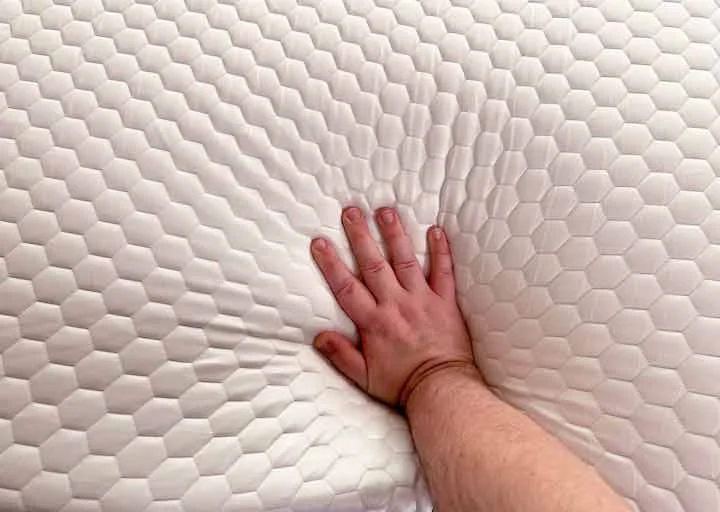
Finally, we want each topper to be well-constructed and built to last. Most shoppers are purchasing a new mattress topper in lieu of a new mattress, so one that crumbles after a few months of use isn’t going to do any good.
We evaluate the construction of each of these mattresses by looking at the materials, from the cover to the inner layers. Our testers will give the materials an overall rating out of 5, a metric that represents their quality and durability. All of the toppers on this list earned a perfect 5/5 for their construction.
For side sleepers especially, we also wanted these toppers to be thick, at least 2 inches thick—often even thicker. This should be enough depth to allow for the necessary sinkage.
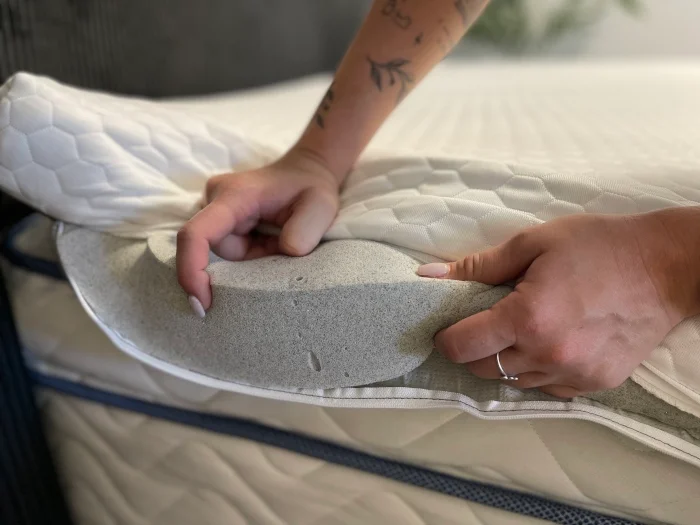
Our team of Certified Sleep Science Coaches selected the best mattress toppers for side sleepers by looking for top performers in the categories above: pressure relief, support, and durability.
But our full process involves testing several aspects of a mattress topper’s performance, including cooling, responsiveness, and more. We evaluate and score these factors using specialized technology as well as firsthand accounts of how a mattress topper feels to testers with different body types.
Once we have all those scores, we calculate the overall score using a weighted formula. This overall score is a good indicator of a mattress topper’s general quality, and is always a number out of 5.
As we decide which toppers to feature on any roundup, we only include those with an overall score of 3.5 out of 5 or higher. Even if a mattress topper does certain things well, we won’t point you towards it if it falls below this baseline.
- 500+ mattresses and 100+ sleep accessories tested in person
- 30+ data points collected for each bed
- Certified Sleep Science Coaches on staff
- Expert input from our Chief Medical Advisor Dr. Raj Dasgupta (MD, FACP, FCCP, FAASM) and our Chief Medical Product Tester Dr. Hannah Habeeb (DPT)
- 40,000+ readers who bought a new bed based on our recommendations
Learn more about Mattress Clarity.
Read about our testing experience with each of the mattress toppers on our list below.
Saatva Graphite Memory Foam Topper – Best Mattress Topper for Side Sleepers Overall
Saatva Graphite Memory Foam Mattress Topper
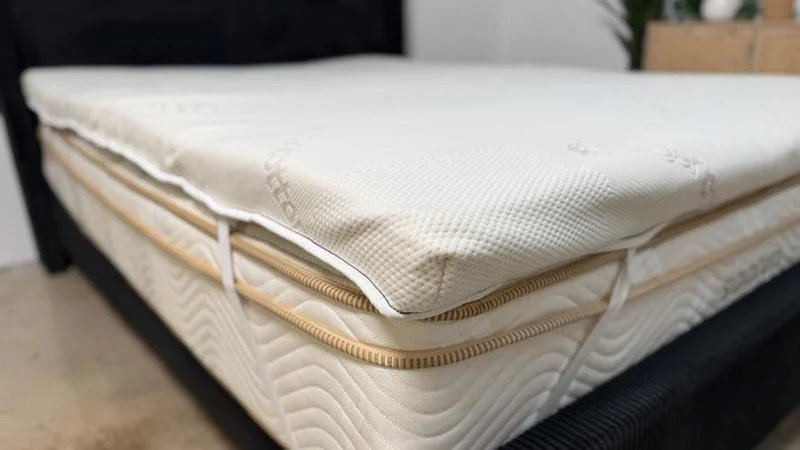
The Saatva Graphite Memory Foam Mattress Topper is a quick and affordable way to breathe life into an old mattress. It is made from durable, high-quality materials that can provide additional support for your current bed.
Mattress Clarity Score
4.1 / 5
Side sleepers seeking a soft yet supportive mattress topper need look no further than the Saatva Graphite Memory Foam Topper. As the name implies, this topper is made primarily of graphite-infused memory foam, offering sumptuous sinkage while maintaining a density that should keep you from falling out of alignment. One of our product experts was particularly impressed by this topper’s construction quality, awarding it a perfect score for materials. It also earned impressive marks for value and support, both coming in at 4/5.
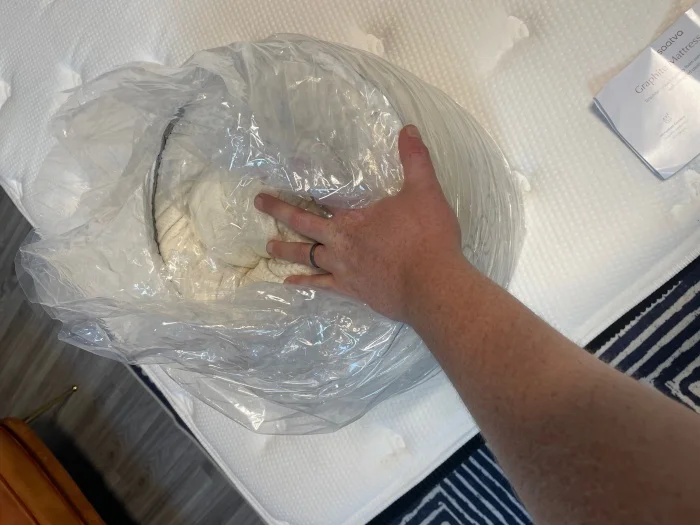
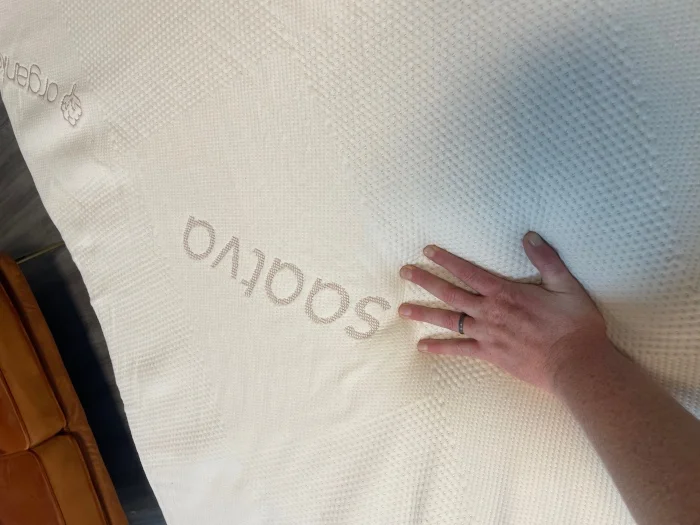
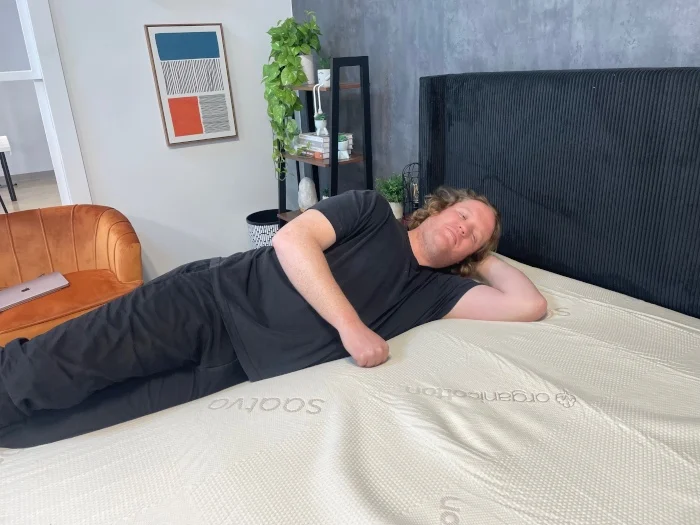
The tester thought that this topper offered “good memory foam support,” thanks to its “high-quality materials” that make it feel “nicely made.” He thought it would be perfect for someone “looking to add some plush support and a memory foam feel to your bed.” This should also benefit side sleepers suffering from a too-firm mattress.
Even with its doughy feel, our product tester found the topper to be reasonably responsive. “It’s memory foam, so it’s not going to be the most responsive thing in the world,” he said. “But when you change positions or get up off the bed, it does retain its original shape pretty quickly.” It’s good news if you’re a combination sleeper who loves a foam feel; you’re less likely to feel “stuck” in the bed’s surface.
The Saatva topper is also infused with graphite, a mineral known for its high thermal conductivity, to counter the foam’s heat-trapping properties. “I think that the cooling is pretty good for memory foam,” he said. “I was lying on my stomach on this topper for over 15 minutes, and I never felt like I was overheating.” It follows that this topper shouldn’t sleep too hot, and should hopefully remain temperature-neutral for most sleepers.
Dense memory foam is usually prized for its motion isolation, but the in-house tester found that its ability to absorb motion was “just okay.” He could feel “a good amount of movement” from the other side of the bed with his fellow tester moving around on it. He noted that it “wasn’t extreme,” but added, “It’s a bit more than you’d expect for a memory foam topper.” (Sleepers who are looking for top-notch motion isolation might want to check out the Nolah Topper instead.)
A queen-size Saatva Graphite Topper will run you $305, which is a bit on the pricey side, but as our product tester put it, “The quality justifies the expense.” You’ll also receive a 45-night sleep trial and a lifetime warranty with this topper.
For more, read our full Saatva mattress topper review.
Mattress Clarity Test Results: Saatva Graphite Memory Foam Topper
Nolah Topper – Best Mattress Topper for Side Sleepers with Shoulder Pain
Nolah Mattress Topper
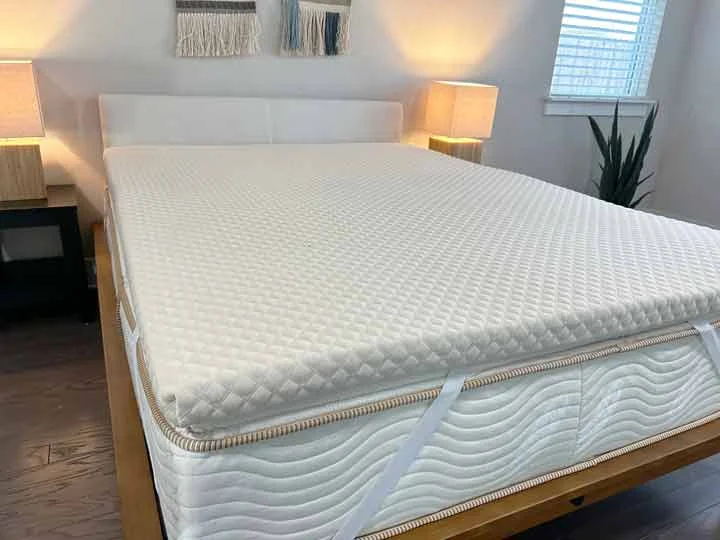
AirFoam™ topper offering plush softness and enhanced contouring.
Mattress Clarity Score
4.3 / 5
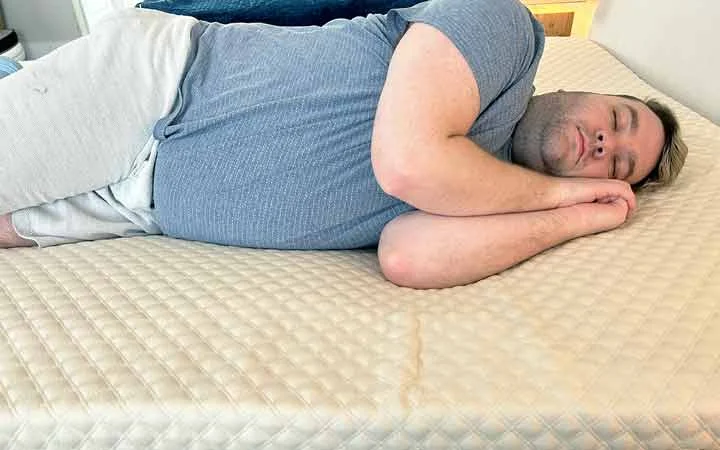
If you’re dealing with shoulder pain while sleeping on your side, you’ll want an extra-soft sleep surface to cradle this sensitive joint. You can achieve that with the Nolah Topper, one of the softest and most cushioning we’ve tried. It has a dense, slow-moving memory foam feel that earned it perfect scores for both materials and motion isolation. You should sink right into this topper and feel the pressure on your shoulder melt away.
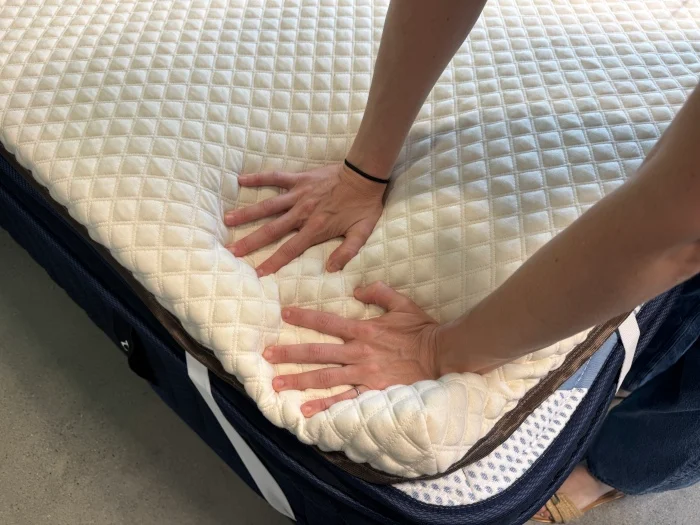
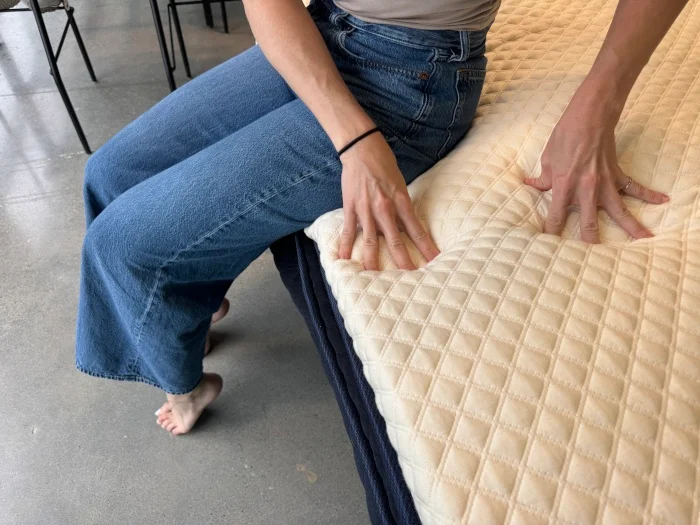
The Nolah Mattress topper is primarily made up of dense, thick memory foam. It’s two inches thick and swaddled in an organic cotton cover. My colleague Kenny Timper, who tested out the topper, called it “well-constructed and durable-feeling.”
He noted that the overall feel of this topper was extremely plush. “You sink pretty far into it, which feels great, but probably won’t give your mattress more support,” he explained. “This is best for side sleepers who need extra cushioning around the hips and shoulders, or anyone looking to soften up a too-firm mattress.”
Kenny found that this super-cushy feel led to some near-perfect motion isolation. “There’s not much movement, only a little ripple across the surface that I can barely feel,” he said. “I doubt that couples will have any trouble sleeping on this mattress, especially if one of you is a light sleeper.”
Combination sleepers, however, likely won’t love the feel of the Nolah Topper. Kenny encountered a bit of difficulty when moving around on the surface. “I wouldn’t say I’m getting stuck in it, but you definitely have to put in the effort, especially if you roll onto your back or stomach.” He personally had no issue with this, but as someone who loves a bouncy bed, I’d recommend combination sleepers check out a latex topper like the Birch topper.
The Nolah Topper comes with a 30-day return policy and an extremely generous 10-year warranty, one of the best we’ve seen from sleep accessories. You can purchase a queen-size for a little over $300, thanks to frequent sales and coupons.
To find out more about this topper, read our full Nolah mattress topper review.
Mattress Clarity Test Results: Nolah Topper
ViscoSoft Active Cooling Copper Topper – Best Memory Foam Mattress Topper for Side Sleepers
ViscoSoft Active Cooling Copper Topper
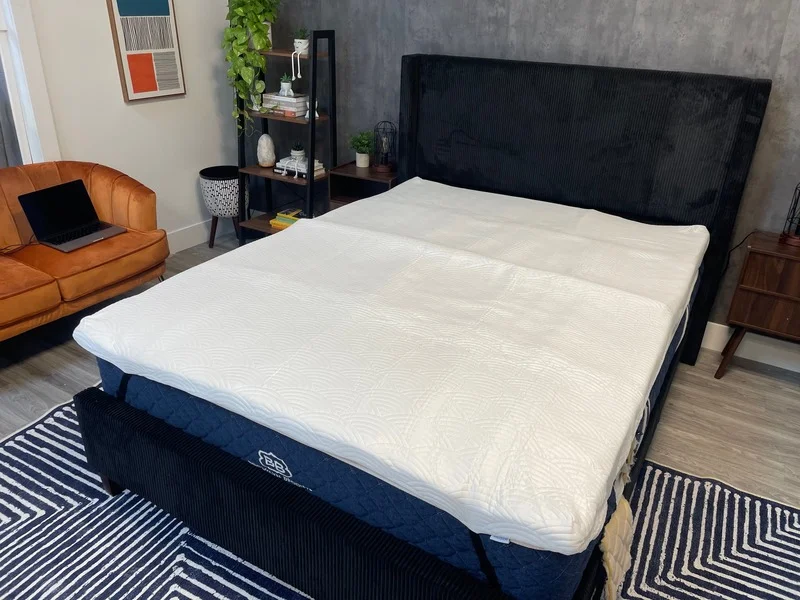
The ViscoSoft Active Cooling Copper Topper is a 4-inch memory foam mattress topper that’s infused with copper to provide a crisper, fresher sleep surface.
Mattress Clarity Score
4.5 / 5
Memory foam mattress toppers are popular picks for their cushy feel and general affordability. But they also offer the perfect profile for side sleepers. The ViscoSoft Active Cooling Copper Topper is one such mattress topper, with a dense foam construction that balances softness and support for the right amount of sinkage. It earned a 4.5/5 rating for overall support, plus a perfect materials score for its luxurious and high-quality feel.
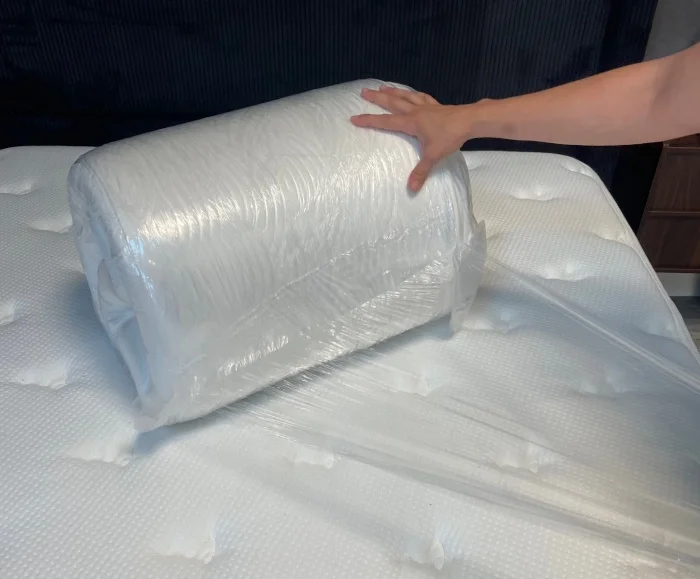
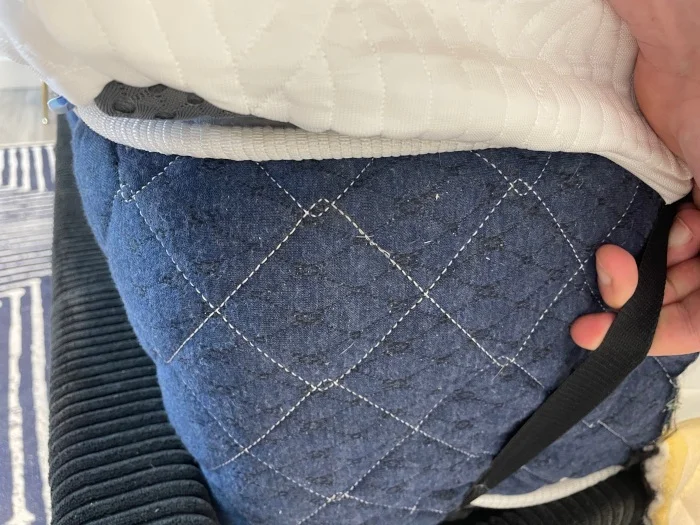
The construction of this topper was “thoughtful” enough that our product expert believed it could “soften up even a bad bed.” He said, “There’s a nice couple of inches of foam, a well-stitched cover, and it has girdle-like straps to secure it to the bottom of the bed.” The ViscoSoft topper is actually 4 inches thick, making it the densest option on this list.
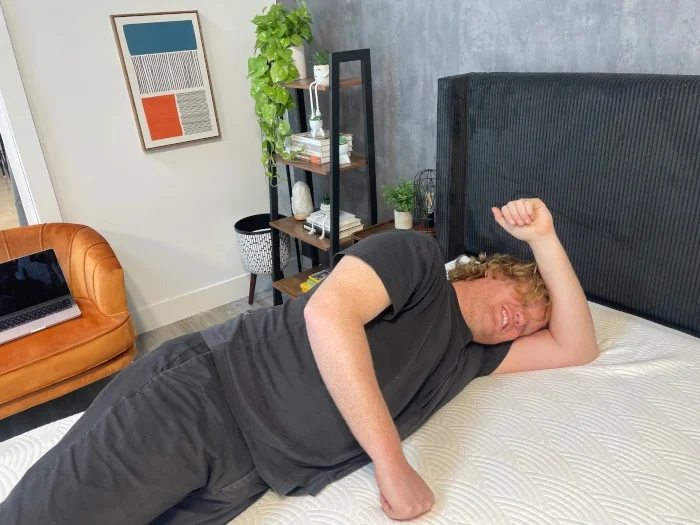
My colleague, who tested this, is a heavyweight sleeper and was impressed by the level of support he achieved on this topper. “This has a lot of sink, and it feels super plush, but it feels very supportive at the same time,” he said. “Side sleepers who are looking to soften up a firmer bed will really enjoy the pressure relief and support this gives.”
As its lengthy name suggests, the ViscoSoft Active Cooling Copper Topper is great for side sleepers who sleep hot. Its copper-infused cooling cover gives it a leg up despite its all-foam construction. The tester didn’t notice he was overheating while lying on the surface for 5 minutes. Moreover, he used a thermal gun to record the increase in surface temperature, and it barely broke 4 degrees. “I heartily recommend this for hot sleepers, despite the foam construction,” he said.
That foam construction doesn’t do it any favors for bounce, though. The tester noted the topper had a “true memory foam feel,” adding, “You’ll likely feel a little more ‘in’ the bed than on top of it.” Folks looking for a more responsive mattress topper might prefer the Birch topper, which includes bouncy latex.
The ViscoSoft Topper comes with a 90-day money-back guarantee, plus a nifty 5-year warranty. Even on sale, a queen-size Viscosoft topper will still run you about $300. But Matt dubbed it “high quality and high price,” so folks who can spring for it should appreciate its luxurious feel.
Mattress Clarity Test Results: ViscoSoft Active Cooling Copper Topper
Helix GlacioTex Premium Mattress Topper – Best Firm Mattress Topper for Side Sleepers
Helix GlacioTex Premium Mattress Topper
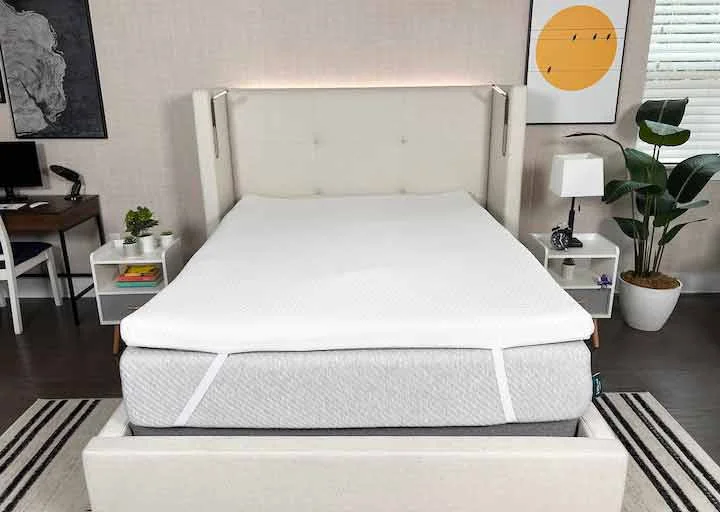
A cooling, gel-infused memory foam topper that balances support and temperature control.
Mattress Clarity Score
4.2 / 5
Maybe your mattress is too soft, making it unsupportive. Maintaining spinal alignment is crucial for side sleepers, and if your mattress has started to sag, a firmer mattress topper could be the solution. For a topper that balances this feel with enough pressure relief for side sleepers, check out Helix’s Premium Mattress Topper with GlacioTex. This topper earned high marks for support, value, and motion transfer, culminating in a 5/5 materials score for its microcoil construction. It’s like a mini-mattress for your mattress, certain to revitalize your sleep.
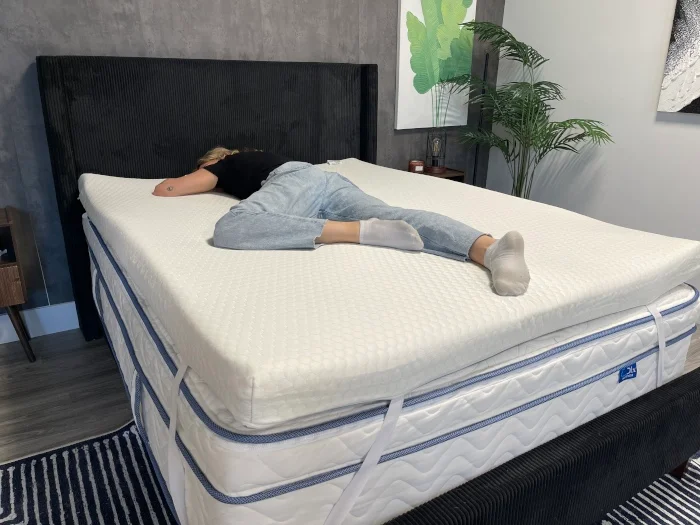
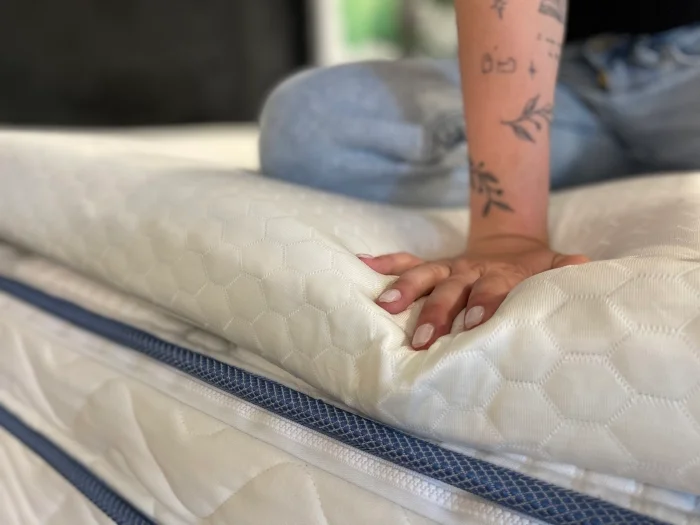
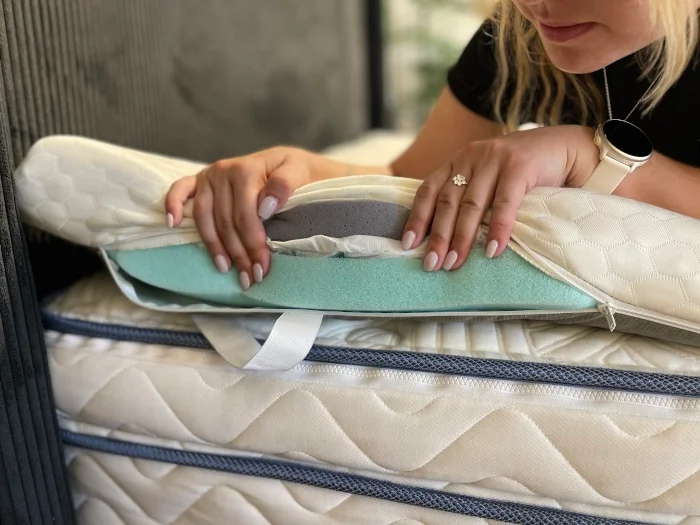
This Helix mattress topper features a microcoil layer sandwiched between two high-density foam layers. Everything is then wrapped up in a GlacioTex cooling cover. Our in-house tester found the mattress topper to be “very high-quality.” She explained, “The dense double layers of foam seem like they would hold up well over time.”
This topper does have a slightly firmer feel, coming in at about 7/10 on our firmness scale. It’s just a touch firmer than your standard medium-firm, meaning it should work well for side sleepers who need added support from their mattress. “This topper is very supportive and firm,” our in-house tester said after trying it out herself. “It has some slight sinkage but overall I feel more ‘on top’ of this mattress topper than deeply sinking into it.” She added that sleepers with larger frames would likely experience more sinkage with this topper.
Running her hand over the surface of the topper, our in-house tester noted that it indeed felt “cool to the touch.” She found that the topper felt a bit warmer the longer she lay on it, but it would dissipate and cool again whenever she moved. “I think someone who moves a lot in their sleep would be okay, because as soon as I got up I could feel it immediately start to cool down,” she said.
The Helix topper’s microcoils provide pinpoint support to help align your spine, but they don’t offer much in the way of bounce. “I wouldn’t say it’s super easy to move around on this topper and change positions,” our tester said. “But the foam does bounce back to its original shape after a few seconds. I don’t feel stuck.” If you want a truly bouncy mattress topper, check out the Birch Organic mattress topper, which features more responsive latex foam.
If the Helix Premium Topper seems like it’s calling your name, you can purchase it for around $400 on sale. It’s definitely “pricey,” per our tester, but she believed it was “very nice quality” and therefore worth the extra upcharge. Still unsure? Helix offers a 120-night sleep trial for this topper. After that, it’s backed by a 1-year warranty.
Mattress Clarity Test Results: Helix GlacioTex Premium Mattress Topper
TEMPUR-Adapt Topper – Best Mattress Topper for Side Sleepers with Hip Pain
TEMPUR-Adapt Topper
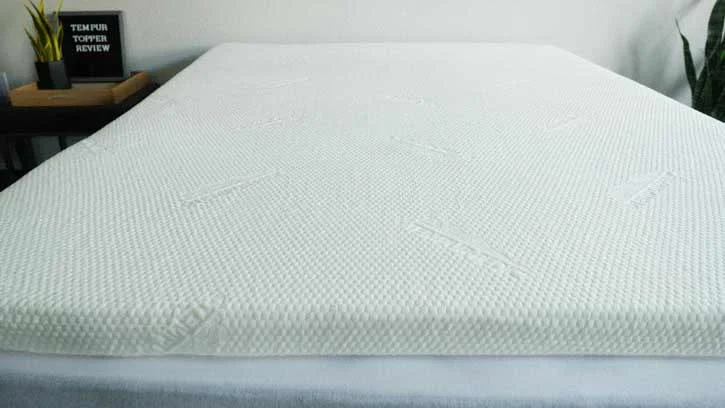
Soft, conforming TEMPUR material that provides luxurious plush feel and pressure relief.
Mattress Clarity Score
4.5 / 5
Sleeping on your side can put undue strain on your hip, especially if your mattress is too firm to allow for the right amount of sinkage. The TEMPUR-Adapt Topper offers an uber-squishy feel that will conform to your body, keeping pressure off your hips while still elevating them to remain in line with your shoulders. This should reduce the risk of exacerbating any hip pain or discomfort.
This topper also earned a swath of 5/5 scores, not just for support. We were also impressed by its motion isolation, cooling performance, and construction quality.
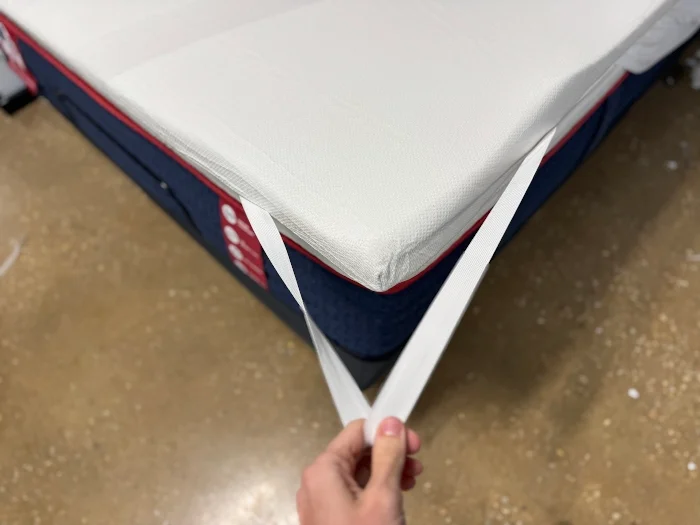
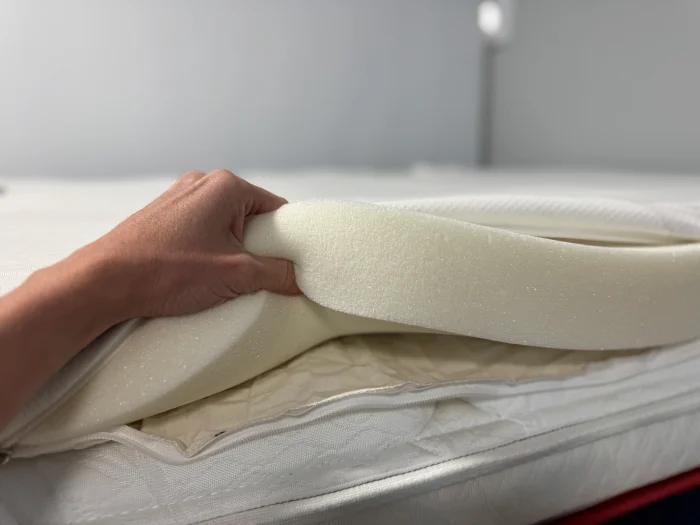
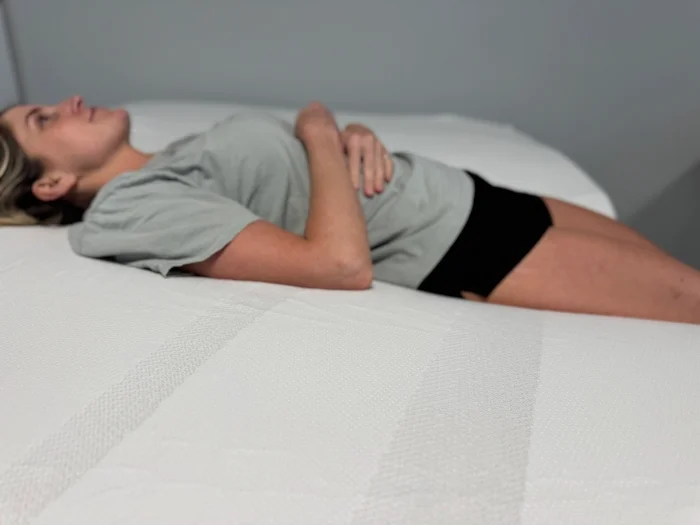
TEMPUR-Pedic is known for its super-soft and cushioning TEMPUR material, which is precisely what makes up this mattress topper. The result is a topper that “conforms and hugs your body in all the right places,” per our in-house tester. “Side sleepers should be able to sink right in, but it’s dense enough that they won’t risk losing support.”
This topper is also three inches thick, offering plenty of room to cradle the hips, even on a super-firm, uncomfortable mattress. “This topper feels dense and durable,” our tester explained. “It’s also extremely pliable without crumbling or breaking in any places.”
The doughy foam feel it offers is also great news for couples. Our tester noted that motion was “completely isolated” on the surface of this topper. “Even with another tester beside me in the bed, I couldn’t feel any of their movements,” she said.
With such contouring, we’d expect the TEMPUR topper to hold onto more heat, potentially disrupting hot sleepers’ rest. But our in-house tester was pleased by how well the topper’s breathable cover performed. “The cover feels cool-to-the-touch, and even when I’m lying on it, it doesn’t heat up much beneath me,” she explained. “The warmest it got was temperature-neutral, which should satisfy sleepers prone to overheating.”
Like many foam toppers, the TEMPUR-Adapt isn’t the most responsive. “You’re likely going to feel ‘stuck’ when you try to move around on this topper,” our tester said. “Since it completely envelops your body, combination sleepers will likely have trouble switching positions throughout the night.” These folks might want to try the Birch topper, which offers a more responsive feel.
The TEMPUR-Adapt topper retails for about $400 for a queen-size. TEMPUR-Pedic doesn’t accept returns on this product, but the brand does offer a generous 10-year warranty with your purchase.
Find out more about this topper in our full TEMPUR-Adapt mattress topper review.
Mattress Clarity Test Results: TEMPUR-Adapt Topper
Birch Plush Organic Mattress Topper – Best Latex Mattress Topper for Side Sleepers
Birch Plush Organic Mattress Topper
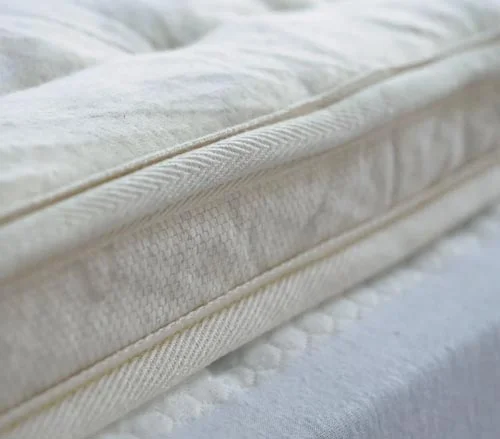
Made with organic wool and cotton for breathable plush comfort and eco‑friendly credentials.
Mattress Clarity Score
4.6 / 5
Though often overlooked in favor of memory foam, latex mattress toppers can give side sleepers the pressure relief they need. Latex has a uniquely buoyant feel that’ll offer plenty of support while still contouring to your body. It’s also bouncy, good news for side sleepers who move around a lot in their sleep.
The Birch Plush Organic Topper is one of the latex mattress toppers we love for side sleepers, thanks to its cushioning and medium-firm feel. It earned high praise for its quality of construction, cooling ability, and bounce—all of which earned 5/5 scores in our performance tests.
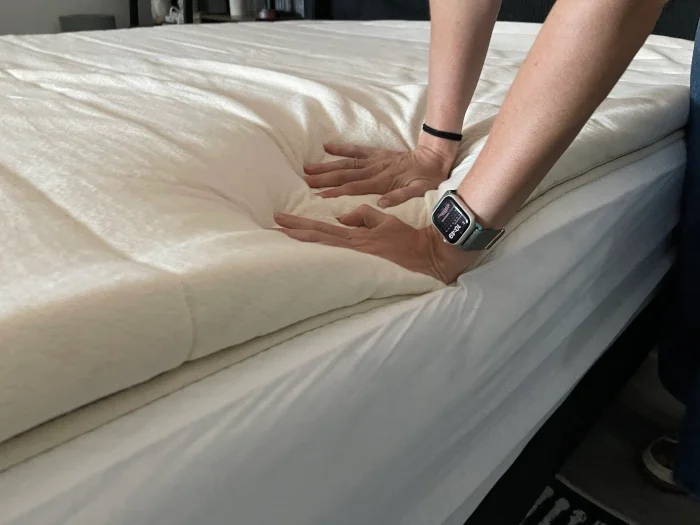
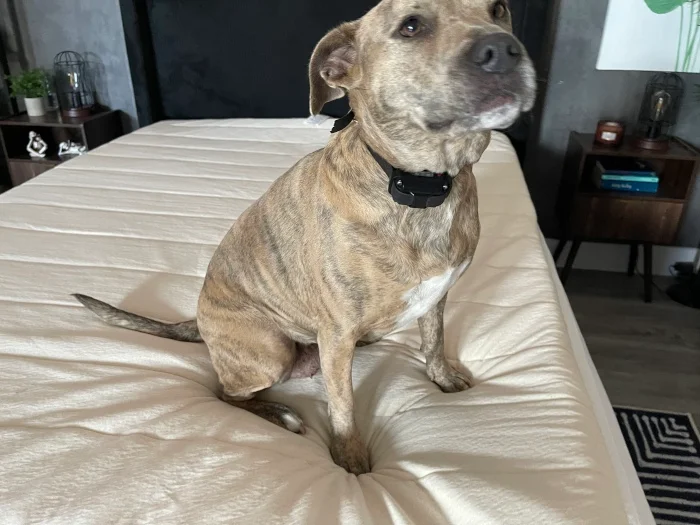
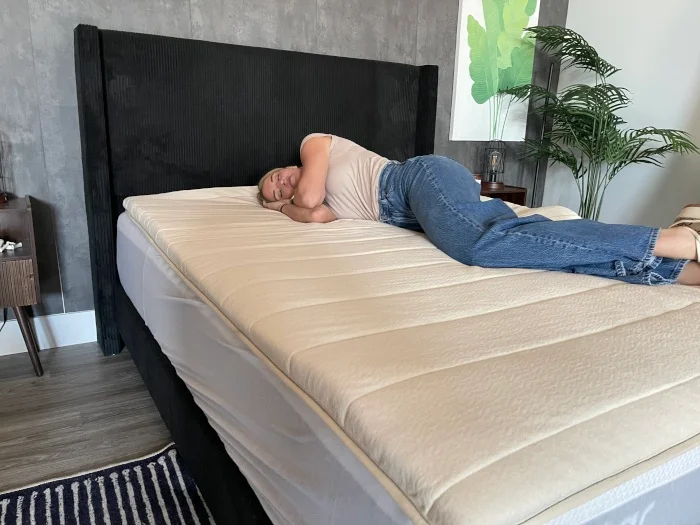
The Birch Plush Organic Topper features a mix of organic latex and organic cotton for natural and comfortable sleep. “This topper doesn’t feel flimsy,” noted fellow tester Kenny Timper. “It’s two inches thick, which is enough to add some extra cushioning to your bed. And it doesn’t feel like it would sag or rip with repeated use.”
The latex in this topper has a softer feel that can rival memory foam. Kenny experienced more sinkage than he would expect. “It’s got a medium-firm feel, but it’s softer than I thought it would be, especially around the joints,” he explained. “While you won’t get the same level of contouring as foam, you should feel plenty cradled by this topper.” This should suit side sleepers perfectly.
“This topper is a bit more breathable than other foam toppers,” Kenny also noted. “It’s got a temperature-neutral feel—not overly cooling, but it should be enough to keep most sleepers from overheating. I’d expect this from organic cotton, which is naturally moisture-wicking.” Kenny only noticed a negligible amount of heat buildup beneath him while resting on the topper.
Bounce is where this topper really shone, though. The latex within “snapped back into shape almost instantly” when Kenny pressed down on the topper’s surface. It also made moving around fairly easy, a boon for combination sleepers and sexually active folks who hate feeling “stuck” in their mattress.
This bouncy feel didn’t do any favors in our motion isolation tests, though. Kenny wasn’t too disrupted by his partner’s movements, but he could definitely feel them. “It’s a bit worse than your traditional foam toppers, but I don’t think it would’ve disrupted my sleep if I’d already drifted off,” he said. If motion absorption is a priority for you and your partner, you might prefer denser toppers like the Nolah Topper or TEMPUR-Adapt Topper.
But if latex is your match made in heaven, you can purchase a queen-size Birch topper for about $440 on sale. It’s definitely pricey, but worth it if “responsible sourcing and sustainability are a priority for you,” as Kenny put it. Thankfully, you get 120 nights to try it out and decide if it’s for you. After that, it’s covered by a 10-year warranty.
Read more in our Birch Plush Organic Mattress Topper review.
Mattress Clarity Test Results: Birch Plush Organic Mattress Topper
Other Mattress Toppers Considered
Didn’t see what you were looking for in the list above? Here are some other mattress toppers that could work for side sleepers.
- Layla Memory Foam Topper – The Layla mattress topper should soften an existing mattress significantly, so it’s great if you need a bit more cushioning and comfort. Instead of a slow-moving foam feel, the Layla topper has a responsive foam feel. This makes the topper easy to move around on and supportive. It’s also infused with copper to help with cooling. We did notice that this topper had quite a strong off-gassing smell and took a while to expand, though.
- Dreamfoam Topper – If you need a queen-size topper that won’t break the bank, check out the Dreamfoam gel-infused topper. This no-frills topper will soften an existing mattress by one point, so it’s a great choice if you need a bit more pressure relief. It’s also infused with cooling gel to help with temperature regulation. However, because this topper is only two inches thick, it may not provide enough pressure relief to heavyweight sleepers or those looking for a lot of extra cushioning.
- TitanFlex Topper – The TitanFlex is available in three firmness levels: soft, medium, and firm. Any option should have a balanced foam feel and offer more support to heavyweight sleepers than slow-moving foam. The topper’s open-cell construction also allows for more airflow than traditional memory foam. However, it doesn’t have corner straps to keep it from slipping off, which could prove temperamental for sleepers who move around a lot in their sleep.
What Makes a Great Mattress Topper for Side Sleepers
“Side sleepers need a balance of pressure relief and support to maintain their comfort throughout the night,” says Dr. Dasgupta, echoing a point I’ve tried to drive home in these recommendations. Let’s dive a bit deeper into the pressure relief, support, and durability that make a topper great for these sleepers.
Pressure Relief
Pressure relief is what allows the shoulders and hips to sink deeply into the mattress without meeting too much resistance. A bed that’s too firm or lacking contouring materials likely won’t offer the pressure relief side sleepers need. A mattress topper for side sleepers should address this concern.
“Memory foam and latex are great materials for pressure relief, as they will conform to the body and offer plenty of contouring,” says Dr. Dasgupta. “Side sleepers should look for mattress toppers that include these in their construction.” They might also want to opt for toppers described as softer. (If you feel your mattress offers a decent amount of pressure relief, you might be able to get away with something a bit firmer. Or you might want to focus on a topper that’s supportive—more on that below.)
We don’t have a specific test for evaluating pressure relief in a mattress topper. Our testers rest on their side and back on top of a topper and gauge whether they feel relief around common pressure points, like the shoulders, hips, lower back, and knees. They always note which sleeper types will gain the most pressure relief from a topper. All of our choices on the list above should be great picks for side sleepers’ pressure relief.
Support
A supportive mattress is one that keeps your spine in alignment. This looks different depending on your preferred sleeping position. Generally, your mattress should coax your body into its natural S-curve. “For side sleepers, this means the shoulders and hips are in one line,” explains Dr. Dasgupta. “If your hips or shoulders are too lifted or dip too far into the mattress, it’ll likely feel uncomfortable or painful.”
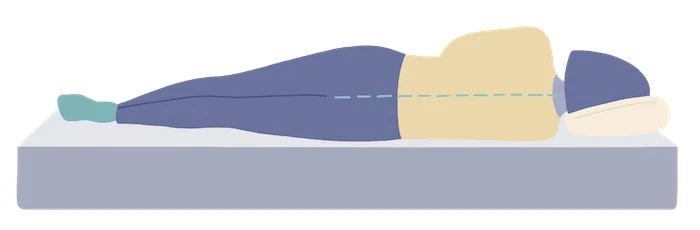
Our testers evaluate each mattress topper for support and stability—not just for side sleepers, but for all sleeping positions. They also take into account their body type and how it might affect their support. Some toppers will feel more supportive to certain sleepers, so our support score (which is rated out of 5) is a measure of how accommodating this support will be for multiple sleepers.
Folks often equate firmness with support, but this isn’t necessarily true. “While a medium-firm mattress is generally regarded as the best for spinal alignment, it doesn’t automatically mean you’ll be supported,” says Dr. Dasgupta. “It depends on the materials involved, the construction, and who is lying on top of the mattress.” Lightweight side sleepers may be able to sleep comfortably on a fluffy down comforter, while some heavyweight sleepers may feel better supported by a firmer topper with microcoils.
Durability
When you purchase any new sleep accessory, you’ll want your money to be an investment into a high-quality, durable product. Mattress toppers are no different. Since most folks are likely buying them to avoid purchasing a whole new mattress, durability becomes doubly important.
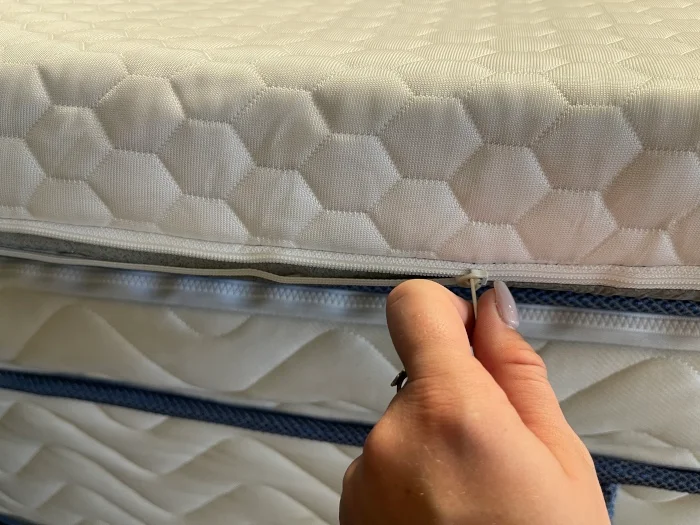
Durability mostly comes down to the topper’s construction. In our materials evaluation, we inspect every corner of the mattress topper. This includes the cover, stitching, any zippers, and the density of the layers within. We also find that thicker toppers (those over 2 inches thick) should last longer.
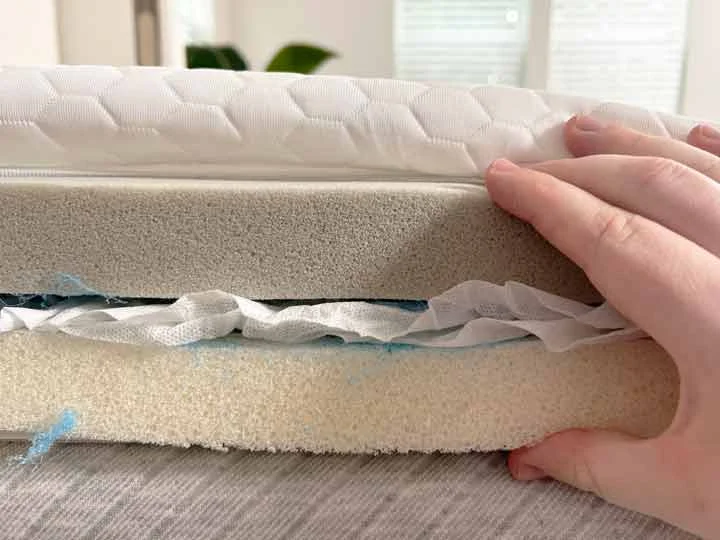
“High-density foams and latex are a sign of durability,” says Dr. Raj Dasgupta. After this, we assign the mattress topper a materials score out of 5, which you can also read as a durability score.“But aside from construction, you may want to look at the company policies,” adds Dr. Dasgupta.
We see generous sleep trials and warranties as a sign of confidence in a product. The longer a sleep trial, the longer you have to decide whether you like it, so manufacturers believe it’ll last at least that long. It’s the same for warranties. But warranties also ensure that your product is covered in the event of damage or deterioration, long past the trial period.
Warranties for toppers are less common and less lengthy than those for mattresses, but most high-end options feature them, like those on this list. We’ve seen mattress toppers with 5-year or even 10-year warranties, which we take as a sign for a lasting product.
What Else Is Important When Buying Mattress Toppers?
Like buying a new mattress, a new mattress topper involves quite a lot of considerations when it comes to personal preference and individual needs. Side sleepers struggling to find the right topper for their needs should tick off all the boxes before deciding on a final purchase. I’ll go over some factors that might influence that final decision to guide you on the right path.
Material
The type of mattress topper you buy can determine its firmness, feel, and a number of other performance factors. This makes certain mattress topper types better suited to certain sleepers than others—not just side sleepers. Here are the most common materials we see in toppers, and who will most enjoy what they have to offer:
Foam
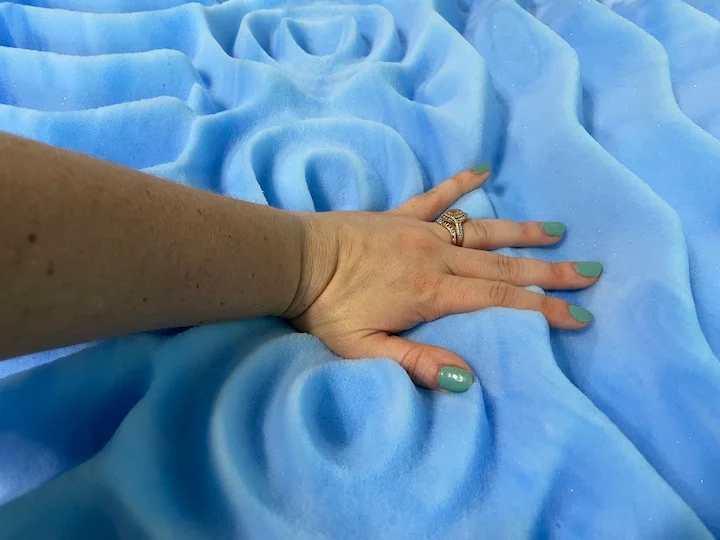
Foam or memory foam mattress toppers are some of the most prolific. Foam has a dense, slow-moving feel that makes it great for pressure relief, but usually offers a modicum of support, too. This makes them good picks for side sleepers. Their doughy feel can also absorb motion, a plus for couples. They also are some of the most affordable options out there.
But foam has its downsides too. For one, foam tends to trap heat. That’s why many foam toppers include cooling gel or breathable covers, but this doesn’t always fix the issue. Hot sleepers may want to opt for a different type.
Latex
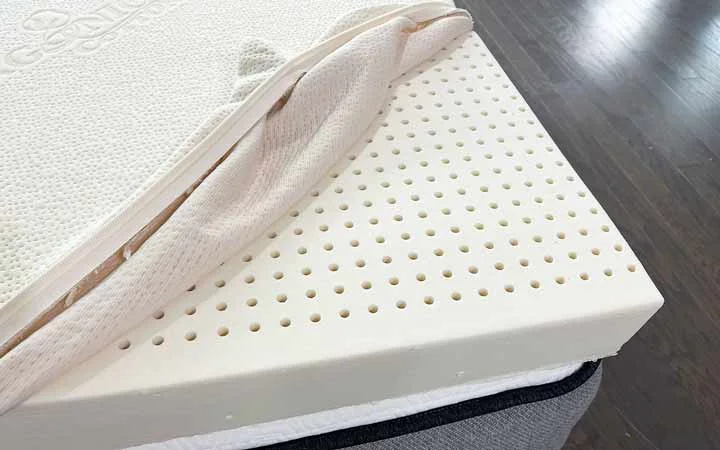
Latex is a material derived from the sap of a rubber tree. It has a uniquely buoyant feel, but it echoes some of the qualities of foam, making latex toppers a good option for side sleepers. Studies even tout latex as more breathable and pressure-relieving than standard memory foam. Latex is also known for its bounce, which should suit combination sleepers and sexually active folks looking for ease of movement.
However, latex’s natural origins and costly production can sometimes drive up the price—especially if organic latex is involved. But if you’re looking to purchase a sustainable and eco-friendly product, it might be worth the extra markup.
Down and Down Alternative
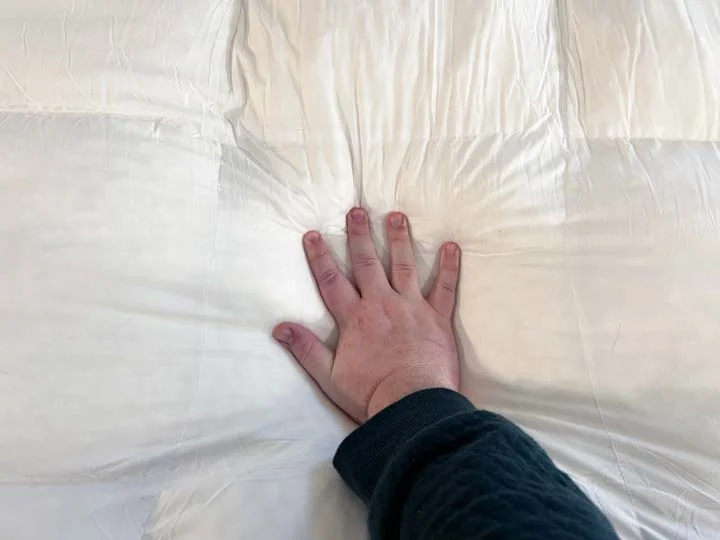
Down refers to the super-soft underlayer of goose, ducks, or other fowl. It has a fluffy, lightweight feel, and usually is used in mattress toppers to soften up sleep surfaces. While you’ll sink deeply into a down topper, you won’t get the same cradling from foam or latex. This may not make them the best picks for side sleepers.
Moreover, down is an animal product, which could pose problems for folks with allergies. Down alternatives are synthetic or natural fibers (like polyester or fiber) that are finely shredded to mimic the feel of down. They’re also less expensive than traditional down, which involves a delicate harvesting process, one reason for its high price.
Coils
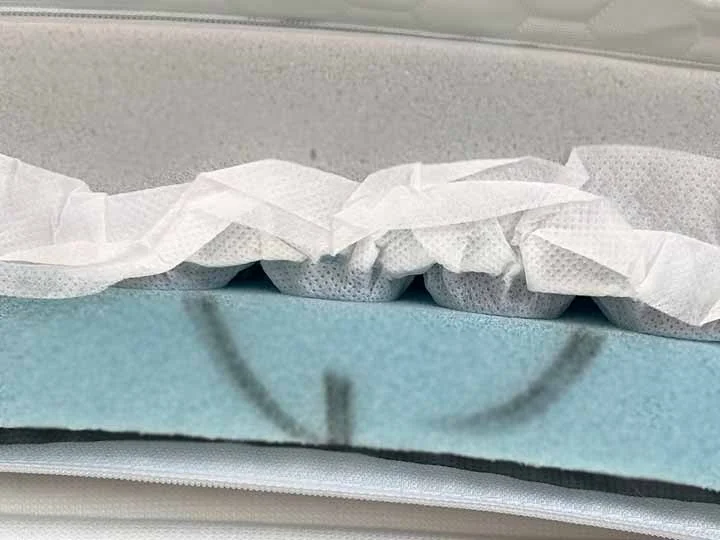
A new innovation among mattress toppers is microcoils. These are miniature coils that resemble a tiny version of the innerspring units in mattresses. These coils are combined with comfort layers of foam, latex, or other cushioning materials, creating a sort of mini-mattress.
Generally, microcoil mattress toppers are geared to offer more support to a mattress that’s lost its luster. They may not be effective for all side sleepers, especially those on the lighter side or dealing with hip or shoulder pain. If you’re a side sleeper that thinks they’re sinking too far into the bed, a microcoil topper could provide that extra boost while still retaining enough pressure relief.
Firmness and Feel
Side sleepers typically benefit from soft mattresses that offer body contouring and pressure relief. If your current mattress feels too firm, you may want to get a soft topper that can cushion your shoulders and hips. But if your mattress is too soft and you need some support, you may want to opt for something a touch firmer.
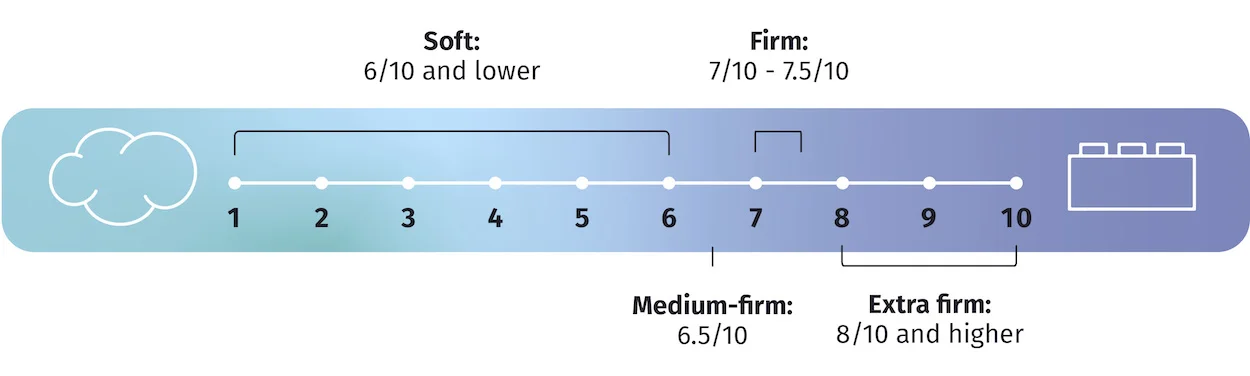
Generally, we recommend medium-soft to medium-firm mattresses for side sleepers. Mattress Clarity’s firmness scale ranges from 1-10, and 6.5/10 represents the industry standard of medium-firm. Many toppers, like the Saatva and TEMPUR-Adapt, can soften mattresses by as much as two points. These options are particularly helpful for folks who sleep on beds that feel closer to the higher end of our scale. Others, like the Helix Premium Topper, provide a more supportive feel that might slightly increase the firmness of your mattress. It’s all about what you need, and the mattress you’re currently working with.
The feel of your mattress topper, however, ultimately boils down to personal preference. Some folks love to sink into a memory foam mattress topper, while others prefer the responsive feel of latex foam. Some people love the soft and malleable feel of down feather beds, but they don’t offer much pressure relief for side sleepers.
Performance Features
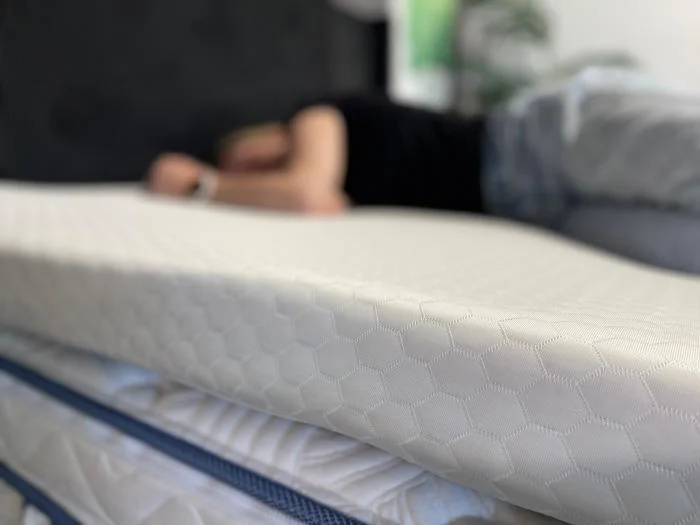
Do you overheat at night? Do you share the bed with a partner? Are you dealing with any aches, pains, or conditions that make it difficult to get quality rest? These are also things to consider when buying a new mattress topper, as your individual comfort is paramount.
For Hot Sleepers
If you find your mattress is too hot to sleep on, you can add a cooling topper to hopefully counteract the stuffiness. We rate the cooling capability of a mattress topper out of 5, so hot sleepers can get a feel for how comfortable they’ll be on a topper.
We generally judge coolness based on how the topper feels while we’re lying on it. Some are cool to the touch, while others offer a more breathable, temperature-neutral feel. In some cases, we also use a thermal gun to measure the surface temperature of the topper before and after taking a quick nap on top of it. The degree of increase lets us know how much heat the topper is holding onto. The cooling score is a summation of both these tests.
For Couples
Sometimes sleeping beside your partner can cause disturbances to your sleep, especially if they move around a lot during the night. Some mattress toppers are actually great at motion isolation, which refers to absorbing these movements before they can carry across the surface to the other side of the bed.
We have two testers on a mattress topper simulate what it would feel like to share the bed. One tester lies still while the other moves around, seeing whether or not they can feel their movements. The less movement they feel, the better the motion isolation, and the higher the overall score. We find that slow-moving foams are the best for absorbing motion, so couples looking for uninterrupted sleep might prefer memory foam toppers.
For Pain Relief
Whether you have arthritis or seem to keep waking up feeling like you “slept funny,” you might want to invest in a topper geared toward pain relief. These toppers will likely be made of softer, more contouring materials, as pressure relief and pain relief go hand in hand. They should cradle sensitive joints, protecting them as you sleep soundly.
If you’re dealing with back pain, though, a lack of support might be the cause. You’ll want a topper that doesn’t allow you to sink too far in the hips or shoulders, throwing off your spinal alignment. A medium-firm topper with foam, latex, or even one with microcoils could be the answer.
Price
Toppers cost significantly less than new mattresses, but if you want a high-quality product that will last years, you may need to invest a couple hundred dollars. When choosing a new topper, be sure to consider not just the quality of construction, but also the company policies. It might be worth it to spend more on a topper with a longer sleep trial to get a better feel for it; moreover, a longer warranty won’t just insure your product for a longer time, it might point to a more robust longevity.
Some toppers are sold on Amazon, which allows some shoppers to take advantage of free shipping and reward points. You can also find the best price on these mattress toppers by using our Mattress Clarity coupons, or check out our favorite cheap mattress toppers.
FAQs
What type of mattress topper is best for side sleepers?
Pressure-relieving foam or latex toppers are often the best for side sleepers, as these will give you the most contouring. Some down toppers may soften up a mattress, but they won’t offer the same cushioning feel. Microcoil toppers could work if your bed is too soft, but note that some lightweight side sleepers could find them too firm.
How thick should a mattress topper be for a side sleeper?
We recommend toppers that are at least two inches thick. Side sleepers often benefit from soft mattress toppers that cushion shoulders and hips, so thicker is better. A thicker mattress topper also has a better chance of transforming the feel of your original mattress.
What is the best mattress topper for side sleepers with back pain?
The best mattress topper for side sleepers with back pain will have a soft but supportive feel to promote alignment. Our top pick, the Saatva Graphite Memory Foam Topper, should do just that. If your mattress is too soft to support you, you might like the Helix GlacioTex topper, which has microcoils for pinpoint support.
Are mattress toppers worth it for side sleepers?
If your current mattress is causing you pain or discomfort when sleeping on your side, and you don’t have the funds or bandwidth for a new mattress, then a mattress topper is a great investment. It allows you to revitalize a sagging mattress and hopefully sleep better at a fraction of the cost.
References
- Zhao, L., Tang, J., Zhou, M., & Shen, K. (2022). A review of the coefficient of thermal expansion and thermal conductivity of graphite. New Carbon Materials, 37(3), 544–555. https://doi.org/10.1016/s1872-5805(22)60603-6
- Radwan, A., Fess, P., James, D., Murphy, J., Myers, J., Rooney, M., Taylor, J., & Torii, A. (2015). Effect of different mattress designs on promoting sleep quality, pain reduction, and spinal alignment in adults with or without back pain; systematic review of controlled trials. Sleep Health, 1(4), 257–267. https://doi.org/10.1016/j.sleh.2015.08.001
- Low, F.-Z., Chua, M. C.-H., Lim, P.-Y., & Yeow, C.-H. (2017). Effects of Mattress Material on Body Pressure Profiles in Different Sleeping Postures. Journal of Chiropractic Medicine, 16(1), 1–9. https://doi.org/10.1016/j.jcm.2016.09.002