


The memory foam mattress has cemented its status as one of the most popular bedding options today, largely thanks to bed-in-a-box brands that combine an accessible price point with major convenience. But even if you’re a fan of that signature sink, you may not know much about the material itself. What exactly is memory foam? How does it work? Who should sleep on it — and who should steer clear?
In this guide to memory foam, we’re breaking down the benefits, drawbacks, and nitty-gritty details to bring you fully up to speed.
What Is Memory Foam Made Of?
Let’s start with the basics: what is this stuff? Memory foam is a synthetic material formally known as viscoelastic polyurethane foam. Polyurethane is a plastic polymer used in all kinds of things — furniture, paints, car parts, and yes, mattresses.
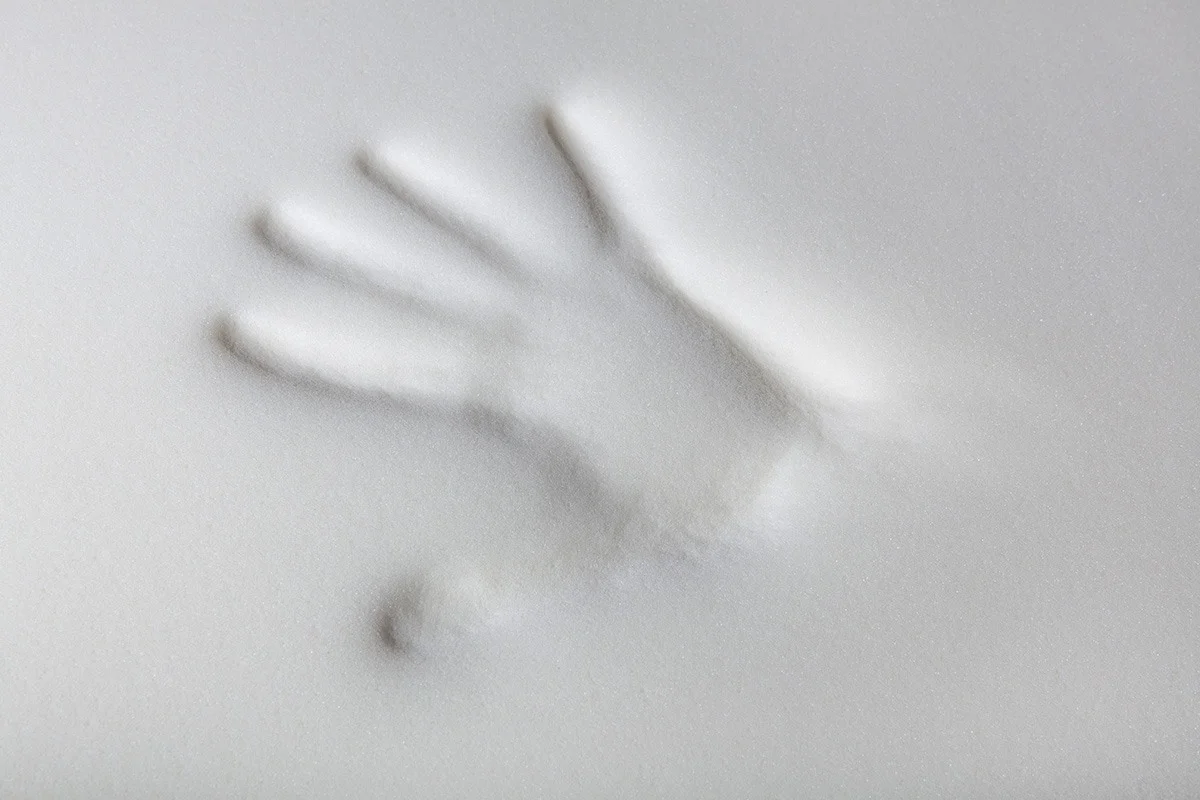
In mattresses, polyurethane is combined with other compounds and additives to produce different types of memory foam. That blend is what gives memory foam its signature mattress characteristic: responding to heat and pressure to conform closely to the body’s curves. In doing so, memory foam evenly distributes body weight, which takes pressure off sensitive parts of the body.
How NASA Originally Developed Memory Foam
Memory foam was invented in the 1960s as a shock-absorbing and pressure-relieving material for NASA spaceship seats. According to the NASA website, aeronautical engineer Charles Yost created “an open-cell, polymeric ‘memory’ foam material with unusual viscoelastic properties; that is, it possessed both high-energy absorption and soft characteristics.” NASA found that this new material not only offered “better impact protection” — it was also pretty comfortable.
Two decades later, the material was made available to the public, and in the 1990s, it found its way into the consumer mattress market.
Modern Memory Foam Manufacturing
While individual brands tend to keep the specifics of their memory foam formulas hush-hush, the overall production process is fairly straightforward. First, polyurethane is combined with a mix of chemical additives, which determine the finished foam’s density, firmness, and feel. This mixture is poured into molds or a conveyor system to rise and cure. Then it’s cut into slabs for use in mattress construction.
Along the way, the formulation can be adjusted and fine-tuned. That’s why memory foam can have such a different mattress feel from one brand to the next.
How Does Memory Foam Work?
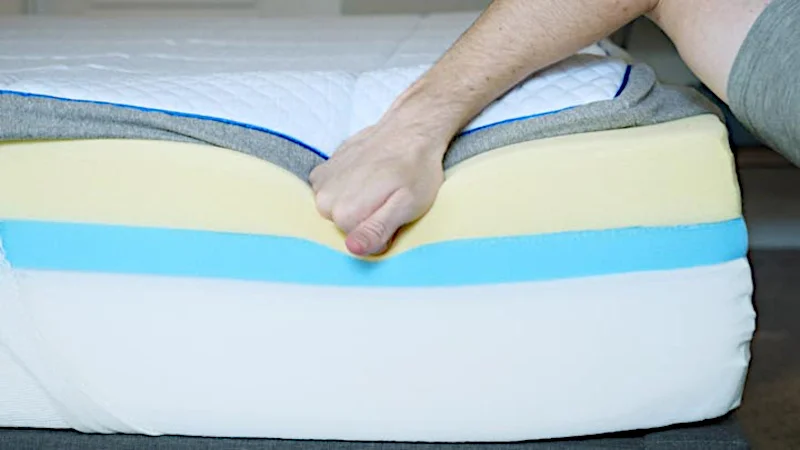
When you lie down on a memory foam mattress or mattress topper, the material molds to your body’s contours and distributes your body weight. Get up, and the material slowly returns to its original shape. That’s what makes memory foam unique among mattress materials, and why it’s known for its pressure relief — and notorious for heat retention.
Pressure Relief and Contouring
When we talk about contouring, we’re referring to the way memory foam slowly molds to the body when you lie down. Unlike a traditional innerspring mattress, which pushes back against the body with equal force, memory foam cradles. That makes it really forgiving on sensitive pressure points, like the hips, shoulders, and knees. By absorbing and distributing pressure, memory foam mattresses can mean fewer aches and pains in the morning.
“My favorite thing about my memory foam mattress is definitely how soft and comforting it is. I get excited to go to sleep at night knowing I’ll get to snuggle into the soft layers. I especially love memory foam because I struggle with hip and shoulder pain. It’s great at cushioning these areas and preventing them from bearing any weight.”
– Riley Otis, in-house mattress expert
Heat and Responsiveness
Memory foam’s cradling effect is directly tied to temperature. The material softens as it absorbs body heat, which allows it to curve around the body so well. That’s great for pressure relief, but there’s a major drawback: heat retention.
Overheating is one of the most common complaints about memory foam. Many brands use gel infusions and covers made with breathable or phase-change materials to help combat this tendency.
Motion Isolation
Memory foam’s slow response time means it isolates motion very well. Instead of transferring movement across the surface of the bed, the material absorbs it. That feature is especially important for couples, or anyone who shares a bed with a partner, pet, or kid. When a bed isolates motion well, it means you’re less likely to be disturbed by what’s happening on the other side.
Firmness Guide
Memory foam is available in different firmness levels. According to Dr. Raj Dasgupta, a quadruple board-certified doctor, mattress firmness should be based on your sleeping position. “It’s crucial to strike a balance that supports your sleeping position while providing comfort,” he explains.
| Sleeper Type | Recommended Firmness |
| Side sleeper | Soft to medium |
| Back sleeper | Medium-firm |
| Stomach sleeper | Firm |
Top Memory Foam Mattresses
We’ve tested around 100 different memory foam mattresses, and here are some of our favorites.
- Nectar Classic Memory Foam Mattress – An excellent value that combines contouring and support.
- DreamCloud Premier Memory Foam – Superior motion isolation.
- WinkBeds GravityLux Mattress – Top-tier cooling capabilities.
“When I moved back to Chicago in 2021, I received a very old Nectar Classic model as a hand-me-down from my cousin, and it served me well for years. I’ve slept on foam beds that are too thin, so I was surprised by how supportive this one was. I think memory foam has a reputation as this very plush, enveloping material, but the best memory foam beds often feel quite firm and sturdy—they just have that initial layer of lovely contouring foam for pressure relief up top.”
– Melanie Kassel, Certified Sleep Science Coach
Benefits of Memory Foam
Like any mattress material, memory foam has its strengths and its drawbacks. Understanding both can help you figure out whether a memory foam bed is the best mattress for you.
Here’s what people tend to appreciate about memory foam:
- It offers excellent pressure relief. Because memory foam absorbs and redistributes pressure instead of pushing back against the body, it’s one of the most effective materials for easing tension in pressure points.
- It has superior motion isolation. Memory foam absorbs movement instead of transferring it across the surface of the bed, so it’s a strong choice for couples or anyone sharing a sleep space with a restless partner.
- It comes in a wide range of price points. Memory foam mattresses are available at every budget level, from affordable bed-in-a-box options to premium models with advanced cooling technology.
- It’s great for side sleepers and joint pain. The material’s cradling effect makes it particularly well-suited for side sleepers, who need extra cushioning at the hip and shoulder to maintain spinal alignment.
Disadvantages of Memory Foam
For all its benefits, there are definitely limitations to the material. Here’s what to keep in mind as you consider memory foam mattresses.
- It naturally traps heat. Traditional memory foam retains body heat, which can make it uncomfortable for those who already run warm at night. Gel-infused and open-cell memory foam can help, but heat retention is still a common complaint.
- It has a slow response time. The same slow sink-and-recover that makes memory foam so conforming can also make it harder to move around or change positions during the night — something active sleepers may find disruptive to a good night’s sleep.
- Off-gassing is an issue. Many memory foam mattresses emit a chemical smell when first unboxed, which is caused by volatile organic compounds (VOCs) released from the foam. It typically dissipates within a few days, but it can be a problem if you’re sensitive to odors.
- It may lack support for some sleepers. Stomach sleepers and those with a higher body weight may find that memory foam doesn’t offer enough pushback to keep the spine properly aligned.
Types of Memory Foam
There are a few types of memory foam you might find in a memory foam mattress:
- Standard memory foam. This type of memory foam features no extra infusions or special features and has that classic slow-moving feel.
- Fast-response memory foam. Some mattresses contain fast-response memory foam that isn’t as slow-moving as standard memory foam. This memory foam makes it easier for sleepers to move around and change positions.
- Open-celled memory foam. Open-celled memory foam is designed to be more breathable than standard memory foam. Its structure allows for more airflow so that it won’t trap as much heat.
- Gel-infused memory foam. Some memory foam features infusions designed to minimize overheating. Gel, copper, and graphite are just a few of the infusions that can help lower the temperature of a memory foam mattress.
- Plant-based memory foam. For you green shoppers out there, you may want to try a mattress with plant-based memory foam. This foam is usually made from soy and is a bit more eco-friendly than standard memory foam.

Memory Foam vs Other Mattress Types
If you’re on the fence about memory foam, it’s helpful to compare it to other materials. That can steer you toward an appropriate mattress type for your sleep needs and preferences.
Memory Foam vs Hybrid
Hybrid mattresses feature coils in their support layer and some type of foam in their comfort layer. And yes, that can and often does include memory foam. It’s why hybrids are generally considered a best-of-both-worlds option.
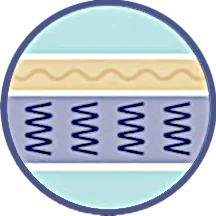
Memory foam hybrids are a great way to get the memory foam experience with few of the drawbacks. Namely, you should sleep cooler and move around more easily on a hybrid mattress because the coils boost airflow and offer a more responsive feel. Plus, coils make hybrid mattresses more supportive than standard memory foam mattresses and can boost durability as well.
The main drawback to hybrid mattresses is often the price tag. Hybrids can be more expensive than standard memory foam mattresses, though there are notable outliers. Check out our memory foam vs hybrid article to learn more.
Memory Foam vs Latex
Latex foam is made from the sap found in rubber trees. There are a few types of natural latex, including Dunlop and Talalay. Neither is synthetic, so that’s one major difference between memory foam and latex foam.

Latex also has a much different feel. Instead of sinking into latex, the sensation is much more buoyant — it has a definite “on top” feeling. It’s also much bouncier than memory foam. When you move, the material will immediately bounce back into its original shape. That makes it easier to roll around and change positions. While you might get stuck in a memory foam mattress, that’s far less likely on a latex mattress.
Another difference: while memory foam has a reputation for sleeping hot, latex mattresses tend to sleep cool. Latex doesn’t have the heat-trapping chemicals found in memory foam, so it’s the better cooling option.
Higher density memory foam can be very durable, but it’s rarely as durable as natural latex. This material stands up to many more years of use than memory foam, making it a better long-term investment.
And, latex is definitely an investment. More often than not, latex mattresses cost more than memory foam. Read our memory foam vs latex article for more information.
Memory Foam vs Innerspring
Innerspring mattresses are a more traditional type of mattress that has been around for hundreds of years. The main support system comes from metal coils, unlike the foam found in memory foam mattresses.

Innerspring options are bouncier than memory foam options, making it easier to change positions. In addition, the coils leave more room for airflow, keeping innerspring mattresses from trapping too much heat.
They’re also usually more supportive than memory foam mattresses. Coils are able to handle more weight than foam, making them a better option for heavier people and those who just need more support.
Traditional innerspring mattresses also tend to be inexpensive, an advantage if you’re on a tight budget.
Memory Foam Lifespan Comparison
How long memory foam mattresses last depends on their construction and material quality, but that’s true of mattresses in general. Here are average lifespans for different mattress types.
| Mattress Type | Average Lifespan |
| Memory foam | 7-10 years |
| Hybrid | 7-10 years |
| Innerspring | 5-8 years |
| Latex | 10-15 years |
Who Should Sleep on Memory Foam?
Memory foam isn’t for everyone, but it can be a great material for certain kinds of sleepers. Here’s who tends to benefit the most.
Side Sleepers
Memory foam mattresses are usually a great fit for side sleepers. This material offers excellent relief around the shoulders and hips, areas where side sleepers usually experience pressure build-up.
Couples
Memory foam mattresses are extremely quiet and handle motion transfer well. This makes them ideal for couples. If your partner moves around at night, you won’t feel it or hear it on a memory foam mattress.
People With Joint Pain
Those with chronic pain can often find real relief on memory foam. Since the material absorbs and redistributes pressure, it minimizes stress on sensitive joints throughout the night. That can lead to less discomfort and more restorative sleep.
Lightweight Sleepers
Sleepers under 130 pounds often find mattresses feel firmer than advertised. They lack the weight necessary to compress top layers, which can mean they don’t get the contouring and pressure relief they need. But because memory foam responds to heat and pressure, it’s easier for lightweight sleepers to get that cradled, supported feel.
Fans of a Cradled Feel
Memory foam mattresses are also a good fit for sleepers who like a softer feel with more sinkage. If you like lying down and slowly sinking into your mattress, a memory foam mattress should be right for you. Lying down on a memory foam mattress, it feels more like you’re sleeping in it instead of on top of it.

Who Should Avoid Memory Foam?
For some sleepers, memory foam just isn’t going to work. Here’s who probably wants to consider a different material.
Hot Sleepers
Heat retention is probably the biggest issue with memory foam. Absorbing heat is part of what makes the material work the way it does. But if you already sleep hot or you live in a warm climate, it can result in sweaty, uncomfortable nights. If you’re looking for a mattress that supports cooler sleep, latex, hybrid, and innerspring beds are probably a better choice.
Stomach Sleepers
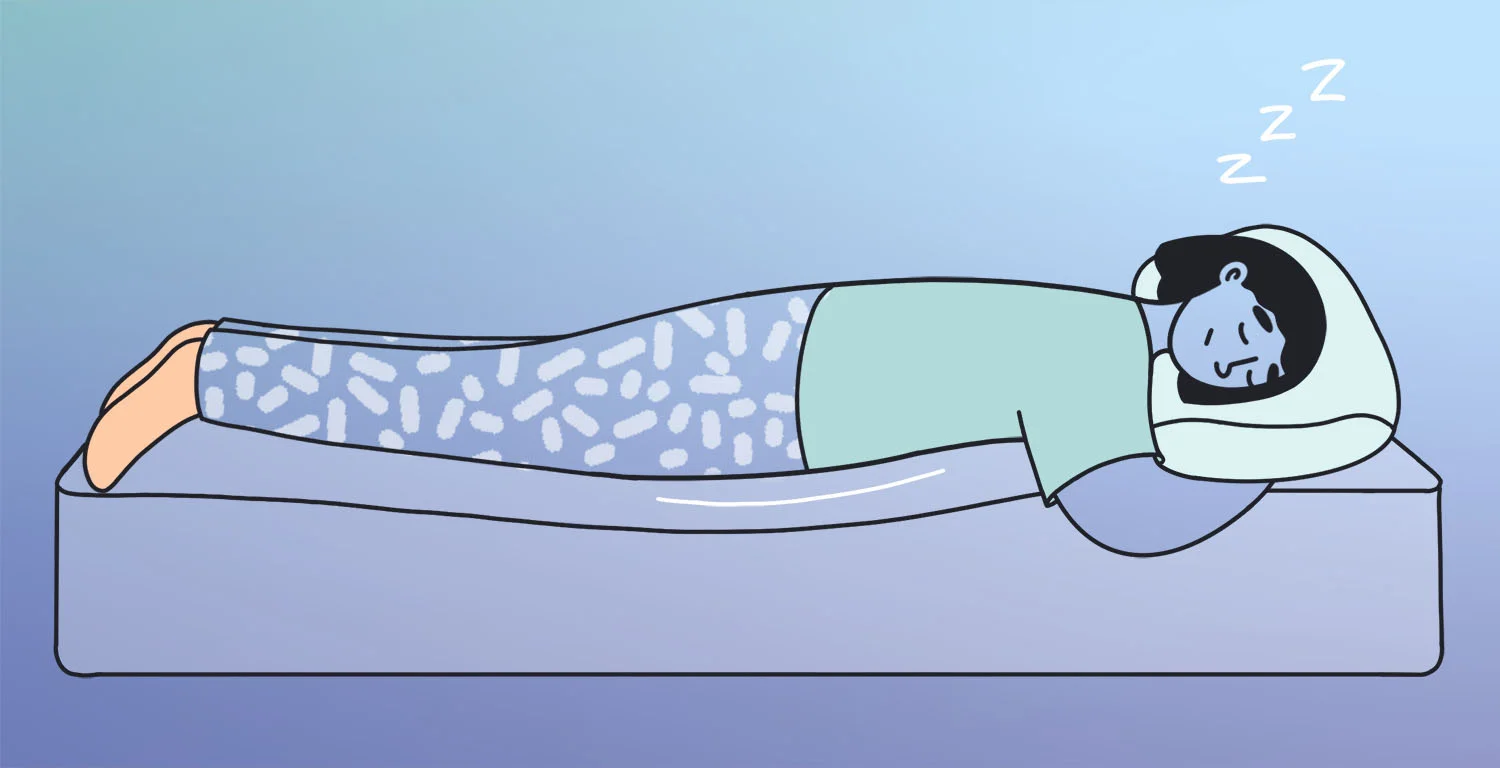
Stomach sleepers need enough support beneath the hips to keep them from sinking, which can pull the spine out of alignment. Memory foam’s contouring nature isn’t ideal here, often allowing the hips to sink enough for lower back strain. Stomach sleepers usually do better with a firmer mattress that has more pushback.
Combination Sleepers
If you switch positions at night — falling asleep on your side only to wake up on your back — a mattress with a quick response time is important. That’s not a feature of memory foam, which can make repositioning harder and more disruptive in the middle of the night. A bouncy surface tends to be a better option for these sleepers.
Is Memory Foam Good for Back Pain?
A memory foam mattress can be good for back pain, as long as it isn’t too soft. Dr. Dasgupta notes that in addition to proper spinal alignment, an appropriate firmness, and zoned support, pressure relief and motion isolation — hallmarks of memory foam — go a long way.
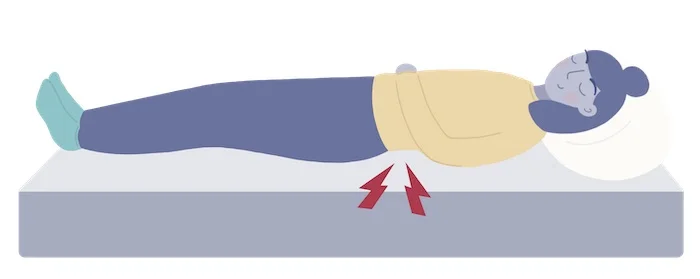
Because it molds to your body, memory foam fills in the lumbar area when you rest on your back, offering good support there.
How Long Does Memory Foam Last?
So, how long will your mattress last? Memory foam mattresses typically last between five and 10 years, but the longevity depends on several factors. Mattresses that are less than 10″ thick usually only last about five years, while thicker mattresses have a longer lifespan. The sleeper’s body weight can also impact how long the mattress lasts. If a heavy person rests on a soft mattress for several years, the bed could start to sag.
Memory foam density also plays a significant role in how long a mattress will last. If a 12″ mattress contains lower-density foam, it may only last seven years.
Frequently Asked Questions
Does memory foam sleep hot?
Memory foam absorbs heat, so it tends to sleep hotter than other materials. To combat this tendency, many brands use gel infusions or cooling covers. That can help minimize the issue, but it doesn’t prevent it altogether. If you’re a chronically hot sleeper, latex or innerspring beds can be a better choice.
Is memory foam toxic?
Some memory foam contains toxic chemicals that release when you unbox it. While most of these chemicals dissipate after a few days, they may still cause skin irritation and other issues. To find the safest mattress possible, make sure it passes third-party safety certifications.
Why does memory foam contour?
Memory foam has viscoelastic properties that make it contour. The material slowly responds to heat and pressure to mold closely around the body. When you move, it slowly returns to its original form. That’s what makes memory foam different from traditional polyurethane foam, which compresses and rebounds much faster.
What density memory foam is best?
Memory foam density affects how it feels and its durability. Low-density foam is cheaper and softer, but it doesn’t last long. Medium-density foam is more commonly used because it balances comfort and durability. The most durable and supportive foam is high density, but it also increases the price tag.
Is memory foam good for side sleepers?
Memory foam can be great for side sleepers, who benefit from contouring around the hips and shoulders. The material cradles these sensitive areas to deliver the pressure relief, with enough support for proper spinal alignment.