


Sleep should give your body a chance to recover, so waking up with lower back pain often feels confusing and frustrating. Although your body does much of its healing overnight, spending hours in the same position can place stress on your spine, muscles, and joints, leading to stiffness and discomfort by morning.
In many cases, the culprit behind your early morning lower back pain is your sleep setup. A worn-out mattress, a mismatched pillow, or poor sleeping posture can throw your spine out of alignment and increase pressure on your lower back while you sleep.
That said, morning back pain isn’t always caused by your bed, as underlying health conditions and everyday activities can also play a role.
The good news is that many causes of morning back pain are treatable. Read on to learn more about the common reasons your lower back hurts when you wake up, how to tell whether your mattress is to blame, and practical ways to fix it.
Why Does My Back Hurt More in the Morning?
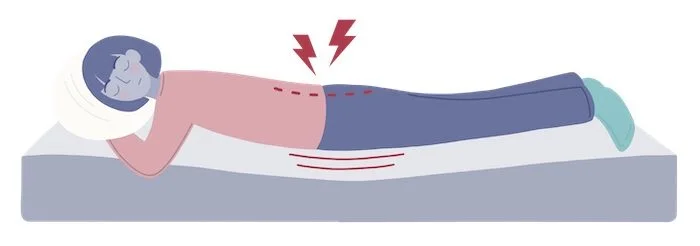
When you sleep, the muscles supporting your spine are immobile. During this period of immobility, your muscles can tighten and become less mobile because you aren’t engaging them. Couple that with a less-than-ideal sleep position, pillow, or mattress, and it can place extra stress on your lower lumbar spine, which leads to soreness or discomfort when you wake up.
Many people notice that their back pain improves or completely goes away after getting up and moving around in the morning. Motion helps blood flow to your muscles and loosens up your spine and surrounding tissues after lying in one position for many hours, gradually easing your morning pain and stiffness.
Signs That Your Mattress Is Causing Back Pain
If waking up feeling stiff and sore is a new phenomenon for you, it could have more to do with the surface you’re sleeping on. Here are a few signs that your mattress could be the culprit behind your morning back pain.
You Feel Fine Before Bed but Wake up Feeling Sore
If you feel fine just before bed after a day of working and moving around, and then wake up with lower back pain that subsides within several minutes or an hour, it’s unlikely that an injury or chronic condition is to blame. The temporary soreness is likely due to something on your bed or to the position you’re sleeping in.
You Sleep Better in Other Beds or on Vacation
One easy way to tell if your bed at home is the reason for all your lower lumbar woes is to sleep on a different surface and see how your body responds. If you consistently wake up feeling well-rested and pain-free after sleeping in a hotel bed, crashing at a friend’s house, or even after an unexpected nap on the couch, then it’s very likely your nightly sleep surface isn’t doing what it needs to do.
Your Pain Coincides With a Certain Sleeping Position
If you’ve begun gravitating to a new sleeping position and are noticing aches and pains in different pressure points, then chances are your mattress might not be tailored to that position. Back sleepers, for example, often notice more pressure and soreness in their lower backs. Meanwhile, side sleepers may experience shoulder and hip pain.
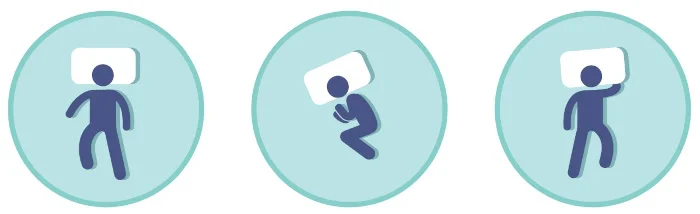
If you fall into the first category, you might have a mattress that isn’t supportive enough for back sleeping. The best mattresses for back pain are often medium-firm and provide enough lift to align your hips with the rest of your spine.
As Dr. Hannah Habeeb, our chief medical product tester and licensed physical therapist, explains, “With back pain, you want to find proper support without sinking in too much, causing misalignment. Look for a mattress that provides lower lumbar support without creating a gap between your lower back and the mattress.”
You Can See or Feel Sagging in Your Mattress

No mattress is immune to time. Even a quality mattress will start to sag or show signs of wear after 7 to 10 years. Some of those signs include deep body impressions, lumpiness, and springs poking through the surface. This wear often develops beneath the hips and shoulders, where most of your body weight is concentrated. If those areas sink too far and fall out of alignment, it can contribute to lower back pain.
If you’re not sure whether your mattress is sagging, here’s a simple way to check:
- Remove all bedding so the mattress surface is completely exposed.
- Lay a level or yardstick across the area where you usually sleep.
- Use a tape measure to measure the gap between the yardstick and the mattress.
- If the indentation is deeper than 1 to 1.5 inches while no one is lying on the bed, the comfort layers have likely broken down enough to affect support.
Other Causes of Morning Back Pain
Beyond your mattress, other accessories, health conditions, and changes to your body can influence how your back feels in the morning. Learn more about the other common causes of back pain below.
Your Pillows
Your mattress does most of the heavy lifting, but your pillow also plays a pivotal role in ensuring your spine stays aligned through the night. If your pillow is too tall or too short, it throws your head and neck out of a neutral position. If one part is thrown out of alignment, it can create a chain reaction that impacts the rest of your spine, including your lower back.
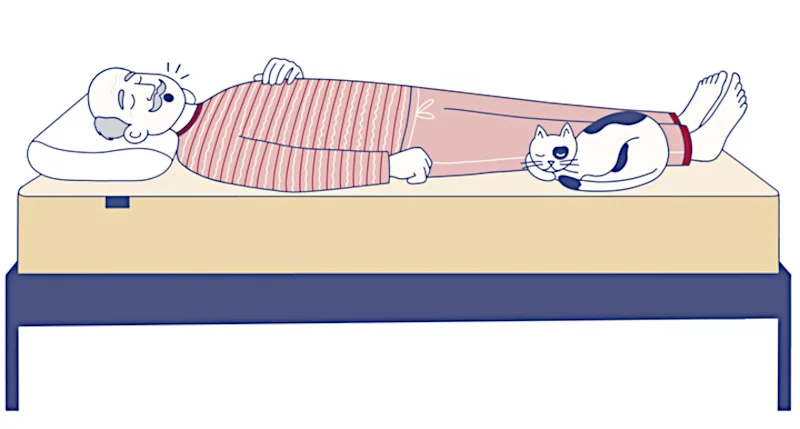
If you suspect your pillow is behind your back pain, your best bet is to invest in a new one based on your sleeping position. The best pillows for back pain are typically medium-loft pillows that support the neck’s natural curve without pushing the head too far forward. Meanwhile, side sleepers benefit from thicker pillows that fill the space between the head and the shoulder.
Muscle Soreness (DOMS)
If you’ve recently become more active during the day in hopes of tiring yourself out enough by nighttime, your morning back pain could be a sign that you’re putting in the work.
Weightlifting, running, or core exercises that engage your lower back can cause DOMS (delayed-onset muscle soreness), a common type of muscle soreness that develops several hours after exercise. DOMS typically peaks 24 to 48 hours after a workout and can feel especially noticeable when you first wake up.
Pregnancy
Back pain during pregnancy is common and may be more noticeable at night or as you wake up. Several changes can place additional stress on your lower back as your pregnancy progresses.
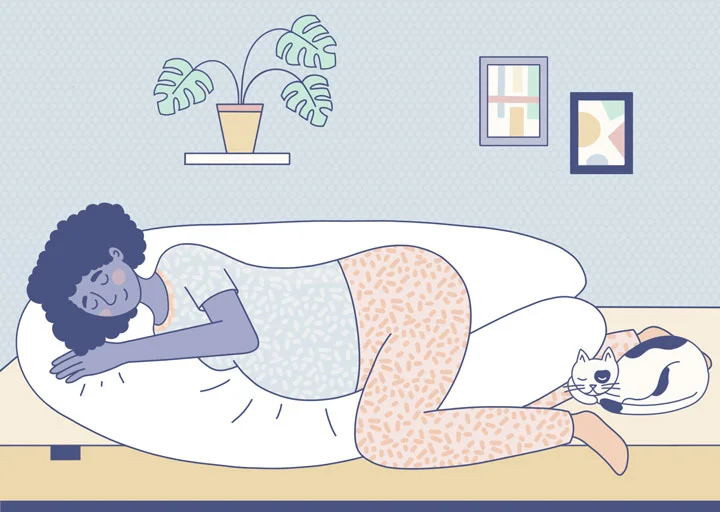
Weight gain and a shifting center of gravity alter your posture, while your abdominal muscles stretch and weaken, providing less support for your spine. At the same time, pregnancy hormones loosen the ligaments in your pelvis to prepare your body for childbirth, which can make the lower back less stable and more prone to discomfort.
Gentle stretching, warm compresses to your lower back, and using your legs instead of your back when getting into and out of bed can help ease pregnancy-related back pain. Sleeping on your side with your knees bent and placing pillows beneath your abdomen, between your knees, or behind your back can also help reduce overnight discomfort.
Spinal Stenosis and Other Spinal Conditions
In some cases, morning back pain is a result of an underlying condition. One such condition is spinal stenosis, which occurs when the spaces within the spine narrow, compressing the spinal nerves. This added pressure often leads to lower back pain, stiffness, numbness, or tingling that often feels worse in the morning or after remaining in one position for hours.
Other conditions, such as spinal arthritis or sciatica, can produce similar symptoms. Arthritis causes inflammation in the joints that connect the vertebrae. People with arthritis often experience reduced flexibility and stiffness after periods of rest. While gentle movement often helps ease discomfort, persistent or worsening symptoms should be evaluated by a healthcare provider.
Degenerative Disc Disease
Degenerative disc disease occurs when the spinal discs that act as cushions between the vertebrae gradually lose hydration and flexibility with age. When the spinal discs wear down, they become less effective at absorbing shock and supporting the spine, which can contribute to lower back pain and stiffness.
Many people with degenerative disc disease notice their symptoms are worse in the morning. After spending hours in the same position overnight, the spine can become stiff, making it uncomfortable to get out of bed.
How to Relieve Lower Back Pain After Sleeping
Recurring morning lower back pain can be tiring, but it’s not impossible to fix. The right combo of good sleep habits and targeted exercises is often enough to reduce morning back pain and prevent it from being a constant issue.
Strengthen Your Core and Hips
Your core and hips support your spine throughout the day and night, so strengthening them can help reduce strain on your lower back while you sleep. If you have time, try incorporating the following exercises into your routine and see if you notice any improvements over time.
| Exercise | How to Do It | Benefits |
| Glute Bridges | Lie on your back with your knees bent and feet flat on the floor, then lift your hips until your body forms a straight line from your shoulders to your knees. | Strengthens the glutes and improves pelvic stability, helping reduce stress on the lower back. |
| Bird Dogs | Begin on your hands and knees, then extend one arm and the opposite leg while keeping your spine neutral before alternating sides. | Improves core stability and helps the muscles that support your spine work together more effectively. |
| Planks | Hold your body in a straight line while supporting yourself on your forearms and toes, keeping your core engaged throughout. | Builds core endurance, which helps maintain proper spinal alignment and reduce strain on the lower back. |
| Cat-Cow Stretch | On your hands and knees, slowly alternate between arching your back toward the ceiling and lowering your belly while lifting your head and tailbone. | Improves spinal mobility and helps ease stiffness after sleeping. |
| Child’s Pose | Kneel on the floor, sit back onto your heels, and stretch your arms forward as you lower your chest toward the ground. | Gently stretches the lower back and hips, helping relieve muscle tension and improve flexibility. |
Perform these exercises slowly at first and stop if you experience sharp or worsening pain. If your symptoms persist, consult a healthcare professional before starting a new exercise routine.
Optimize Your Sleep Ergonomics
If you work in an office during the day, it’s important to maintain good posture while sitting in your chair. Ergonomics are also equally important when it comes to sleeping.
The way you position your body in bed can make a significant difference in how you feel when waking up. The goal is to keep your spine in a neutral position throughout the night. Back sleepers can place a pillow beneath their knees to reduce pressure on the lumbar spine, while side sleepers should place a pillow between their knees to keep their hips level.
Try a Different Sleeping Position
Your sleeping position could be part of the problem if you persistently wake up with back pain. Side and back sleeping generally provide the best support for spinal alignment, especially when paired with proper pillow placement. Without enough support, stomach sleeping will typically exaggerate the natural curve of the lower back and force the neck into rotation, which can exacerbate back pain over time if left unchecked.
Replace Your Mattress
Finally, if you have tried replacing your pillows and altering your sleeping position, it might be time to take a close look at the mattress itself. An old mattress, or one that has seen a lot of wear, may no longer provide the support your spine needs.
If your mattress is sagging, over 7 to 10 years old, or you’ve noticed your back feels better when sleeping elsewhere, it may be time for a replacement. Look for a mattress with a firmness that matches your body type and preferred sleeping position while keeping your spine properly aligned throughout the night.
Recommendations from Dr. Habeeb
When we test mattresses at Mattress Clarity, our chief medical product tester and licensed physical therapist, Dr. Hannah Habeeb, assesses many of the mattresses that come to our studio. Together, we evaluate how well they support healthy spinal alignment and relieve pressure.
Two of her favorite picks for sleepers with back pain are the DreamCloud and Nectar Classic Hybrid. Of the DreamCloud, she said, “Everything feels really comfortable, and the pressure is very evenly dispersed on the DreamCloud. It’s contouring my body, and I’m sinking in the right amount at my hips and shoulders. I’m supported enough to prevent my spine from bending, and my back feels really good.”
She was equally impressed by the Nectar Classic Hybrid, noting, “For those with back pain, I think the support and pressure-relieving aspect of the Nectar Classic Hybrid will be a great match. I’m not sinking into an awkward position, and I don’t feel my spine being compressed. When switching over to my side, I notice that I am getting good pressure relief at both my hips and shoulders.”
If you’re shopping for a new mattress, check out our full reviews of the DreamCloud and Nectar Classic Hybrid to see how they performed in every category.
Know When to See a Doctor
Stiffness and occasional morning back pain are usually not a cause for alarm and can often be fixed with minor adjustments to your sleep setup and movement. However, persistent or severe back pain shouldn’t be ignored.
If your pain lasts more than a few weeks, regularly wakes you from sleep, radiates into your legs, or is accompanied by numbness, weakness, fever, or changes in bowel or bladder function, you should consult your doctor or healthcare provider.
A healthcare professional can tell you if an underlying condition is worsening your symptoms and pair you with the appropriate treatment. Even if your mattress is part of the problem, identifying and addressing those underlying causes is the best way to find ongoing relief.
FAQ
What if my brand-new mattress is hurting my back?
It’s normal for a new mattress to feel different at first, and some people experience mild discomfort during the break-in period as their body adjusts. Most brands offer a sleep trial of at least 90 to 120 nights, so give your mattress a few weeks before deciding whether it’s the right fit.
What mattress firmness is best for back sleeping?
Most back sleepers find the best balance of comfort and support on a medium-firm mattress, which helps maintain the natural curve of the spine without allowing the hips to sink too deeply. That said, your ideal firmness also depends on your body weight and personal preference.
How do you relieve back pain?
Gentle stretching, staying active, applying heat or ice, and improving your sleep setup can all help ease back pain. However, if your pain lasts more than a few weeks or is accompanied by numbness or weakness, you should contact a doctor.
Does lower back pain go away on its own?
Many cases of lower back pain improve within a few days to a few weeks with rest, gentle movement, and self-care. However, persistent, worsening, or recurring pain should be evaluated by a medical professional to rule out an underlying condition.
What are underlying issues that can lead to lower back pain?
Lower back pain can stem from a variety of underlying conditions, including spinal stenosis, degenerative disc disease, spinal arthritis, herniated discs, muscle strains, and sciatica. A healthcare provider can help determine the cause if your symptoms don’t improve or keep coming back.
References
- Olson, G. (2019). What is delayed onset muscle soreness (DOMS) and what can you do about it? In Healthline. Healthline Media. https://www.healthline.com/health/doms
- Mayo Clinic. (2019). Back pain during pregnancy: 7 Tips for relief. In Mayo Clinic. https://www.mayoclinic.org/healthy-lifestyle/pregnancy-week-by-week/in-depth/pregnancy/art-20046080
- Johns Hopkins Medicine. (2024). Degenerative disc disease. In www.hopkinsmedicine.org. https://www.hopkinsmedicine.org/health/conditions-and-diseases/degenerative-disc-disease