


Making the choice for your child to move from a crib to a toddler bed can be a big milestone for parents, as well as a developmental milestone for your child. However, you’re not alone, and a world of research is out there to help you decide when to make that transition from crib to bed.
Because sleep is precious to a child’s development, I wanted to offer parents a concise but comprehensive understanding of what experts say and what the science suggests to help you stay calm and confident when it’s finally time to make that move.
Notably, not all children mature at the same pace; some are ready to change beds as early as 18 months, while others may be ready at 3 years or even older, depending on factors such as maturity and size.
That said, as a general rule, the American Academy of Pediatrics (AAP) suggests that if your child is 35 inches or taller, or the guardrails on their crib are at mid-chest or armpit/nipple level (allowing them to potentially climb out), or they are constantly trying to get out of the bed, it may be crucial to transition your child to a toddler bed.
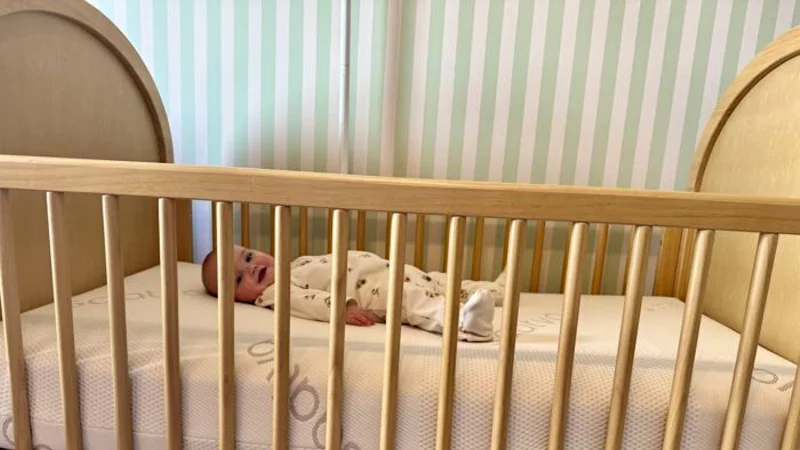
When to Transition to a Toddler Bed
Height: The AAP considers the 35-inch mark a crucial time to switch from a crib to a bed because most standard crib railings aren’t tall enough to safely contain a child at that height if they try to climb out. Additionally, even if your child is shorter than 35 inches but is constantly trying to escape their crib, it’s a potential hazard and a sign that they need to transition out of the crib.
Consistent climbing: If your child is a climber (consistently tries to climb out of the crib), it’s a critical time to transition them to a toddler bed. Even if the crib seems secure or your child is still below the height threshold, an agile child constantly trying to get over the safety rails can still pose a significant risk of a fall.
Vocalizing a desire to change beds: According to the Cleveland Clinic, if your child starts requesting to move to a toddler bed, it may be a sign they’re ready and a good opportunity to start communicating with them about the change. Pediatrician Dr. Laura O’Connor, MD, notes, “When your child asks about moving into a bed, use it as an opportunity to start talking about the expectations you have of them when they move out of their crib.”
Emotional maturity: If your child can self-soothe or fall back asleep on their own during the night without you needing to check the baby monitor every few minutes, this may be a sign they’re ready for the big move. Other markers of maturity include the ability to follow basic house rules and understanding nighttime boundaries.
Physical maturity: If your child is potty trained and can use the bathroom independently, this is another big sign they may be ready to switch from a crib to a toddler bed. According to the Mayo Clinic, accidents should not be seen as a serious concern until a child is at least 7 years old. However, when it comes to transitioning to a toddler bed, being potty-trained suggests a child may be better able to handle the increased independence the change requires.

That being said, if you are potty-training your child or introducing other big changes, such as a new day care or new sibling, it may not be the ideal time to start transitioning them out of the crib. “If you’re in the midst of another change, it’s probably best to introduce the bed another time,” according to expert Dr. O’Connor. She also suggests, “Stick to one big change at a time, if you can.”
When It Might Not Be Time
They’re happy with their crib, and it still fits: If your child hasn’t outgrown their crib or expressed a desire to move to a toddler bed and is getting quality sleep, there is no reason to rush. One study published in Sleep Medicine found a potential association between crib sleeping and better overall sleep quality for toddlers up to 36 months. The study found that, in some cases, longer crib use was associated with better sleep and development.
The typical age to switch to a toddler bed varies and depends on their circumstances. Growth and sleeping habits matter more than a precise age. The same study points out that 63.4% of toddlers aged 18 to 24 months still slept in a crib. Around 34% of toddlers aged 24 to 30 months still slept in a crib. Meanwhile, only 12.6% of those between 30 and 36 months had not yet moved to a bed.
Notably, if your child has outgrown (or is clearly rapidly outgrowing) their crib, moving their mattress to the floor (as I go over in the next section), or having durable safety rails around a toddler bed as they transition may help make the change easier.
Behavior: If your child is still learning boundaries and rules, it may be a sign they aren’t ready for the agency involved in removing a crib’s guardrails.
Your child struggles to stay asleep: If you haven’t found a routine that helps your child fall asleep and stay asleep, an additional change to a toddler’s sleeping routine may complicate their sleep even further.
Helpful Ways to Safely Make the Transition
When they’re climbing out: Consider placing the crib mattress or their new toddler mattress on the floor to reduce the risk of injury from a fall. If this becomes necessary, place the crib or toddler mattress in the center of the room, not flush against the wall, to prevent your child from falling and getting stuck in a tight crevice between the wall and floor bed.
You may also want to consider using a sleep sack with your child. Sleep sacks offer comfort and warmth to toddlers, but also make it more difficult for them to climb over crib or bed rails.
Preparing the room: Make sure your child’s room is child-proofed. Anchor heavy furniture to the wall, cover electrical outlets and cords, and remove or cover hard or sharp edges. This will help prevent accidents or injuries if your child leaves the bed during the night. A good way to think about this is to consider their whole bedroom a new crib, which would include securing windows, installing baby gates, and making sure they cannot open the door and wander the house at night.
Communication and Encouragement: Talking with your child about the transition, or making them feel part of it, can make the process smoother and even seem fun for your child. For example, explaining that it is a sign they are becoming a ‘big kid,’ that you are proud of them, or that they can even help pick the type of toddler mattress, big kid bed, or frame they want to move to can make the change easier and add an element of bonding through the process.
According to Dr. O’Connor, “This gives them the chance to get excited about it. Plus, talking about moving to a bed lets you have that conversation about what’s coming and what you expect.”
Creating or maintaining bedtime routines: Children are very sensitive to change, which makes bedtime and morning routines something they can thrive on. Turning off the TV, having a bath, brushing their teeth, turning on a nightlight, handing them their stuffed animal, and reading a bedtime story or singing some lullabies can all be cues that lead to sleep.
One 2017 study on the benefits of routine for childhood sleep and maturity says, “A bedtime routine provides the seemingly obvious benefits to sleep and to reduction of sleep problems, as well as the indirect links to improved wellbeing through better sleep.”
This can also apply to mornings, such as letting your child know you will come to get them rather than having them wake you up. Overall, as Cleveland Clinic states, “Kids thrive on routine,” and a sleep routine can be a great tool in helping make this big change to a toddler bed.
Choosing a Toddler Bed or Transitionary Crib Mattress
Toddler beds are similar in size to crib-size mattresses; however, they’re defined by being moved closer to the ground while still having some form of safety rail on each side to prevent the child from falling out.

Toddler mattresses should be hypoallergenic, waterproof, or have a protective cover (for accidents), offer cooling, and adapt to various furniture, such as decorative toddler frames or a convertible crib (if the toddler-bed transition process isn’t working).
Furthermore, according to Dr. Raj Dasgupta, MD, FACP, FCCP, FAASM, “Firmer mattresses are best for toddlers and infants, as these will provide the most support.” This is a crucial thing to remember before choosing any mattress, as studies have pointed out that mattresses that are too soft can, in some tragic cases, lead to suffocation or SIDS (Sudden Infant Death Syndrome).
Adding to what Dr. O’Connor said earlier, including your child in the process of changing beds can make the transition more exciting. Allowing your child to take part in choosing a new bed frame, say the classic convertible car frame or decorative child’s frame, may make them more eager to leave their crib behind.
Our team at Mattress Clarity has done extensive research into both crib and toddler mattresses, using our testing methodology and the experiences of real children to determine bed quality when deciding which is best for you. You can take a look at our top crib mattress picks or top beds for kids in 2026 for some guidance on making the right choice for you and your child.
References:
- Pittner K, Rasmussen J, Lim MM, Gilmore JH, Styner M, Entringer S, Wadhwa PD, Buss C. Sleep across the first year of life is prospectively associated with brain volume in 12-months old infants. Neurobiol Sleep Circadian Rhythms. 2023 Mar 8;14:100091. doi: 10.1016/j.nbscr.2023.100091. PMID: 37396871; PMCID: PMC10313911.
- Williamson AA, Leichman ES, Walters RM, Mindell JA. Caregiver-perceived sleep outcomes in toddlers sleeping in cribs versus beds. Sleep Med. 2019 Feb;54:16-21. doi: 10.1016/j.sleep.2018.10.012. Epub 2018 Nov 1. PMID: 30529772; PMCID: PMC6432782.
- American Academy of Pediatrics. (2020, August 14th). Make Baby’s Room Safe: Parent Checklist. https://www.healthychildren.org/English/safety-prevention/at-home/Pages/Make-Babys-Room-Safe.aspx
- Cleveland Clinic. (2025, October 1st). When and How To Transition to a Toddler Bed. https://health.clevelandclinic.org/from-crib-to-toddler-bed
- Mayo Clinic. (2023. August 24th.) Bed-wetting. https://www.mayoclinic.org/diseases-conditions/bed-wetting/symptoms-causes/syc-20366685
- Mindell JA, Williamson AA. Benefits of a bedtime routine in young children: Sleep, development, and beyond. Sleep Med Rev. 2018 Aug;40:93-108. doi: 10.1016/j.smrv.2017.10.007. Epub 2017 Nov 6. PMID: 29195725; PMCID: PMC6587181.
- Mitchell EA, Scragg L, Clements M. Soft cot mattresses and the sudden infant death syndrome. N Z Med J. 1996 Jun 14;109(1023):206-7. PMID: 8668299.
- Safe Sleep and Your Baby: How Parents Can Reduce the Risk of SIDS and Suffocation. Pediatric Patient Education 2022; 10.1542/peo_document088