
Product
Firmness
Score
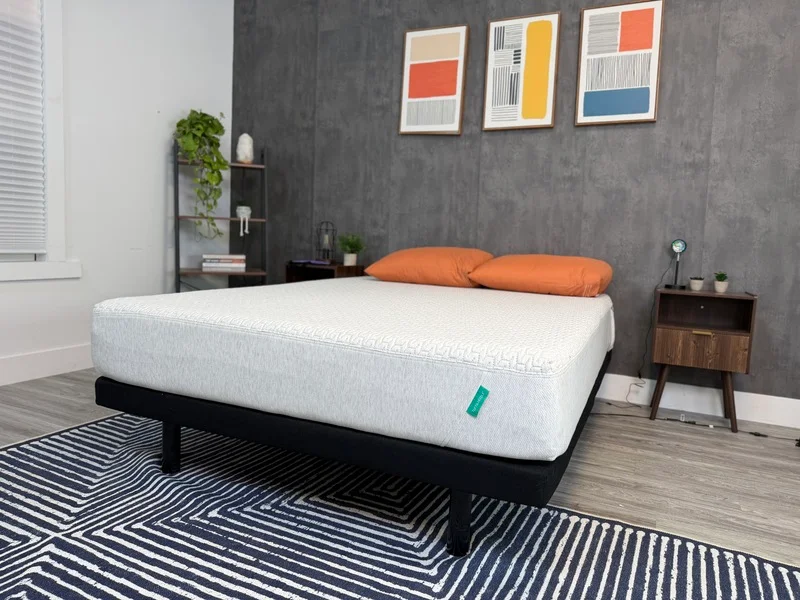
Product
Firmness
Score
Casper Element vs. Tuft & Needle: Top Similarities
- Both are all-foam mattresses with relatively simple constructions.
- They are comparably priced ($695.00 to $1345.00 for Tuft & Needle; $595.00 to $1395.00 for Casper Element).
- Both use polyfoam and have polyester covers.
- Both have springy, responsive surfaces.
- Both offer 100-day trials and free shipping.
Casper Element vs. Tuft & Needle: Key Differences
- Tuft & Needle is thicker at 10″, while the Casper Element is only 8.5″ thick.
- Tuft & Needle will be firmer than Casper Element for most sleepers.
- Casper Element incorporates memory foam, while the Tuft & Needle has uses a proprietary foam.
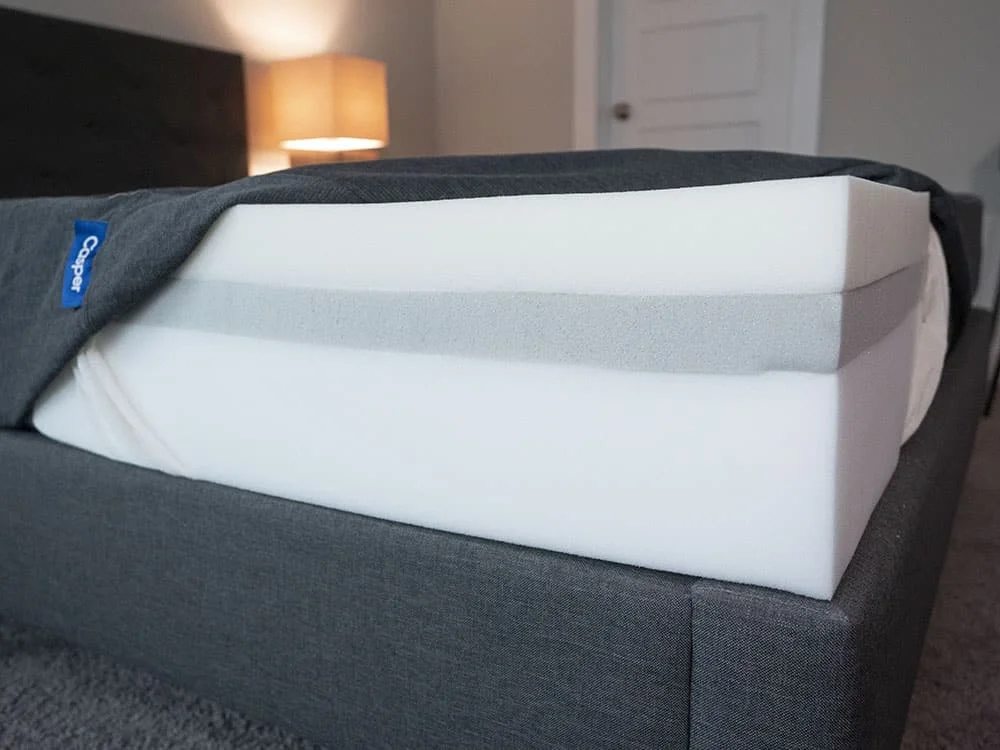
Casper Element Construction
- Casper Element has a removable, soft, poly-knit cover that doesn’t affect the mattress feel too much.
- On top is 2″ of an open-celled, springy, breathable polyfoam that Casper calls “Fusion Foam.”
- The middle layer is 1.5″ of responsive memory foam, which adds pressure relief and body contouring.
- The base support layer is comprised of 4.5″ of durable support foam, which is a pretty standard foam for bed-in-a-box mattresses.
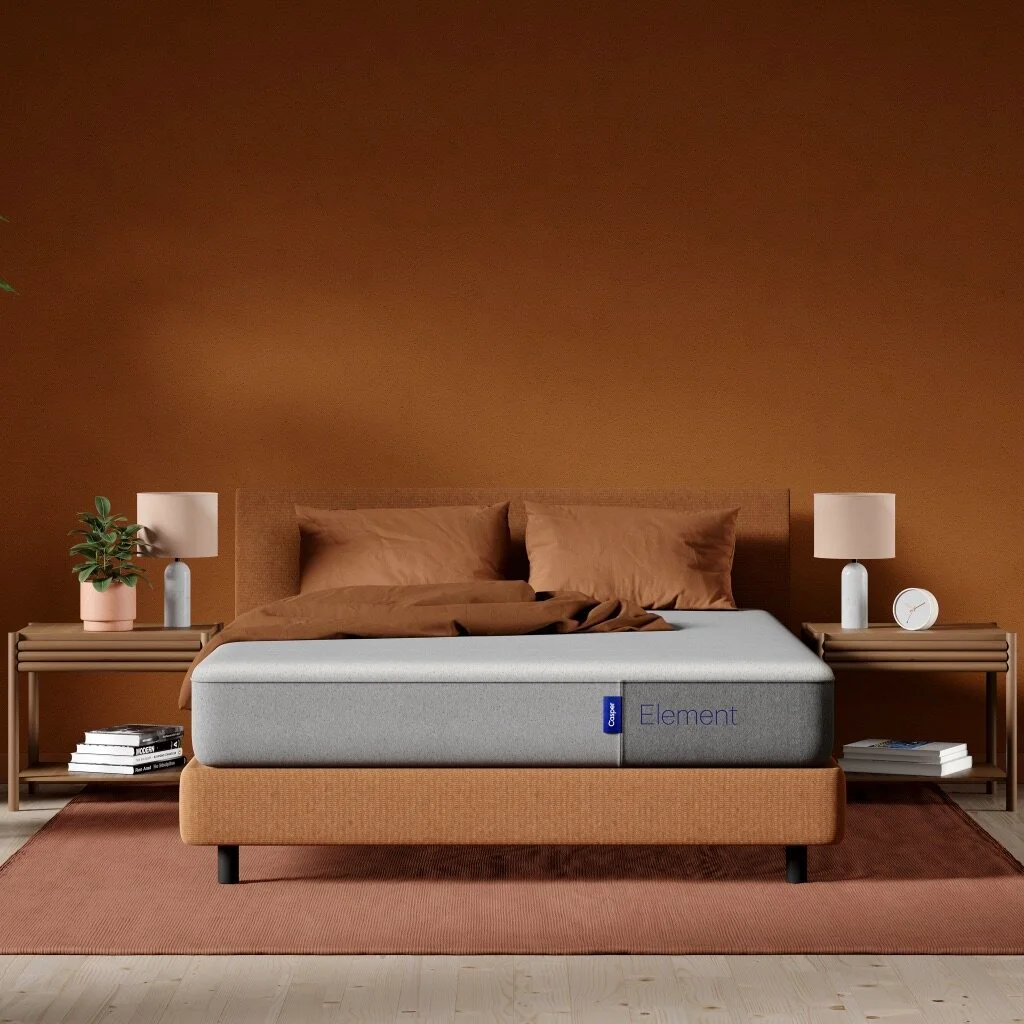
Casper Element Mattress
The Casper Wave Hybrid is a comfortable option for back sleepers, hot sleepers, and many side sleepers.
Product Details
Material
Foam
Firmness
Firm 8/10
Sleep Trial
100 nights
Warranty
10-year limited warranty
Shipping
Free shipping
Price
$$$$$
Our Recommendation
We recommend this mattress for the following sleeper types:
Side Sleepers
This bed offers pressure relief at both the shoulders and hips, making it a great fit for side sleepers.
Back Sleepers
This bed’s strong support is ideal for back sleepers because it helps keep the spine neutrally aligned.
Seniors
This bed is perfect for senior sleepers, as it provides them support and easy mobility.
Financing Options
Financing options are available for this mattress.
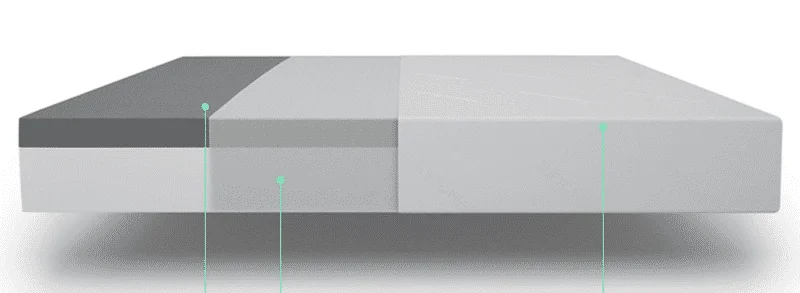
Tuft & Needle Construction
- Tuft & Needle has a breathable polyester blend cover that also doesn’t affect the overall feel of the mattress too much.
- The top of Tuft & Needle’s two layers is 3″ of firm, bouncy proprietary “Adaptive” foam. This is a polyurethane-based foam that incorporates graphite and a gel polymer to absorb and evenly distribute heat from the body.
- The support layer is 7″ of 1.8-lb-density poly foam, which is pretty standard on the market.
Tuft & Needle Original Mattress
The Tuft & Needle Original mattress is an affordable pick for folks who want an all-foam mattress with a medium-firm feel. It earned praise for back sleeping and lightweight side sleepers, plus high marks for motion isolation, which couples should appreciate. However, we wouldn't recommend it for heavyweight sleepers or folks looking for strong edge support—this mattress is a bit too thin for either demographic.
Product Details
Material
Foam
Firmness
Medium-Firm 6.5/10
Sleep Trial
100 nights
Warranty
10-year limited warranty
Shipping
Free shipping minus HI and AK
Price
$$$$$
Our Recommendation
We recommend this mattress for the following sleeper types:
Back Sleepers
This bed’s strong support is ideal for back sleepers because it helps keep the spine neutrally aligned.
Couples
This bed has great motion isolation so you will not feel your partner tossing and turning at night.
Financing Options
Financing options are available for this mattress.
Construction Differences and Notes
- Both are all-foam mattresses that have relatively few layers.
- Both use polyfoam somewhere in the construction.
- Tuft & Needle is firmer and also thicker.
- Casper Element uses memory foam and has one more layer.
Firmness and Feel Differences
While both have responsive top layers, Casper Element is a little softer. I would say that Tuft & Needle feels more supportive overall. That is mainly because it is thicker and firmer.Motion Transfer Differences
Because it’s softer, Casper Element has a slight edge in preventing motion transfer. However, they both did a decent job at isolating motion. Both mattresses might be a pretty good option for couples.Pick Casper Element If …
- You are a side sleeper. Casper Element conforms better to contours and is softer overall, potentially making it more appealing for side sleepers.
- You want something softer. Casper Element has a softer top layer and a memory foam middle layer that adds even more softness to the mattress.
Pick Tuft & Needle If …
- You are a back or stomach sleeper. Tuft & Needle is firmer and more supportive, potentially making it a more appropriate choice for back or stomach sleepers who need that extra support.
- You like a little firmness. If you generally prefer a stiffer mattress, Tuft & Needle will give you that feel more than the Casper Element.