
Of the types of bedding products we test at Mattress Clarity, pillows are the most varied. Be it a unique shape, or a combination of different materials, pillows have evolved from just a fluffy material inside a fabric cover.
When we test pillows, we start by switching between sleeping positions, and then we examine the materials. We also look closely at durability, support, and cooling. Keep reading to learn more about our process.
How We Test Sleeping Positions
Once we’ve fully unpackaged pillows, we will assess how each pillow feels while back, side, and stomach sleeping. As I’ll detail below, the two things we look for most in the sleeping position test is how much support the pillow offers and how tall it is.We can determine which sleeping position the pillow will work best for with this test.
This test usually looks like us switching between each of the three sleeping positions. Finding out which position the pillow works best for involves ensuring our heads and necks are in a neutral alignment. I’ll go more in depth about this later on, but finding that neutral alignment is key with pillows. Stomach sleepers don’t want their heads craning upwards, back sleepers don’t want their head going too far up or too far down, while side sleepers don’t want their heads craning down.

Some pillows, however, can be adjusted in some shape or form. This can look like taking out a shredded foam fill, or taking out sections from the inside of the pillow, or in one instance, zipping the sides of the pillow together. Adjustable pillows tend to work for all sleeping positions because of this, but sometimes finding that “Goldilocks” feeling can take some trial and error.
RELATED: Best Pillows
All the categories we score our pillows on are rated on a five point scale, with one being poor, and five being excellent.
Support
When I test a pillow’s support, I start by assessing how comfortable my head and neck feel. I don’t want my head craning too far up, and I don’t want it craning too far down. Both of these situations are recipes for neck pain.
So, when a pillow has the right amount of support, your head and neck should feel no strain and be in a neutral position while you sleep. What support looks like for each sleeping position is different, and it also depends on the pillow’s materials and height. Adjustable pillows often score high on support because they can accommodate any need.
But pillows that can’t be adjusted can still score high after we’ve assessed which sleeping position they work best for. But they usually don’t earn a perfect 5/5 because they don’t work for every sleeping position.
Pillow Loft
While height (also called loft) doesn’t impact how we score a pillow, it does play a big role in the support category. Each sleeping position needs different heights to achieve a neutral alignment of the head and neck. We break pillow lofts up into three categories: low, mid, and high. I’ve broken down each category below.
- Low: No taller than 3” tall
- Mid: Anywhere from 4” to 5” tall
- High: 6” or taller
Each loft category fits different needs, body types, and sleeping positions. We usually recommend pillows with low lofts for stomach sleepers, though some can even get away without using a pillow at all.
Back sleepers will want a mid-loft pillow. Pillows with this loft tend to do better at keeping a back sleeper’s head flat. If you’re a back sleeper, you don’t want your chin jutting into your chest, but you also don’t want your chin pointing up to the ceiling. Mid-loft pillows will be able to keep your chin in line with your chest.
Side sleepers need pillows that prevent their heads from craning downward, so high loft pillows are ideal here. Again, we don’t score our pillows on loft, but loft is a major component for our support tests.
RELATED: Best Pillows for Side Sleepers
Firmness
Another factor that goes into our support testing is firmness. Just like mattresses, pillows have different firmness options. The three sleeping positions benefit from different firmness levels.
For stomach sleepers, we usually recommend soft pillows. That’s because the softer the pillow is, the easier it is to compress the materials and get it nice and flat.
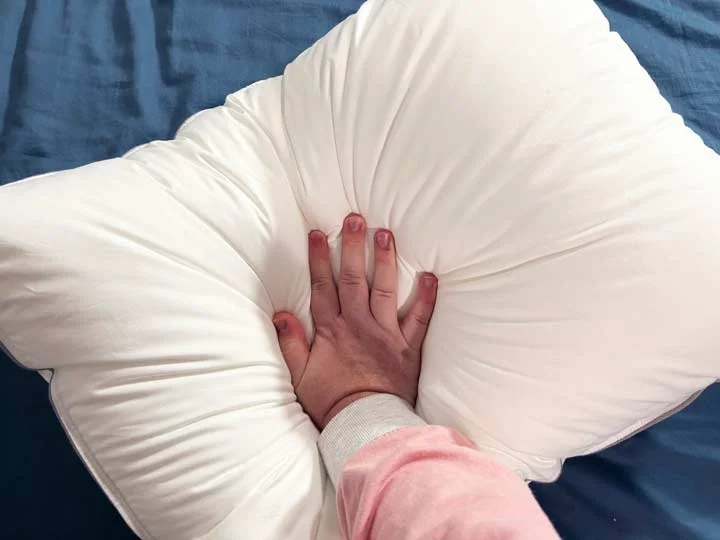
Back sleepers tend to do well with medium-firm pillows because they offer plenty of support. Side sleepers need all the support they can get, so firmer pillows are ideal.
RELATED: Best Firm Pillows
Again, firmness isn’t something we score on, but it’s something that we consider as part of support. And as always, firmness preferences are a very subjective thing, so always go with what feels most comfortable for you.
Feel
When assessing support, we also consider what the pillow feels like. The type of material used can impact the pillow’s overall support and feel. I’ll break down the most popular pillow materials and explain how they impact firmness.
Down
Down is the fiber-like feathers found on birds. This material is soft, airy, and gives pillows a cushioning feeling. Pillows with down or down feathers tend to feel soft and are easily compressed and moldable.
Down Alternative
Down alternative is a synthetic material that is easily the most accessible type of pillow out there (we’ve all seen the $10 pillow bins at supermarkets). This material feels plush and fluffy. It has some give, but it’s often more supportive than down pillows. Depending on the amount of fill in the pillow, down alternative pillows can feel soft, medium, or firm. But more often than not, they feel soft or medium-firm.
Many brands combine down alternative with either latex or memory foam.
Memory Foam
There are two versions of memory foam pillows: those that use shredded memory foam, and those that use single slabs of foam. These foams range from soft to firm, with shredded foam on the softer side, and single slabs on the firmer side. Most of the time, memory foam has a slow-moving quality. This means the pillow will contour to your head and neck and provide some pressure relief.
Latex Foam
Where traditional memory foam feels soft, squishy, and slow-moving, latex foam feels springy and bouncy. But just like traditional memory foam, latex foam comes in either shredded foam or single slab options. There are two types of foam, Talalay and Dunlop. But because Talalay is the softer foam of the two, it’s most commonly seen in latex pillows.
Latex is great for hot sleepers because it’s breathable and often ventilated for airflow. And for those who prefer to use natural materials, latex is a good option because it’s made from the sap of rubber trees. Some companies, like Avocado, go the extra mile and use certified organic latex foam.
Body Type
The last thing we consider under the support category is body type. Just like mattresses, it’s important to consider your body type when searching for a new pillow. Those that are more petite in stature will want softer, lower loft pillows. This is because they won’t compress the pillows as much. If you have narrow shoulders, you should also consider getting a low-loft pillow. That way, the pillow can fit into the space between your head, neck and shoulder without craning your neck out of alignment.
Those who are heavier or have broader shoulders typically want to choose firm and tall pillows. Heavier individuals will end up compressing the materials a bit more, so they need medium-firm or firm pillows to keep them from bottoming out of the pillow. If you have broad shoulders, you’ll need a tall pillow to fill in the gap between your head, neck, and shoulders.
Cooling
If you frequently turn your pillow over to the cool side, you may want to consider getting a pillow that doesn’t trap body heat. These days, many pillows contain cooling infusions and cooling fabrics. But even so, some pillows feel cooler than others. Here are just a few things we look for when assessing a cooling pillow:
- Cooling fabrics: Bamboo, TENCEL, or phase change fabric in the outer shells will do a good job at temperature regulation
- Breathable fill: Pillows with shredded foam or latex foam promote airflow and feel cool
- Gel infusions: Pillows with gel-infused memory foam help pull body heat away from you
We usually try to use a pillow for at least an hour to see how well it stays cool. Naturally, there will be some heat transfer into the pillow, but if the pillow has any number of the materials listed above, we’ll usually score them higher for cooling. The higher the score, the better the pillow is at preventing people from overheating during the night.
Durability
When we assess a pillow’s durability, we’re really looking at its materials. Pillows with 100% synthetic materials, like down alternative fill and polyester covers, might not last as long as pillows with latex fills and cotton covers. Because of this, pillows that feature natural materials tend to score higher on durability.
This category also takes into consideration care instructions. Some pillows can be fully machine-washed, while others can only be spot-cleaned. Those that can be machine-washed are easier to care for and also have higher scores.
Company Policies
We also take into consideration warranties and trial periods, since we frequently review pillows from online manufacturers.
Warranty
Some companies offer warranties on their pillows. This can range anywhere from about one to three years, which is usually the lifespan of a pillow. Pillows with longer warranties tend to score higher than those that only offer one-year warranties, or none at all.
Trial Periods
Not every company offers a trial period or return window for their pillows. If a company doesn’t offer either, we tend to give the pillow a low score in this category. The standard return window is about 30 days from the day the pillow arrived on your doorstep, so this trial period tends to score in the middle of the road, usually a 3/5. Anything over 30 days will receive a 4/5 or higher.