




Sleepers who weigh over 230 pounds often struggle to find a mattress that provides the right amount of support and comfort. If these larger-bodied folks are sleeping in an ill-suited bed, they may experience discomfort, dissatisfaction, or even pain. If this sounds like you, but you don’t have the funds or bandwidth to buy a whole new mattress, you might want to consider investing in a mattress topper.
The best mattress toppers for heavy people can completely transform the feel of your mattress, whether that be softening or firming up your sleep surface to better address your needs. Most importantly, though, they won’t be too thin, flimsy, or unsupportive. Our top picks in the list below all do just that, so read on to find the right mattress topper for you.
Clarity’s Clear Winner
According to our findings, the best mattress topper for heavy people is the Brooklyn Bedding Microcoil Topper, because this topper’s miniature coil unit provides the heavy-duty support that sleepers over 230 pounds need. On top of that, this topper earned high marks across the board for its performance in responsiveness, cooling, and even motion isolation. It’s got a firmer feel that should reinvigorate any too-soft or saggy mattress.
The Best Mattress Toppers for Heavy People
- Brooklyn Bedding Microcoil Topper – Best Mattress Topper for Heavy People Overall
- Saatva Graphite Memory Foam Topper – Best Memory Foam Mattress Topper
- Nolah Mattress Topper – Best Soft Mattress Topper for Heavy People
- Helix Premium GlacioTex™ Mattress Topper – Best Mattress Topper for Heavy People with Back Pain
- ViscoSoft Active Cooling Copper Topper – Best Cooling Mattress Topper for Heavy People
- Avocado Eco Organic Topper – Best Latex Mattress Topper for Heavy People
How We Tested and Selected the Mattress Toppers
Support is key for the best mattresses for heavy people, so it follows that the same is true for mattress toppers. “A supportive sleep surface promotes the proper spinal alignment for each sleeping position,” explains Dr. Raj Dasgupta, our chief medical advisor. “It means that your spine is in its natural S-curve, with the right amount of sinkage so there aren’t any pressure points.” This looks different for each individual sleeper, but for heavyweight sleepers, it usually means a firmer, denser construction.
We test every topper in each sleeping position, judging how comfortable we feel in each. The final score we assign reflects this, though we’re sure to note which sleeper types will glean the best support.
For this list, we aimed to include toppers that scored at least a 4/5 for overall support. (The only exception is the Nolah mattress topper, which earned a 3.5/5 for its softer feel that may not accommodate certain positions.)
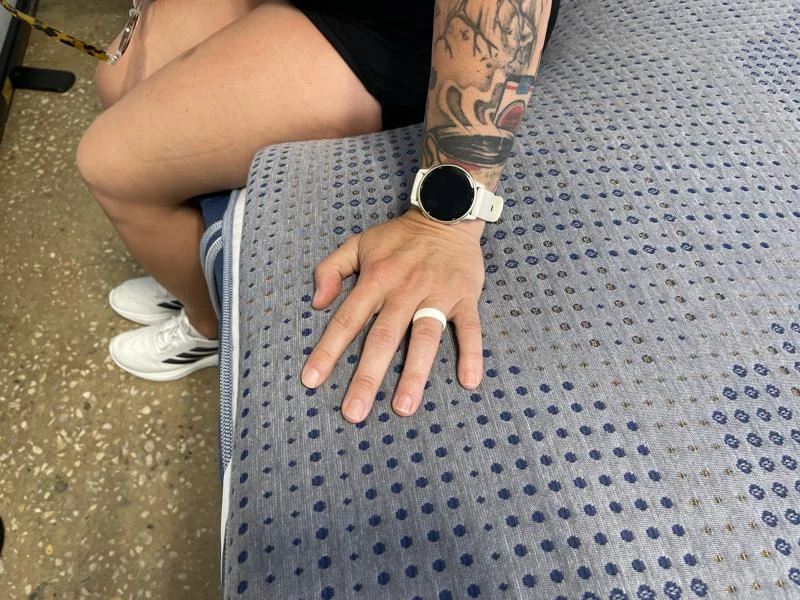
Most folks are buying a new mattress topper to avoid buying a new bed, so like any new investment, you’ll want it to last many years of use. The most durable toppers will be made with high-quality materials, like thick foams and latex—even miniature coil layers, in some instances.
We rate a topper’s durability by evaluating its overall materials score, which reflects the overall quality of construction. You’ll notice that all of the toppers on this list earned a perfect rating for their materials, which ensures that they’re the best of the best and built to last.
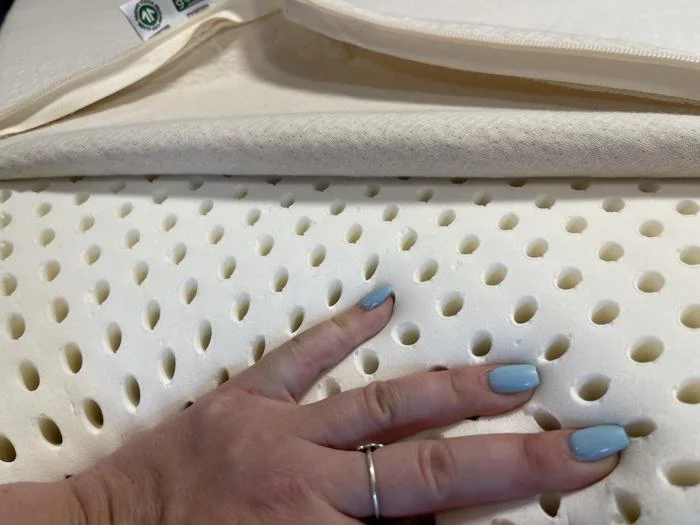
Oftentimes, heavyweight sleepers sink too deeply into a mattress surface and end up “bottoming out” on the firmer support layers below. The same thing can happen with mattress toppers. You don’t want to sink straight through them and feel the bed below; it defeats the entire purpose of using one in the first place.
That’s why we recommend choosing thicker toppers. The more material, the more durability and support, and hopefully the less likelihood for “falling through” to your original mattress. All of the toppers on this list are at least 2” thick, with the thickest being a whopping 4” tall.
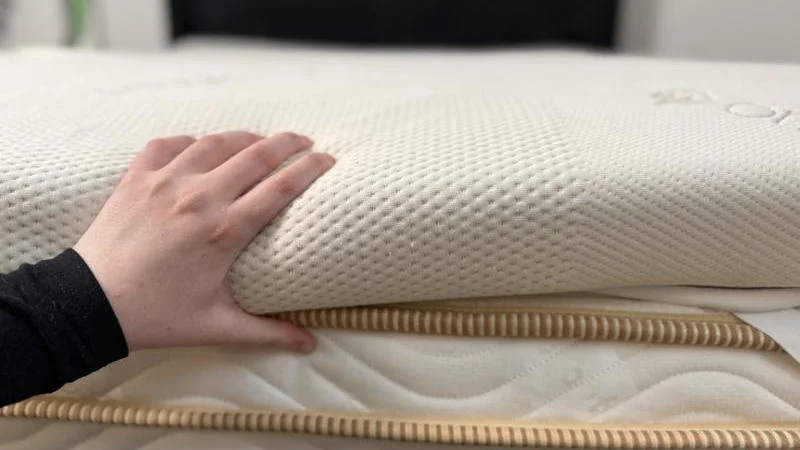
Our team of Certified Sleep Science Coaches selected the best mattress toppers by looking for top performers in the categories above: support, durability, and thickness.
But our full process involves testing several aspects of a topper’s performance, including cooling, responsiveness, and more. We evaluate and score these factors using specialized technology and firsthand accounts from testers with different body types about how a mattress topper feels.
Once we have all those scores, we calculate the overall score using a weighted formula. This overall score is a good indicator of a topper’s general quality, and is always a number out of 5.
As we decide which mattress toppers to feature on any roundup, we only include those with an overall score of 3.5 out of 5 or higher. Even if a topper does certain things well, we won’t point you towards it if it falls below this baseline.
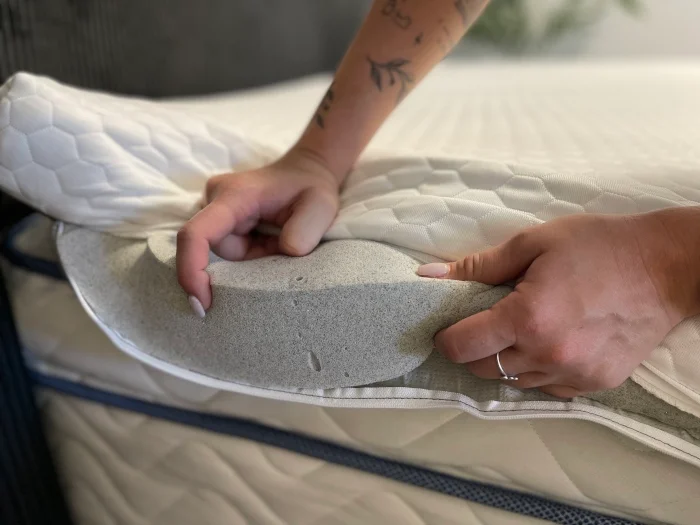
- 500+ mattresses and 100+ sleep accessories tested in person
- 30+ data points collected for each bed
- Certified Sleep Science Coaches on staff
- Expert input from our Chief Medical Advisor Dr. Raj Dasgupta (MD, FACP, FCCP, FAASM) and our Chief Medical Product Tester Dr. Hannah Habeeb (DPT)
- 40,000+ readers who bought a new bed based on our recommendations
Learn more about Mattress Clarity.
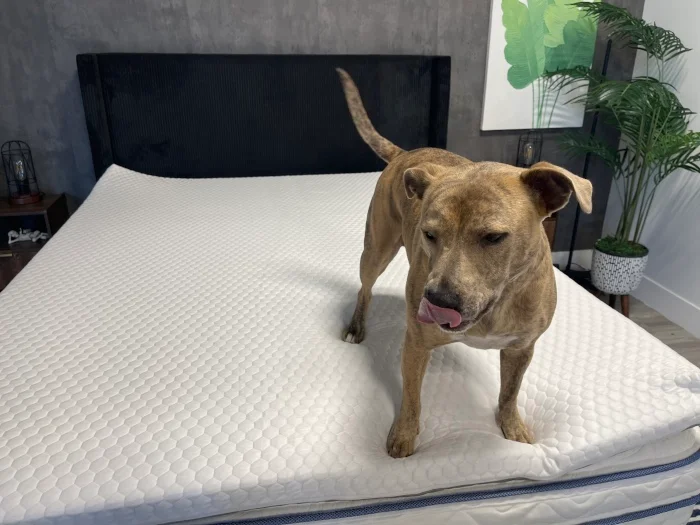
Read about our testing experience with each of the mattress toppers on our list below.
Brooklyn Bedding Microcoil Topper – Best Mattress Topper for Heavy People Overall
Brooklyn Bedding Microcoil Mattress Topper
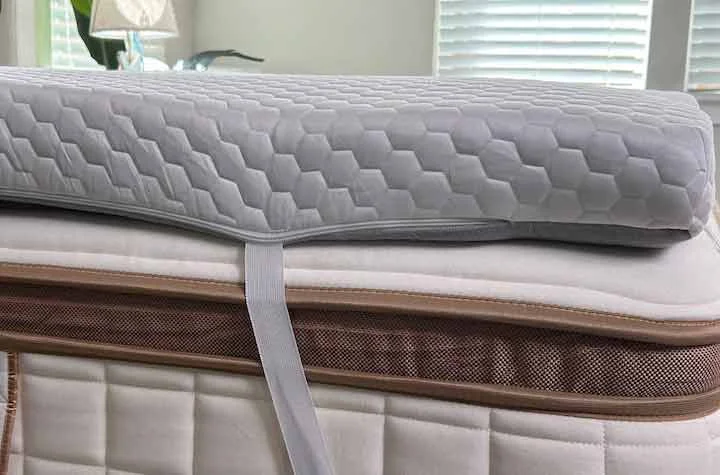
The Brooklyn Bedding Microcoil topper blends memory foam and a thin layer of coils to offer even more support and body contouring to your mattress.
Mattress Clarity Score
4.7 / 5
Heavyweight sleepers needing extra support will find it in Brooklyn Bedding’s Microcoil mattress topper. As the name suggests, this 4” topper features a layer of miniature innerspring coils sandwiched between foam layers, creating a mini-mattress to go on top of your existing bed.
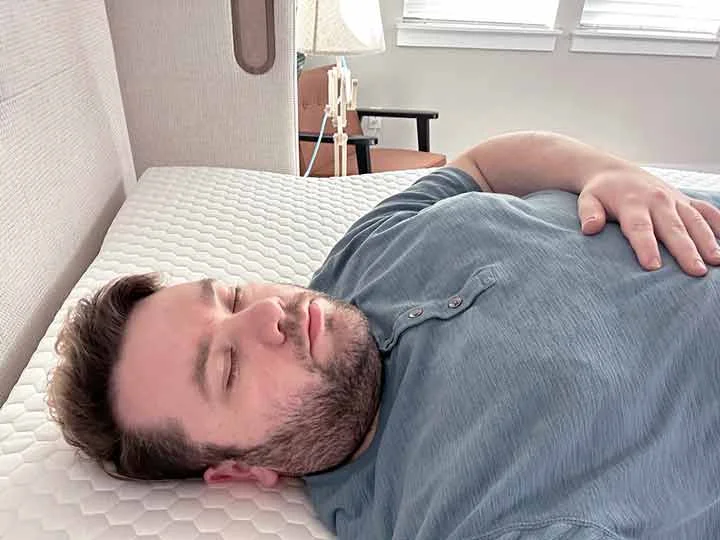
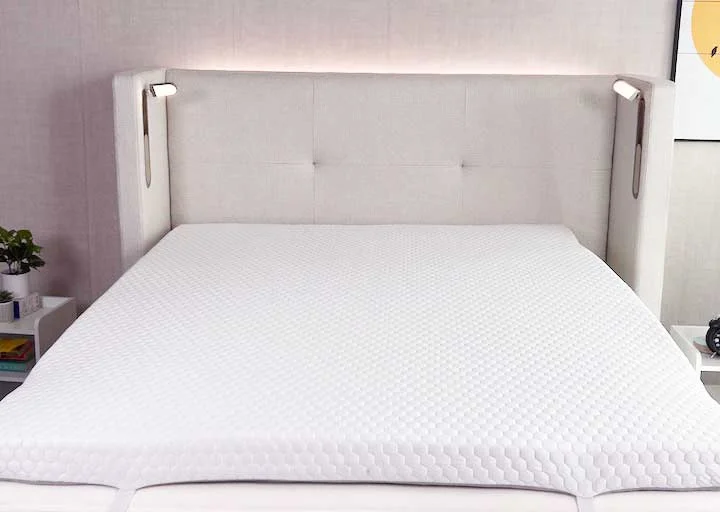
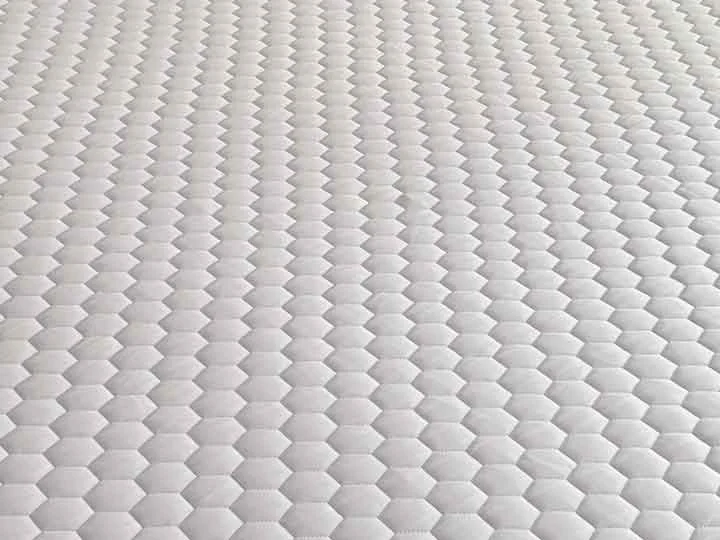
The result is a completely revitalized sleep surface, ideal for folks over 230 pounds who are tired of sinking too far into so-called “supportive” beds. My colleague Sosha Lewis gave this topper a plethora of 5/5 scores, including that for materials, support, responsiveness, and cooling.
This topper is available in both soft and firm iterations, though either should give the boost heavyweight sleepers need, thanks to the microcoils inside. Sosha tried out the firm version and rated it at 7/10, which is a smidge firmer than true medium-firm.
This should make it a better pick for heavyweight sleepers who rest on their back or stomach. “The coils noticeably contribute to your alignment,” Sosha added. “I can feel them pushing back and keeping me lifted as I lie down on the surface.”
These coils also give this topper an extra bit of bounce, not unlike a hybrid mattress. “This is super responsive for a mattress topper,” Sosha said. “When I push down on the surface, it bounces right back, and it’s super easy to move around on.” She heartily recommended it for combination sleepers and sexually active couples.
Speaking of couples, the Brooklyn Bedding Microcoil topper should also work well for these folks, courtesy of its above-average motion isolation. With the coils in its construction, Sosha was unsurprised by some of the motion transfer but thought it wouldn’t cause problems. “As a light sleeper myself, I’d say that the level of disturbance I felt when another tester was on the topper wouldn’t have woken me up,” she explained.
Hot sleepers will also love this topper. It comes swaddled in a GlacioTex cooling cover, whose fibers will help to dissipate excess heat. “During our thermal test, the surface didn’t even heat up 4 degrees after lying on it for a few minutes,” Sosha explained. “Plus, the microcoils are allowing for more airflow through the topper.”
The area that might raise some shoppers’ eyebrows is the Brooklyn Bedding Microcoil Topper’s price. It’s decidedly expensive at full retail, coming in at $660. Sales and coupons can bring this number down to around $400, which Sosha called “worth it” for the quality and experience you’ll receive. You also get 30 days to return it if it doesn’t work out, plus a 3-year warranty. Still, it’s difficult to call it a budget option. For something cheaper, I suggest you check out the Saatva Graphite Memory Foam Topper.
Read more in our full Brooklyn Bedding Microcoil Mattress Topper review.
Mattress Clarity Test Results: Brooklyn Bedding Microcoil Topper
Saatva Graphite Memory Foam Topper – Best Memory Foam Mattress Topper
Saatva Graphite Memory Foam Mattress Topper
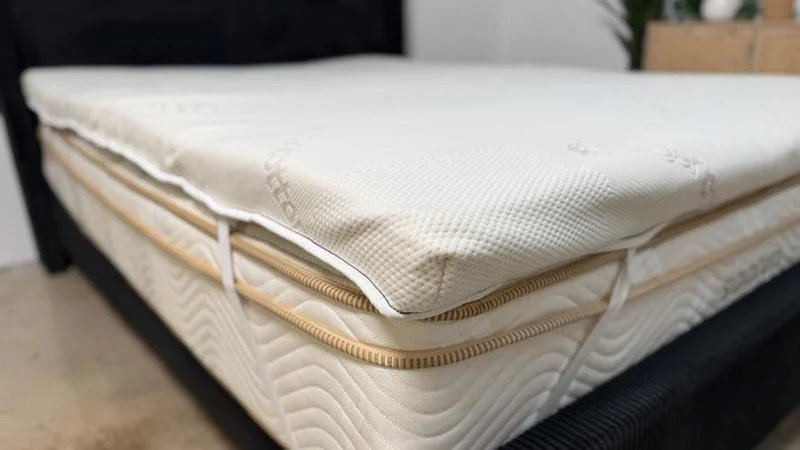
The Saatva Graphite Memory Foam Mattress Topper is a quick and affordable way to breathe life into an old mattress. It is made from durable, high-quality materials that can provide additional support for your current bed.
Mattress Clarity Score
4.1 / 5
The most common type of mattress topper out there is memory foam, and for good reason. This material provides cushioning and contouring to soften too-firm beds, but its density can also support heavyweight sleepers.
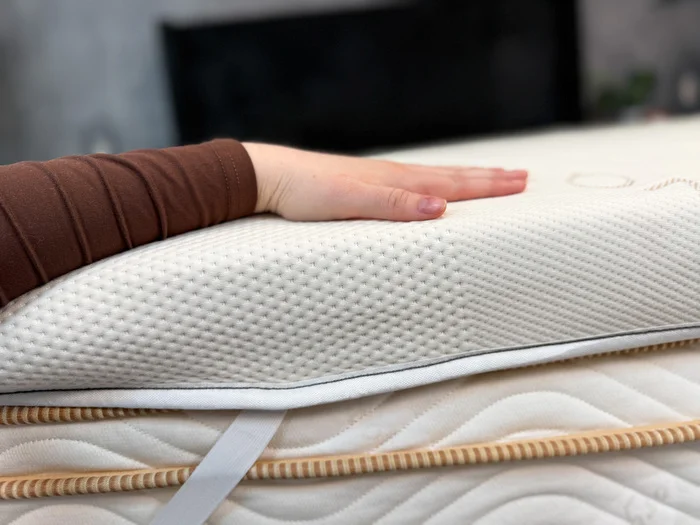
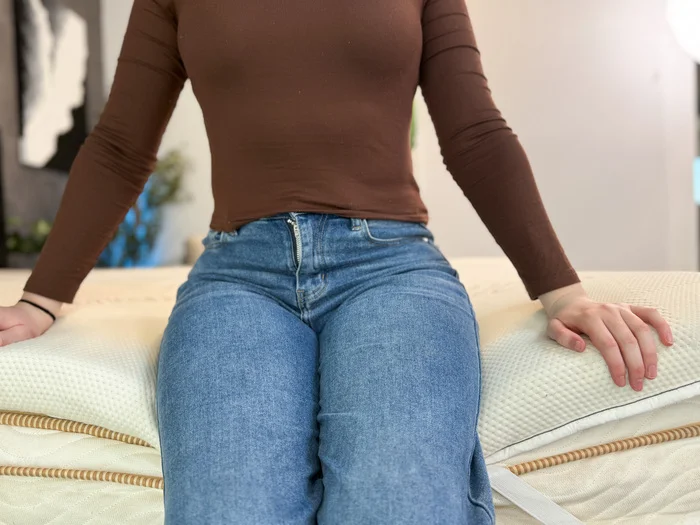
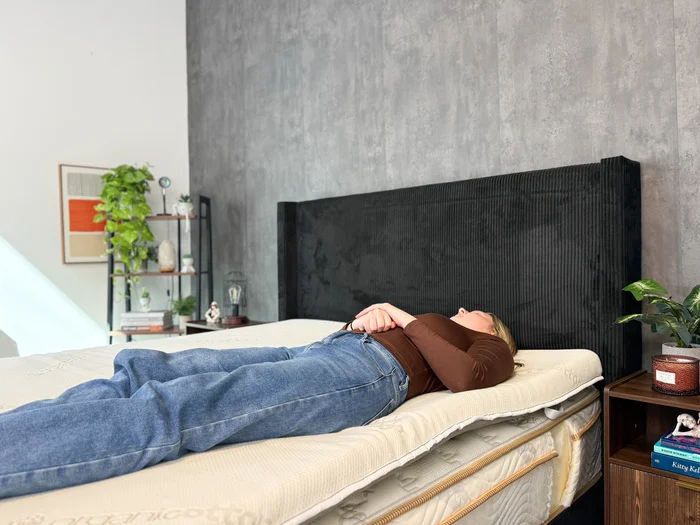
The Saatva Graphite Memory Foam Topper is one such topper; its balanced feel works well for multiple sleeping positions and folks who love the super-sink of traditional memory foam. In our tests, it earned a 5/5 materials score, plus high marks for value and support.
The Saatva mattress topper is 3” thick, giving heavyweight sleepers plenty of material to comfortably sink into. Our in-house tester, a heavyweight sleeper himself, praised this topper for its “good memory foam support,” and rated it at a true medium-firm feel, 6.5/10. Heavy back and side sleepers should most enjoy the way the foam conforms to the lower back, hips, and shoulders.
This topper is infused with graphite, known for its high thermal conductivity, which should counteract the heat-trapping nature of memory foam. Our tester found that this was the case: “The cooling on this topper is pretty good for memory foam,” he explained. “When I was lying on top, I could feel it warming slightly beneath me, but it never became stifling.” He did note that the breathable cover wasn’t cool-to-the-touch, which may deter hot sleepers looking for active cooling.
Memory foam is also known for its slow-moving, doughy feel that can give sleepers a comfortable “hug” as they sink into it. Or, in some cases, you might feel stuck in its dense layers. Our tester noted that while the Saatva topper wasn’t the bounciest thing in the world, he thought it was relatively easy to move around on. “It retains its shape pretty quickly if you get up and off the bed,” he added. “Though it’s not particularly bouncy or responsive, I think most combination sleepers should be able to move around without incident.”
However, the Saatva Graphite Topper pivoted from traditional foam in our motion isolation evaluation, which is usually a shoo-in for memory foam toppers. Still, our tester found that he could feel “a good amount of movement” from his colleague beside him as they rested on the topper’s surface. “It’s not extreme, but more than you’d expect for memory foam,” he explained. If you’re looking for top-notch motion absorption from a foam topper, I’d recommend the Nolah topper instead.
A queen-size Saatva Graphite Memory Foam Topper retails for $305, which our tester called “good value, as the quality justifies the expense.” Saatva’s customer service can’t be beat, either, and you get a 180-night sleep trial with this topper. After that, it’s backed by a 1-year warranty.
Find out more in our dedicated Saatva mattress topper review.
Mattress Clarity Test Results: Saatva Graphite Memory Foam Topper
Nolah Mattress Topper – Best Soft Mattress Topper for Heavy People
Nolah Mattress Topper
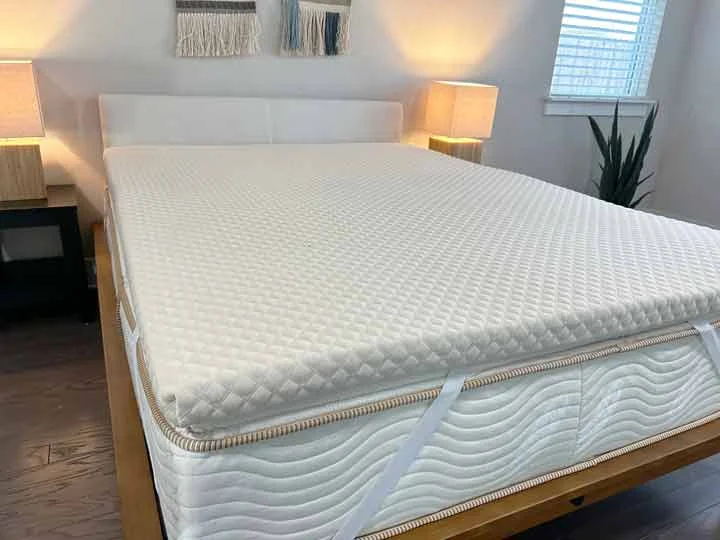
AirFoam™ topper offering plush softness and enhanced contouring.
Mattress Clarity Score
4.3 / 5
Some heavyweight sleepers buy firmer mattresses in the hope of getting better support, but sometimes extra-firm ends up being too hard for comfort. For a plush mattress topper that’ll work well for folks with a larger frame, look no further than the Nolah topper. This 2” all-foam topper will make your bed feel “pillowy and soft,” per fellow tester Kenny Timper. He awarded the topper a 5/5 rating for both materials and motion transfer, recommending it to side sleepers and couples who love a soft, slow-moving surface.
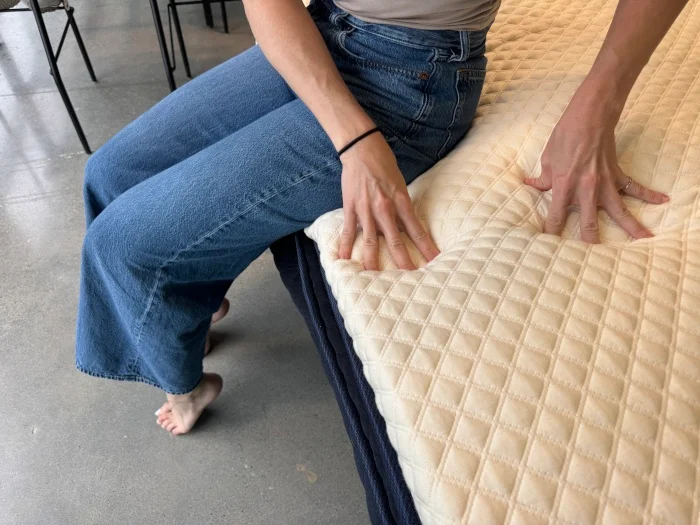
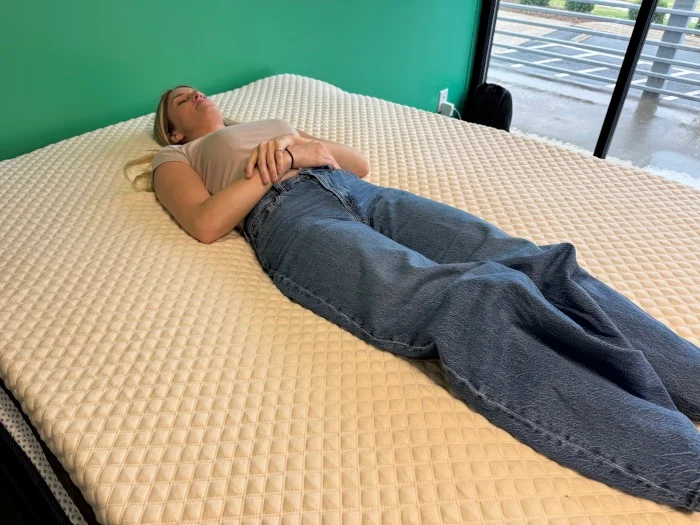
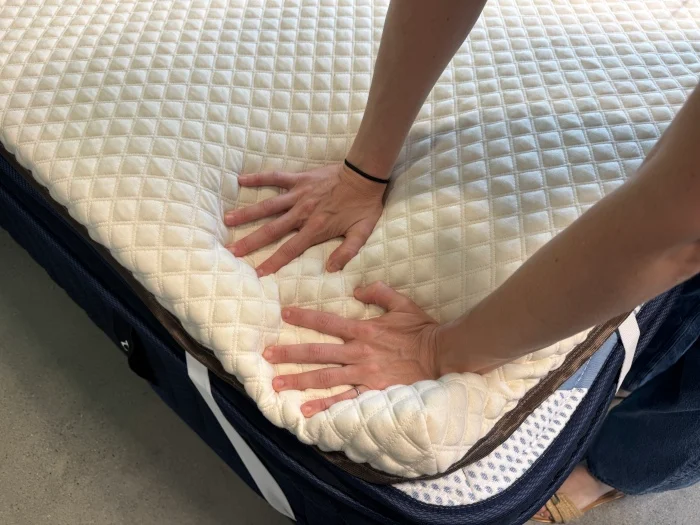
The Nolah topper is available in both plush and luxury firm models. We tested out the plusher model, which came in at a very soft 5/10 on our firmness scale.
Kenny, an average-weight sleeper, said he had “plenty of sinkage,” and noted it could be too soft for some heavier folks. He especially recommended it “for side sleepers with a firm bed, since it’ll give more cushioning around the hips and shoulders.” Back and stomach sleepers in this weight category may want to opt for the luxury firm for extra support.
The topper should also appeal to folks who love traditional memory foam: “This is for the sleepers that love to slowly sink into their mattress and feel ‘hugged’ by it,” Kenny explained. This slow-moving feel also contributed to the topper’s excellent motion isolation. Kenny tried out the topper alongside another tester and wasn’t disturbed by their movements. “If you sleep with a restless partner, you should sleep soundly through their tossing or turning,” he added.
This does mean that the topper isn’t very responsive, though. Kenny had to put in some effort to switch positions on its surface. “I never felt totally ‘stuck’ in the foam,” he explained. “But it’s definitely not going to do any favors for combination sleepers.” If you’re looking for a bouncier topper, I’d recommend a latex topper, like the Avocado Eco Organic Topper.
The Nolah retails for about $449 regularly, but frequent sales bring it as low as $314 for a queen-size. Kenny thought this was a little pricey for the simple design, but it does get the job done. The topper also comes with an extremely generous 10-year warranty, one of the longest I’ve seen. Nolah also offers a 30-day return policy for mattress accessories.
For more information, see our full Nolah Mattress Topper review.
Mattress Clarity Test Results: Nolah Mattress Topper
Helix Premium GlacioTex™ Mattress Topper – Best Mattress Topper for Heavy People with Back Pain
Helix GlacioTex Premium Mattress Topper
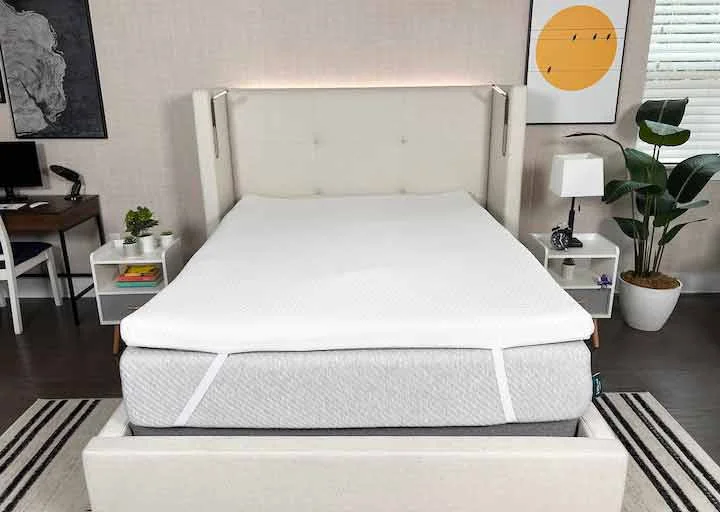
A cooling, gel-infused memory foam topper that balances support and temperature control.
Mattress Clarity Score
4.2 / 5
A mattress that’s ill-suited to your size or preferred sleeping position is just one reason you might be waking up with back pain. A good mattress topper, like the Premium GlacioTex one from Helix, can help give your mattress the support and pressure relief you need to remain comfortable and aligned. This topper features microcoils and foam to do just that, and it should overall yield the extra firmness that heavyweight sleepers need to tackle pesky back pain. Our testers gave this topper a 5/5 for its materials, plus a 4/5 for support.
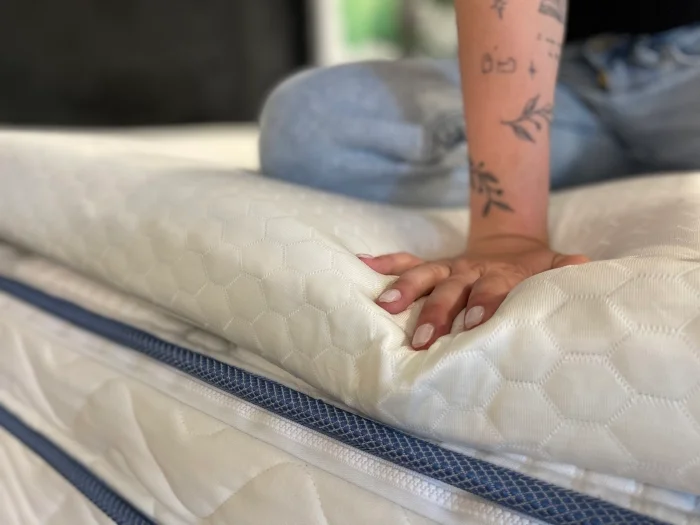
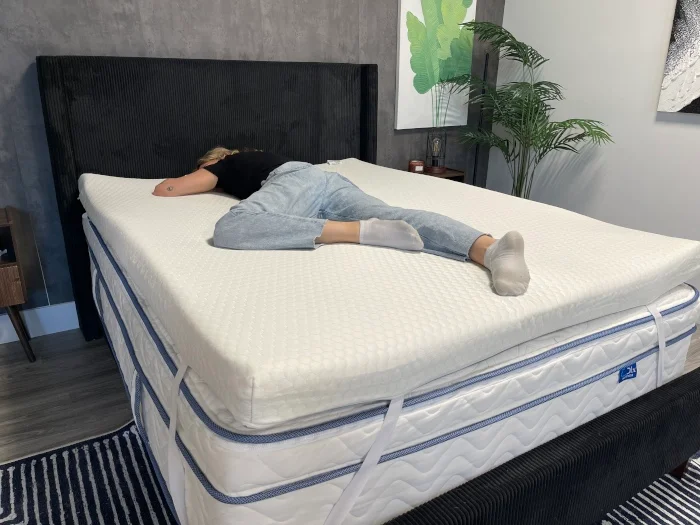
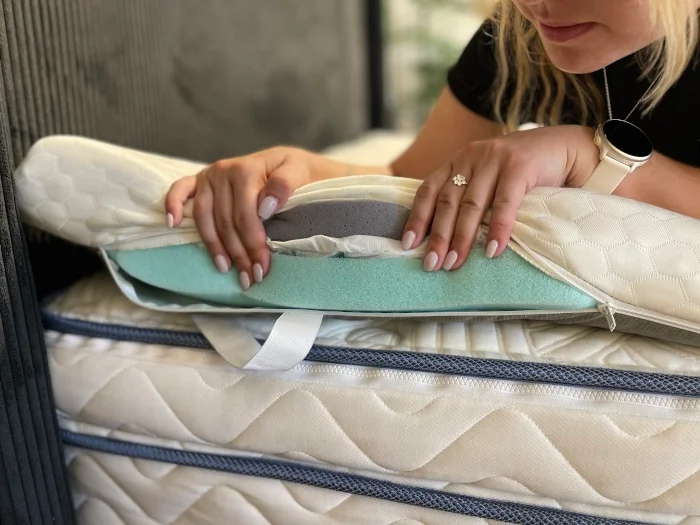
The Luxury Firm version of the Helix Premium Topper has a medium-firm feel that’s perfect for sleepers dealing with back pain, specifically coming in at 7/10 on our scale. It’s also a touch firmer than the industry standard (6.5), which should give heavyweight sleepers an extra boost of support to prevent too much sinkage.
“This topper is firmer than I expected. It’s supportive but has just the right amount of sinkage,” our in-house tester added. “On my back, it cradles my lower back, helping to keep me aligned.” This is just what we want to hear for back pain.
Aside from back pain, the Helix topper should also work to address overheating. The GlacioTex fibers in its cover give it a cool-to-the-touch feel. Our in-house testers did notice a bit of heat building up beneath them while lying down, but it was never uncomfortable. For reference, our thermal gun test yielded only a 5-degree increase in surface temperature, which signals that the topper isn’t holding onto too much heat. “The coils inside are probably helping with airflow,” one tester added.
These coils usually mean a super-bouncy sleep surface, but we found that this topper had a surprisingly slow response time. “It took a while to bounce back into place when you pressed down on it,” our tester observed. It actually made for better motion isolation than expected. “With someone else on the topper, I barely felt any of their movement, even with the coils,” our tester said. For those who prefer a microcoil topper with more bounce, I’d recommend Brooklyn Bedding’s Microcoil topper.
If you’re interested in trying it out for yourself, a queen-size Helix Premium GlacioTex Topper usually runs about $500, with sales bringing it down to about $374. It also comes with a 120-night sleep trial and a 1-year warranty.
Find out more in our dedicated Helix Premium GlacioTex Mattress Topper review.
Mattress Clarity Test Results: Helix Premium GlacioTex™ Mattress Topper
ViscoSoft Active Cooling Copper Topper – Best Cooling Mattress Topper for Heavy People
ViscoSoft Active Cooling Copper Topper
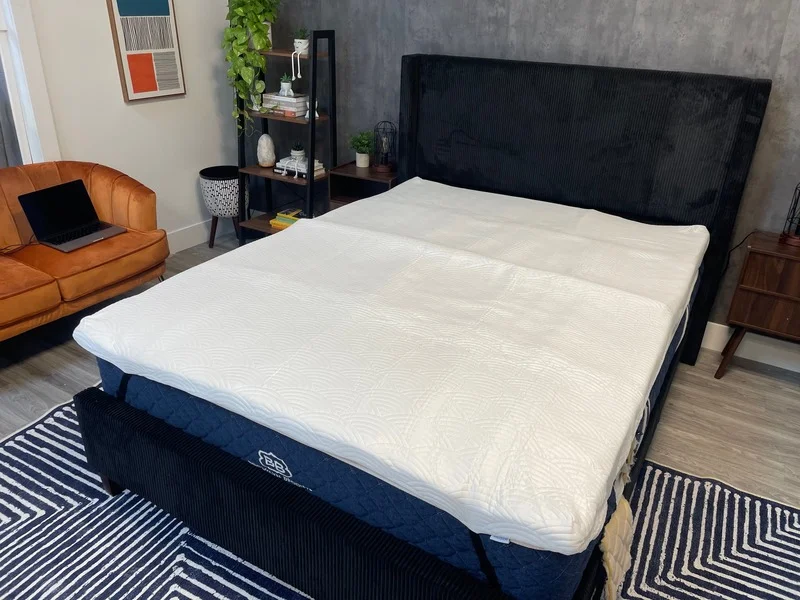
The ViscoSoft Active Cooling Copper Topper is a 4-inch memory foam mattress topper that’s infused with copper to provide a crisper, fresher sleep surface.
Mattress Clarity Score
4.5 / 5
Is overheating a problem on your current mattress? While a new, cooler mattress could do the trick, you could opt for the more affordable avenue: a cooling mattress topper, like the ViscoSoft Active Cooling Copper Topper. This mattress topper features copper-infused foam wrapped in a cooling fiber cover to wick away excess heat, earning a 4.5/5 in our temperature-regulation tests. It also earned a perfect score for its materials and another 4.5/5 for support.
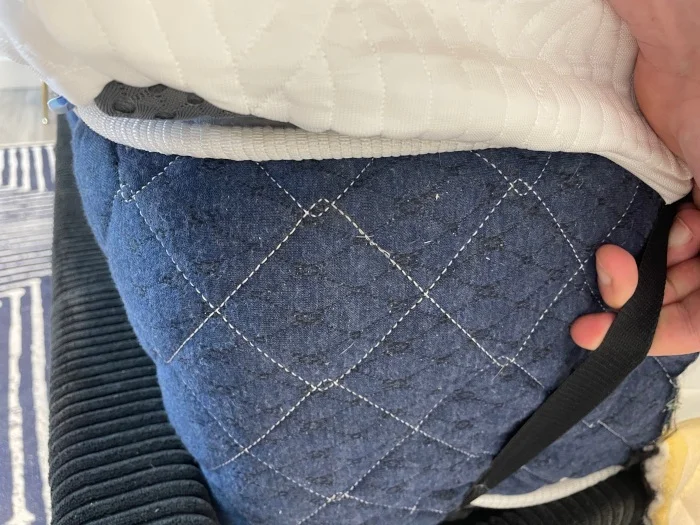
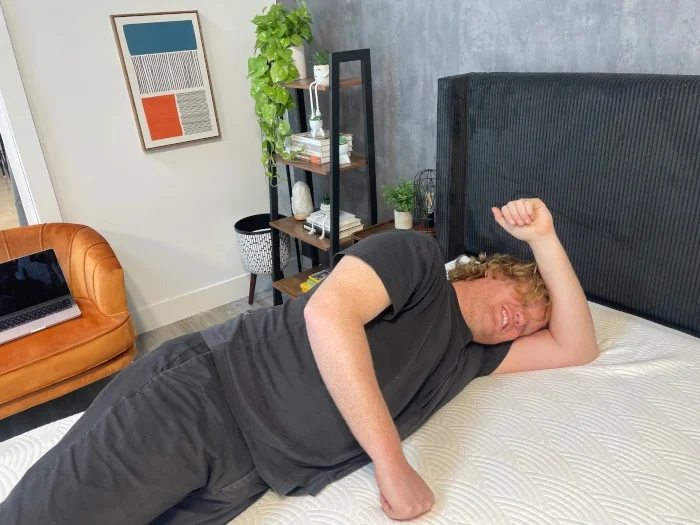
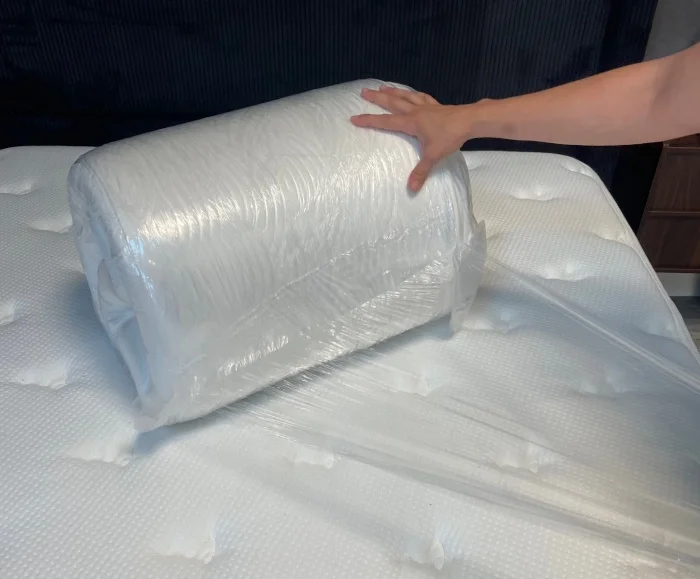
This topper stands at a mighty 4” tall, which should add plenty of height to your bed, plus plenty of material for heavier sleepers to sink into. Our in-house tester is a heavyweight sleeper and praised the topper’s ability to keep him supported. “It’s plush but keeps me aligned at the same time,” he said. “But I think that side sleepers who want to soften up their bed are going to enjoy this topper the most.”
Side sleepers who run hot will be the most satisfied, thanks to the ViscoSoft topper’s cooling technology. The cover is made with phase-change technology that helps to deflect and dissipate excess heat. Inside are two layers of foam: the first contains cooling copper infusions, while the second provides firm support. “Despite its all-foam construction, the temperature never rose on this topper,” our tester explained. “Even after lying there for 20 minutes, I was still comfortable, so I gladly recommend it to hot sleepers who love memory foam.”
Couples should also appreciate the foam’s ability to absorb and stifle motion. When our tester tried out this tester alongside a colleague, he had little to complain about. “I could feel them moving on the other side, but I couldn’t tell you what they were doing,” he said. “It’s not the best motion isolation I’ve encountered from memory foam, but it’ll get the job done for most light sleepers.”
Still, the feel overall is that of true memory foam, which may not appeal to all sleepers. “It’s not very responsive,” our tester added. “With this topper, you’ll likely feel more ‘in’ your bed than on it.”
If you’re a combination sleeper or just someone who likes some springiness in your mattress, check out the Avocado Eco Organic Topper. It contains latex, which has a similar feel to foam but with a lot more bounce.
The ViscoSoft Active Cooling Topper is “high quality and high price,” per our tester. A queen-size will run you about $400 to $300, depending on sales and coupons. It also comes with a 90-day money-back guarantee, so you can return the topper if it isn’t the right fit for you. If you decide to keep it, it’s covered by a 5-year warranty.
Mattress Clarity Test Results: Helix Premium GlacioTex™ Mattress Topper
Avocado Eco Organic Topper – Best Latex Mattress Topper for Heavy People
Avocado Eco Organic Mattress Topper
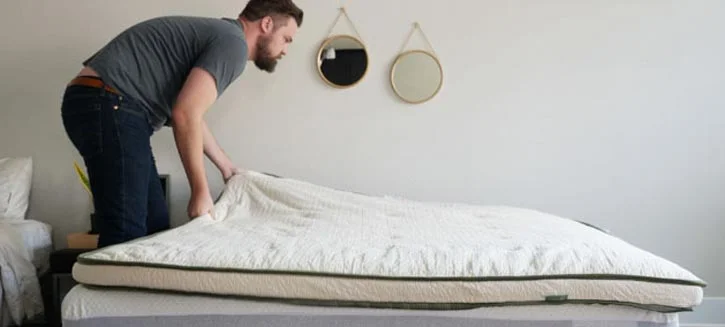
Avocado’s Latex mattress topper is made from the highest quality organic materials and has a bouncy, supportive feel.
Mattress Clarity Score
4.3 / 5
Latex mattress toppers are a great choice for heavyweight sleepers. Like memory foam, they offer plenty of cushy contouring, but they also tend to bring a bit more support. This description is more than apt for the soft-but-sturdy Avocado Eco Organic mattress topper, which I had the pleasure of testing out.
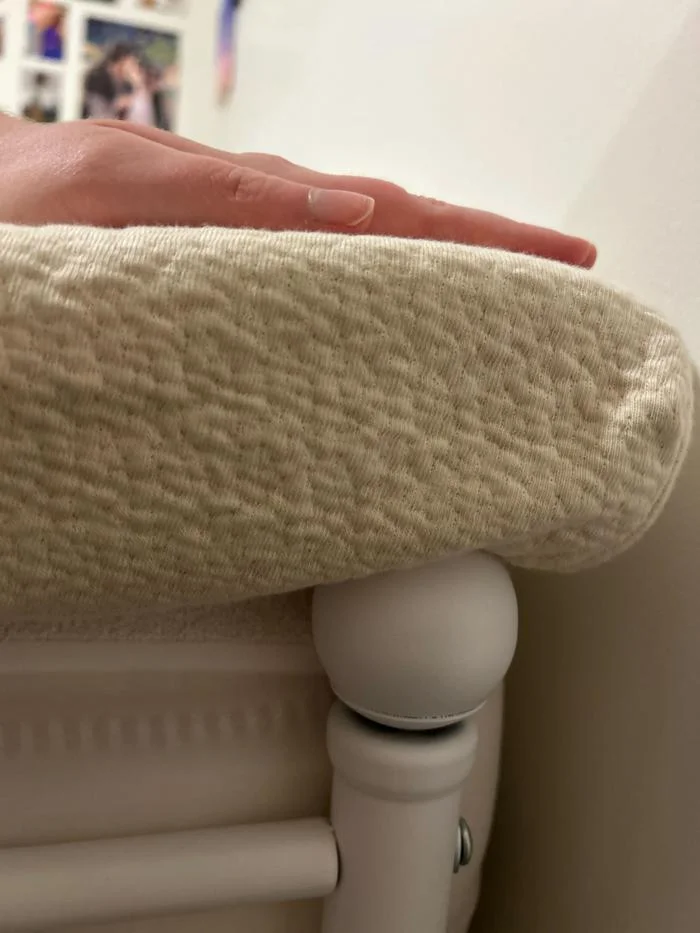
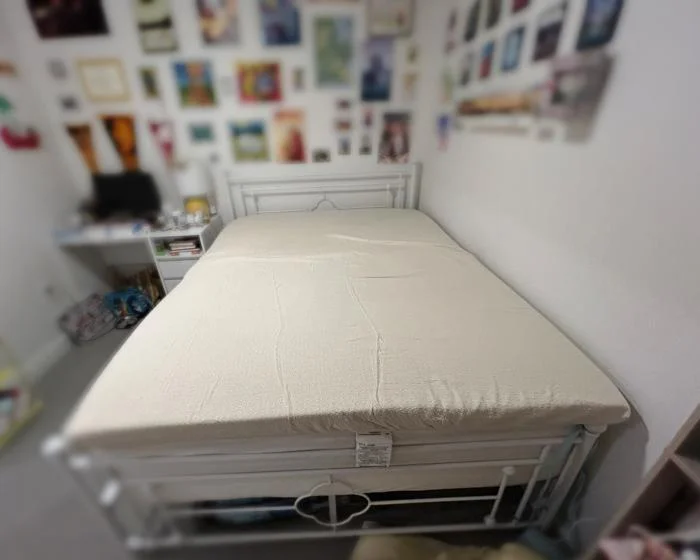
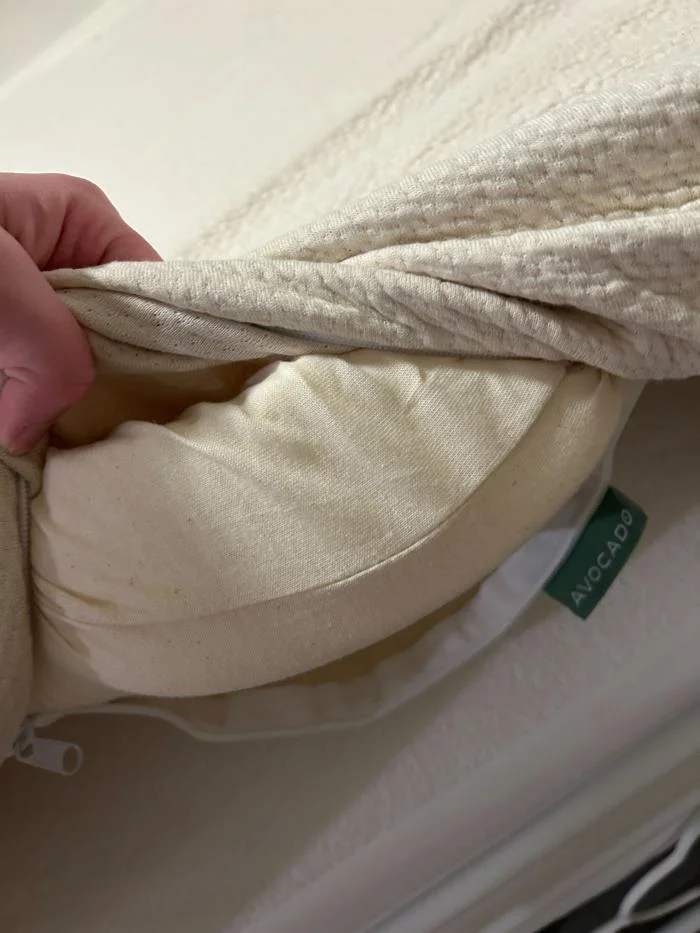
It’s available in multiple firmness levels, but even the softest version was dense enough to keep me properly aligned in each sleeping position. Though the sturdy construction was a performance highlight for me, I also gave this topper high ratings for its support, responsiveness, and cooling.
Customization is the name of the game with this topper, as you can choose from 2” and 3” thicknesses and a plush or firm feel. I opted for the 3” plush model, which contains soft Talalay latex for extra cushioning. The firm version uses Dunlop latex, which gives a more lifted, springier feel. Regardless of which option heavyweight sleepers choose, I think both will keep them comfortably aligned on the mattress surface because of the supportive, durable feel latex offers.
Latex is also very breathable, which came in handy for my chronic night sweats. This topper is wrapped in an organic cotton cover; while not cool to the touch, it should help the latex breathe. As a hot sleeper, I had no complaints. Since I sleep on a Saatva Classic, which also sports an organic cotton cover, it feels about the same as my usual setup, which is comfortably temperature-neutral.
I’m also a combination sleeper and love a springy surface, so I tend to steer clear of true memory foam. The Avocado topper provides the best of both worlds: plenty of cushioning comfort and responsiveness to make moving around simple. The soft version of this topper definitely had a doughier feel than other latex beds I’ve tried, but I still felt like I had relative ease of movement. The firmer Dunlop latex in the other model should only amplify this bounce.
What this topper does amplify, though, is motion from a partner. I’m a notoriously light sleeper, and I feel just about everything on my Saatva mattress. The Avocado topper did stifle a bit of that movement, but I think that was purely because of its thickness. I imagine you’ll still feel your partner’s movements if you put it on top of a mattress with poor motion isolation, so I wouldn’t recommend it for couples. These folks should check out the Nolah mattress topper instead.
Depending on which configuration you choose, the price of the Avocado Eco Organic Mattress Topper varies from about $329 to $499 for a queen-size. For pure organic latex, I think this is a fair price, especially given how hefty it looks and feels. I believe it’ll last well beyond its included 1-year warranty. If you’re still unsure if it’s right for you, Avocado also gives you 100 nights to try it out for yourself.
Read more in our full Avocado mattress topper review.
Mattress Clarity Test Results: Avocado Eco Organic Topper
Latest Updates: In March of 2026, we revamped this page to reflect recent re-testing of hundreds of sleep accessories, including dozens of mattress toppers. When comparing the old panel to our new-and-improved list, we kept many of the same products, such as the Saatva Graphite topper and the Helix GlacioTex topper. But we added a couple new picks that impressed us—specifically, the Brooklyn Bedding Microcoil Topper and the Avocado topper.
Other Mattress Toppers Considered
If you didn’t feel inclined toward any of the options above, here are some other toppers that we’ve reviewed and recommended:
- TEMPUR-Adapt Mattress Topper – The TEMPUR-Adapt topper features Tempur-Pedic’s famous TEMPUR material that conforms to the curves of your body, but won’t let you sink in too far. You’ll feel the topper give you the support and comfort just where you need it. While it should help back and side sleepers who are dealing with back pain or a too-firm mattress, we don’t think it’s a match for stomach sleepers over 230 pounds.
- Coop Sleep Goods Retreat Topper – If you love the feel of memory foam, but you don’t want something big and bulky, consider the Coop Sleep Goods Retreat Topper. Instead of a thick piece of memory foam, the Coop features shredded memory foam in its design. It looks similar to a feather bed, but offers great pressure relief. Even at 5 inches thick, it may not be the most supportive, which could pose a problem for heavyweight sleepers dealing with a sagging mattress.
- Birch Organic Topper – The Birch features organic cotton, wool, and natural latex foam. In addition to its bounce, latex is known for its breathability, so you shouldn’t sleep hot on the Birch. It should also provide a mix of pressure relief and responsive support, unlike traditional foam. But at full price, the Birch topper costs around $630, and even with discounts, it may not appeal to budget shoppers.
What Makes a Great Mattress Topper for Heavy People
We’ve tested dozens of toppers geared toward all types of sleepers and preferences. But as I’ve mentioned, the best toppers for heavy people will pay extra attention to support and durability in their construction. Let’s dive deeper into how we evaluate and rate these factors, so you can make an informed decision about which topper is right for you.
Support
Heavier individuals often don’t get enough support from traditional mattresses, so that’s why it’s first on my list of importance for mattress toppers. Most folks associate mattress toppers with a plush feel, better for softening up a too-firm bed, but there are many that can actually reinvigorate a lackluster sleep surface. If your mattress is too old and has started to sag, a supportive mattress topper can help get it back to a comfortable level.
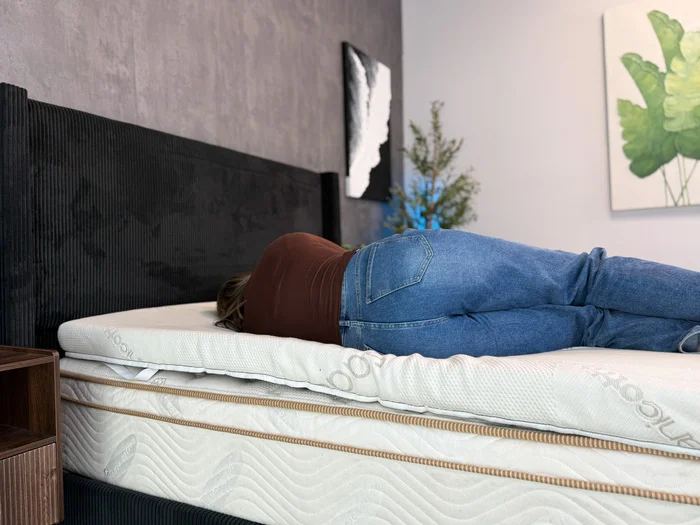
Spinal alignment is the crux of support. Your spine has a natural S-curve that your mattress should conform to by providing the right mix of lift and give in the right places. A mattress that forces you out of this comfortable posture is therefore unsupportive.
Most folks think that a firmer mattress automatically means more support. But you can have an unsupportive firm bed and a soft, pressure-relieving mattress that still provides plenty of support. “I often recommend medium-firm mattresses for the best balance of pressure relief and support,” says Dr. Dasgupta. “This balance can suit a wide range of sleeper types.” Studies often tout these as the best for spinal alignment and reducing the risk of back pain.
In some cases, heavyweight sleepers may find that a medium-firm mattress is too soft for their needs. That’s why it’s always important to take your customary sleeping position, alongside your body type, into account. For more in-depth information, I delve into that in the dedicated section below.
Durability
The last thing you want is your mattress topper to start deteriorating after a few months of use. At that point, you might wish you had invested in a brand new mattress. A durable mattress topper will feature high-quality materials and a construction designed to last, but how do you know what to look for?
First, you can look at our reviews. In our materials assessment, we examine the quality of the topper’s construction. We want to see things like high-density foam or latex, a removable, washable cover, and maybe even some certifications for safe, sustainable, or organic production. These toppers should look and feel premium, especially if they’re marketed as higher-end. A durable mattress topper wouldn’t score below 4/5 in this test.
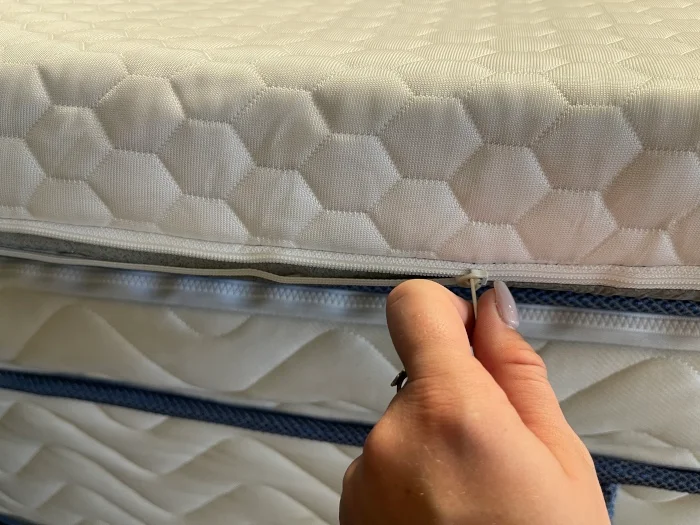
Another marker for durability is a lengthy warranty. We view warranties as a preview of how long the manufacturer expects a product to last, so a longer warranty speaks to higher confidence in the product. Warranties are rarer for sleep accessories like mattress toppers, but every option on this list comes with at least a 1-year warranty.
Thickness
Thicker mattress toppers aren’t just more durable; they’re usually more effective. The thicker a topper, the more material there is to work with, and the more dramatically it can transform a mattress’s feel.
Most budget toppers start out at 1” or 1.5”, but I’d call these too thin for heavyweight sleepers. Choose one that’s at least 2” thick. This gives you plenty of room to sink deeply into the surface without “bottoming out” on the mattress surface below.
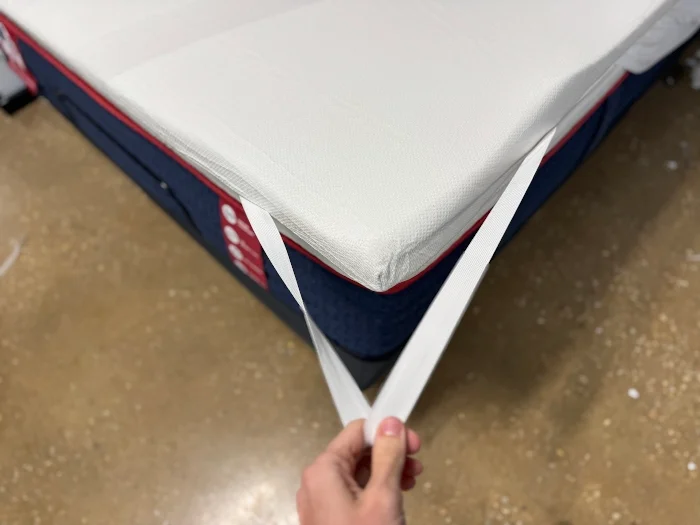
There’s theoretically no limit to how thick a topper can be, but it’s important to consider the height of your current mattress. If your bed is over 12” thick, a 4” topper, while luxurious, may make it too lofty. Take your bed frame and overhead space into account, as well as your sheets. A thicker mattress may require extra investment, like a deep-pocket fitted sheet.
What Else Is Important When Buying Mattress Toppers?
Still unsure of what’s right for you? Here are some other considerations to take into account as you peruse the mattress topper market.
Materials
What’s in a mattress topper determines its feel, durability, and other performance factors. This makes some toppers better-suited to certain sleeper types, and not just those with a larger frame.

Foam
Foam mattress toppers are some of the most prolific, whether they’re made with traditional memory foam or other synthetic polyfoams. They’re usually prized for their cushioning and pressure-relieving properties. Most of the time, they’re used to soften up a too-firm mattress, but some high-density toppers can actually provide the support heavyweight sleepers need.
Memory foam tends to create a slow-moving feel that’s great for isolating motion, but it isn’t the most responsive. It also tends to trap heat, so it may not be the best option for hot sleepers.
Latex
Latex is a material naturally derived from the sap of rubber trees, yielding a uniquely buoyant feel. There are two main types of latex: Dunlop and Talalay. Dunlop has a firmer, denser feel, while Talalay is softer and squishier.
Like memory foam, latex can relieve pressure, with some studies citing it as even more effective than foam. It’s also more breathable than foam, making it more attractive to sleepers who run hot. However, its natural and eco-friendly origins often drive up the price, so I wouldn’t call it a budget option.
Down and Down Alternative
Down refers to the super-soft underlayer of feathers from ducks or geese. It’s a favorite for pillows, yielding a fluffy, airy feel. In mattress toppers, this can make your bed feel like a tried-and-true featherbed. If you’re sensitive to animal products, a hypoallergenic option is down alternative. This is usually made from natural or synthetic microfibers, such as polyester or cotton.
Neither down nor down alternative offers much support, so it may not be the best for heavyweight sleepers. A down mattress topper might work if you like the feel of your mattress, but you’re looking to add a pillow top, for example.
Microcoils
A more recent innovation in the mattress topper world is microcoils. As the name implies, these are miniature coils just like the ones you can find in innerspring or hybrid mattresses. They’re paired with layers of foam or latex, creating a sort of mini-mattress to go on top of your mattress.
Microcoil toppers usually yield a firmer, more supportive feel. This makes them great for heavyweight sleepers who need extra support from their current bed, rather than the super-sink of memory foam. I will note that their complex construction does come with a higher price tag.
Sleeping Position
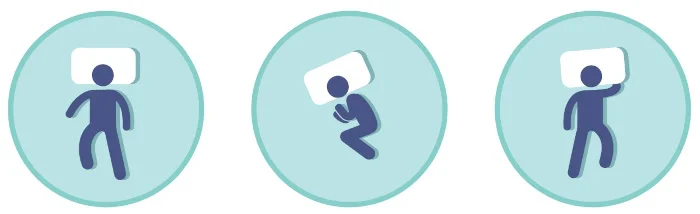
“Alongside your body type, your sleeping position has a huge impact on what you need in a mattress to feel comfortable,” says Dr. Dasgupta. “The ideal level of firmness, support, and pressure relief varies depending on your preferred sleeping positions.” Let’s go over our recommendations for each, so you can choose the right topper for your needs.
Side Sleepers
Sleeping on your side puts strain on the shoulders and hips as they dig into the mattress surface. You’ll want your mattress to provide enough sinkage in these areas while still keeping you lifted enough to stay aligned. We recommend softer beds for most side sleepers, but a lot of this softness will be wiped out by a heavyweight sleeper. They might want to aim for a medium or medium-firm feel with their bed or topper. Just be careful not to go too firm to risk shoulder or hip pain.
Back Sleepers
Back sleepers need a balance of support with gentle contouring. Spinal alignment is key, but you’ll also want something to fill in the gap at the lower back, preventing pain or discomfort in the lumbar spine. We usually recommend medium-firm mattresses for these sleepers, and the same is true for most heavyweight sleepers. Some might want to opt for a firmer topper if their current bed is too soft.
Stomach Sleepers
Heavyweight stomach sleepers will want to prioritize support, otherwise their hips may sink too far into the mattress and cause lower back pain. Firmer sleep surfaces are best to prevent this. Some stomach sleepers over 230 might even feel most comfortable on an extra-firm mattress.
Combination Sleepers
A combination sleeper is someone who rotates between two or all sleeping positions throughout the night. Aside from finding a sleep surface that accommodates all your preferred positions, you might want to consider something more responsive. A responsive mattress or topper will spring back into shape when you press down or move around on top of it, making switching positions a breeze. Latex and coils are the best to achieve this.
Cooling
If you constantly overheat on your current mattress, it might be time to make a switch. But rather than purchase a new cooling bed, you can invest in a mattress topper with cooling features. This might be as simple as a breathable, moisture-wicking cover or cooling gel-infused memory foam. Some toppers are perforated or include spaced coils to allow for better airflow. We’ve also found that latex is better than memory foam for keeping excess body heat at bay.
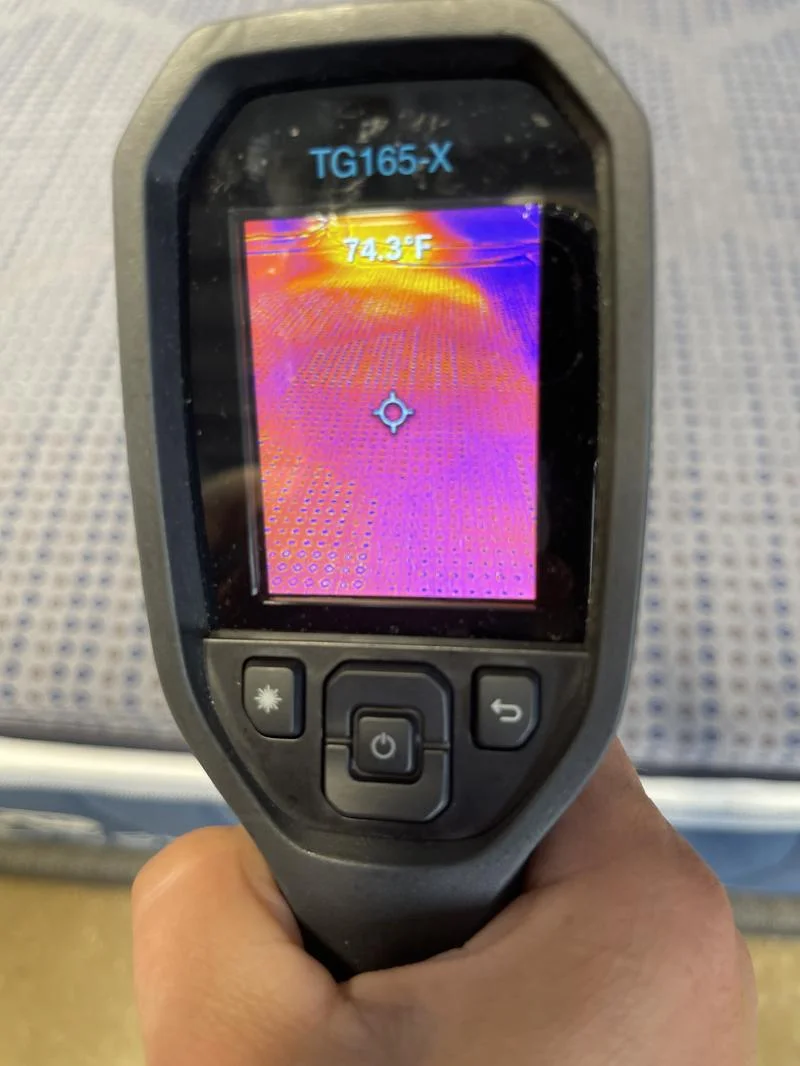
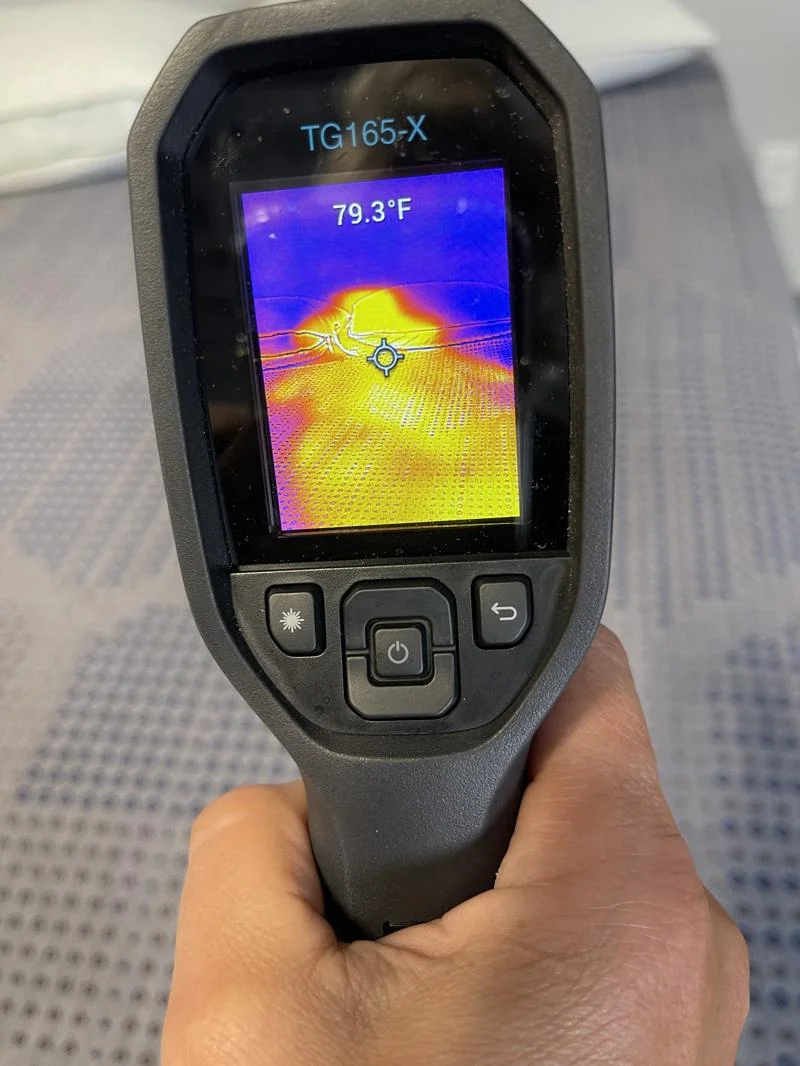
Every mattress topper gets a cooling score out of 5. This comes from either our tester’s experience resting on the topper for a few nights and judging whether it traps heat or our in-house cooling test. Our testers will use a thermal gun to measure the increase in the topper’s surface temperature before and after lying on it for a few minutes, which gives us a feel for how much heat it holds onto. A topper with a cooling score of 4/5 should be a good choice for folks who sleep hot, while those that score higher should provide some manner of active cooling.
Price
Most shoppers opt for a mattress topper over a mattress to save the thousands of dollars a new bed can cost. However, folks on a strict budget will want to exercise caution; sometimes a deal is too good to be true, and a cheap topper may not boast the best quality.
You can expect to pay a couple of hundred dollars for a well-made mattress topper. Options under $100 are available but rare, and may not contain the highest-quality materials. It will also depend on what the topper is made of. Generally, foam toppers are the best for affordability, while latex and microcoil toppers will cost more.
We give every topper an overall value rating. This compares the experience we had with the product against the listed price, and whether we think it’s worth it. A 3.5 or 4/5 means you’re likely getting what you paid for, which should satisfy most shoppers. Anything higher indicates an exceptional deal for a higher-end experience.
If you’re still unsure whether a topper has the right bang for your buck, I always recommend opting for one with a sleep trial. This allows you to give the product a go before deciding if it’s the right one for you. Companies’ return policies differ, but you usually receive a full refund if you return it within the trial period, which typically lasts around a month or two.
FAQs
What type of mattress is best for a 250-lb person?
Most folks over 230 pounds fare best on a mattress with coils, be that a hybrid or innerspring mattress. These give the extra boost of support that they need to keep from sinking too far into a bed and compromising their alignment.
Can a mattress topper help with spinal alignment?
If your existing mattress is too soft and saggy to keep your spine properly aligned, a mattress topper can indeed help. Opt for one with a firmer feel, or even one that contains coils for extra support. Also consider your sleeping position and what you need to feel comfortable. For example, some side sleepers need a bit of sinkage around the hips and shoulders, while stomach sleepers do best on an extra-firm sleep surface to keep the hips propped up.
Is a memory foam mattress good for a 300-lb person?
Some memory foam mattresses can work for heavyweight sleepers, especially if they feature high-density memory foam in their support layers. Firmer foam mattresses will generally work best. They may be the better picks for certain sleeping positions that need a bit of sinkage, like side and back sleepers over dedicated stomach sleepers.
References
- Zhao, L., Tang, J., Zhou, M., & Shen, K. (2022). A review of the coefficient of thermal expansion and thermal conductivity of graphite. New Carbon Materials, 37(3), 544–555. https://doi.org/10.1016/s1872-5805(22)60603-6
- Radwan, A., Fess, P., James, D., Murphy, J., Myers, J., Rooney, M., Taylor, J., & Torii, A. (2015). Effect of different mattress designs on promoting sleep quality, pain reduction, and spinal alignment in adults with or without back pain; systematic review of controlled trials. Sleep Health, 1(4), 257–267. https://doi.org/10.1016/j.sleh.2015.08.001
- Low, F.-Z., Chua, M. C.-H., Lim, P.-Y., & Yeow, C.-H. (2017). Effects of Mattress Material on Body Pressure Profiles in Different Sleeping Postures. Journal of Chiropractic Medicine, 16(1), 1–9. https://doi.org/10.1016/j.jcm.2016.09.002