


If you suffer from back pain, getting a good night’s sleep can feel impossible. Back pain can make it a chore to find a comfortable sleeping position and can disrupt sleep quality. However, there are some ways to potentially battle back pain before bed and better alleviate its symptoms that may disrupt sleep.
In this article, I’m going to go through some of the following ways that may help you understand how to sleep with back pain, with the hope of helping you achieve some relief. Some of the guidance and potential solutions I’ll be discussing here are:
- The best and worst sleeping positions for back pain
- Using pillows to fight back and neck pain
- Choosing the right mattress for back pain
- Sleep routine strategies for back pain
- Stretches for back pain
- How to sleep with back pain while pregnant
I’ll also explain why back pain gets worse at night, and some of the triggers for back pain inflammation that many face daily.
Editor’s Note: The information provided in this article should not be considered a substitute for medical advice. Please consult a medical professional if you have personal health-related questions.
What Is the Best Way to Sleep With Back Pain?
- Try sleeping on your back: According to Keck Medicine of USC, the optimal sleeping position to reduce back pain is on your back. This is because, for many, the position provides optimal spinal alignment while you rest. Notably, experiences may vary, and some debate this, suggesting side sleeping as the better choice, but with the right mattress, back sleeping is most commonly considered the best sleeping position for keeping your spine aligned.
- Use a pillow: Placing a pillow between your knees when sleeping on your side, or under your knees when sleeping on your back, can help reduce strain or inflammation in your joints while keeping your spine more aligned.
- Anti-inflammatory medications: Nonsteroidal anti-inflammatory drugs (NSAIDs), such as ibuprofen, can reduce pain and inflammation before you sleep, making it easier to fall and stay asleep. Natural remedies such as ginger can also reduce inflammation. However, it is important to consult with a healthcare professional before taking any medication to ensure it is safe and appropriate for your condition.
- The right mattress: A mattress that offers firm spinal support and helps keep you posturally aligned may help prevent increased pain flare-ups.
Why Back Pain Gets Worse at Night
According to Dr. Tara-Lin Hollins, a pain management specialist at the Cleveland Clinic in Ohio, “Our bodies are not supposed to be stagnant for multiple hours. Stiffness can settle in, and inflammation can build up. Then, when you try to move in the morning, releasing the inflammation can be painful.” This is in part why back pain can worsen while you sleep and lead you to wake up at night. Resulting in loss of restorative sleep and worsened back pain, which feed off each other.
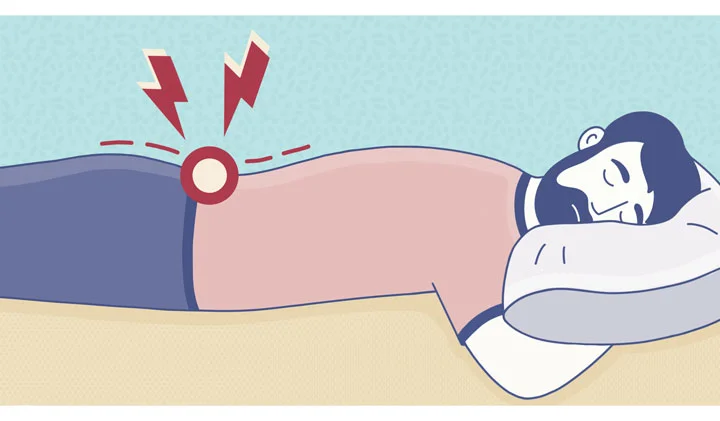
Notably, back pain can significantly disrupt sleep, reducing sleep quality and duration. A 2022 study found that individuals with chronic back pain often experience the following:
- Difficulties falling and staying asleep
- Inability to achieve restorative sleep
The study concluded that as this continues, it creates a cycle of pain and poor sleep that worsens both conditions.
Furthermore, your sleep posture and spinal alignment while you rest also play a big part in back pain. According to Dr. Raj Dasgupta, MD, FACP, FCCP, FAASM, “If pain improves as the day goes on, that usually means there’s a sleep alignment issue. In other words, if you feel worse when you wake up but loosen up after moving around, your pillow height—or lack of proper support—could be part of the problem.”
Put simply, if you’re sleeping without your bodyweight evenly distributed or with your spine misaligned due to a lack of proper orthopedic support or bad sleeping habits, you’re likely to worsen existing back pain.
Best Sleeping Positions for Back Pain: Step-by-Step Instructions)
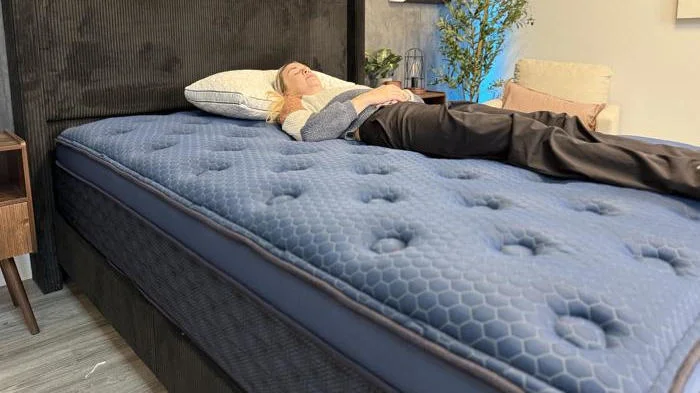
1. Back Sleeping (Best Overall)
In an interview with CNN on sleeping with neck and back pain, Dr. Dasgupta said, “The ideal position is to sleep on your back on a pillow that allows your neck to be positioned so you’re looking straight at the ceiling.” This is in part because your weight is evenly distributed and your spine is well aligned. Sleeping on your back is considered by many to be the best overall sleeping position for preventing or reducing back pain.
Step-by-step Guide for Back Sleeping with Optimal Spine Alignment:
- Place one supportive pillow under your head and another underneath your knees when lying down on your back.
- Optionally, you can also try placing a small pillow or a rolled towel under your lumbar region to help maintain the natural curve of your spine.
2. Side Sleeping (Most popular, and easy to maintain)
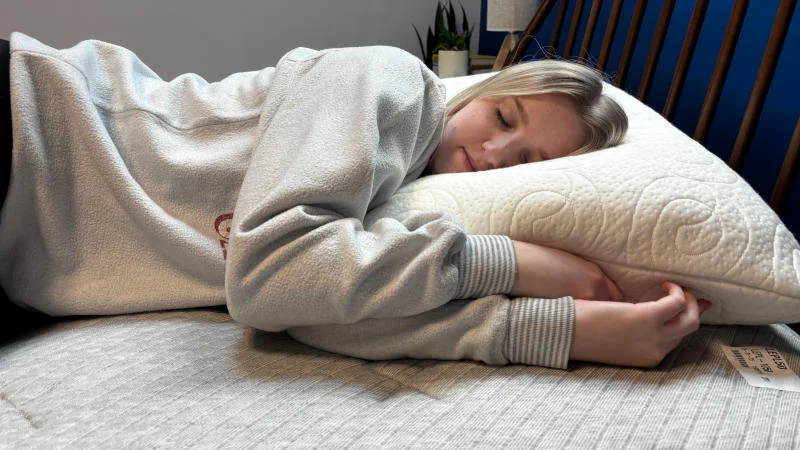
Because most adults sleep on their sides, it’s likely the easiest sleeping position to maintain and find comfort in. So optimizing your spine’s alignment in it may actually be easier for sleepers than forcing yourself to sleep on your back and waking up totally misaligned.
Step-by-step Guide for Side Sleeping with Optimal Spine Alignment:
- Place a pillow between your knees when sleeping on your side to prevent pressure buildup in your joints from the weight of your body pushing down on one side.
- Ensure your mattress cushions your body weight without allowing you to sink too deeply into its surface, disrupting your spine’s alignment.
- Try to make sure you fall asleep with your cervical spine (neck) aligned with your lumbar spine.
3. Reclined Sleeping (Underrated)
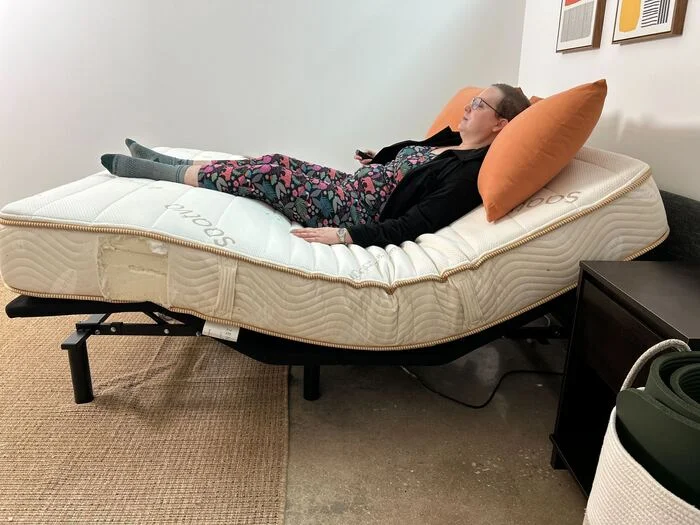
Using an adjustable bed to sleep in a reclined position with your legs elevated, or in the “zero-gravity” position, can also help alleviate disruptive back pain when you sleep. Many recommend this position because it helps more evenly distribute your body weight and take pressure off of sensitive areas such as your hips or spine.
Step-by-step Guide to Reclined Sleeping with Optimal Spine Alignment:
- You can easily use an adjustable base or bed frame to achieve the zero-gravity position. Usually, just by pressing a preset button or manually adjusting your back and elevating your legs.
- Alternatively, if you don’t have an adjustable base, you can place a wedge pillow under your legs, head, and back. It’s good to make sure you lift your knees so they’re slightly above your heart, and simultaneously elevate your upper body to form a 120-degree angle at the hips.

Worst Sleeping Positions for Back Pain
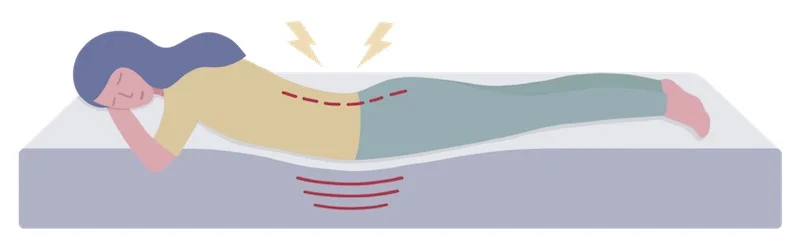
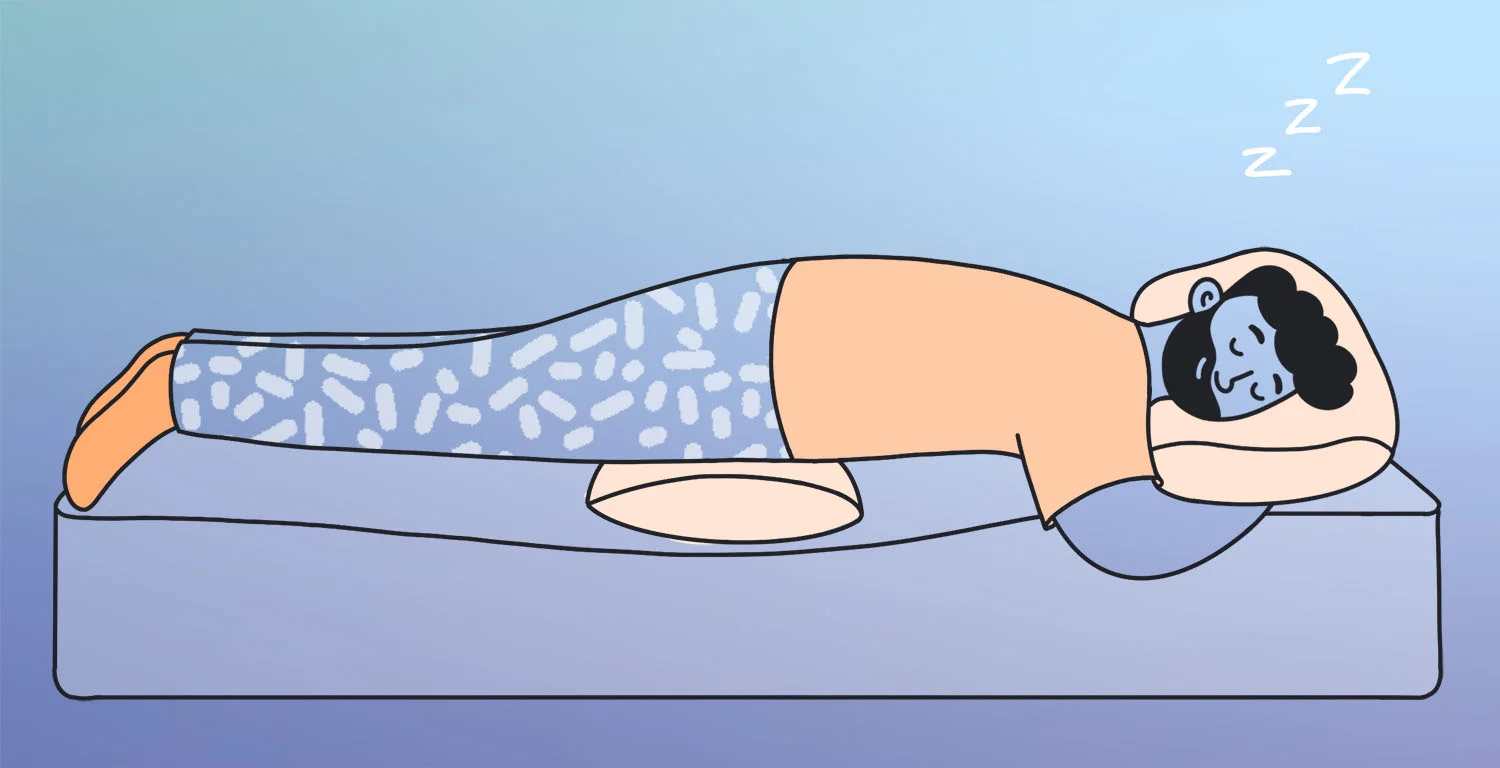
- Stomach sleeping: Sleeping on the stomach is generally not recommended for those with back pain, as it can strain the neck and spine. However, if you’re someone who cannot fall asleep unless you’re on your stomach, placing a thin pillow under the hips can help you maintain the proper spinal alignment.
- Twisted positions: It’s important to avoid sleeping on your side if you sink too much into a mattress, or sleeping on your back with one leg crossed over the other. These are two examples, but generally, “twisted positions” are those in which we sleep in a standard position without our spines fully aligned. So, using pillows (such as body pillows, wedge pillows, or memory-foam pillows), being posturally aware, and finding the best mattresses that support your spine’s alignment based on how you sleep are all good ways to avoid sleeping “twisted.”
How to Sleep With Lower Back Pain
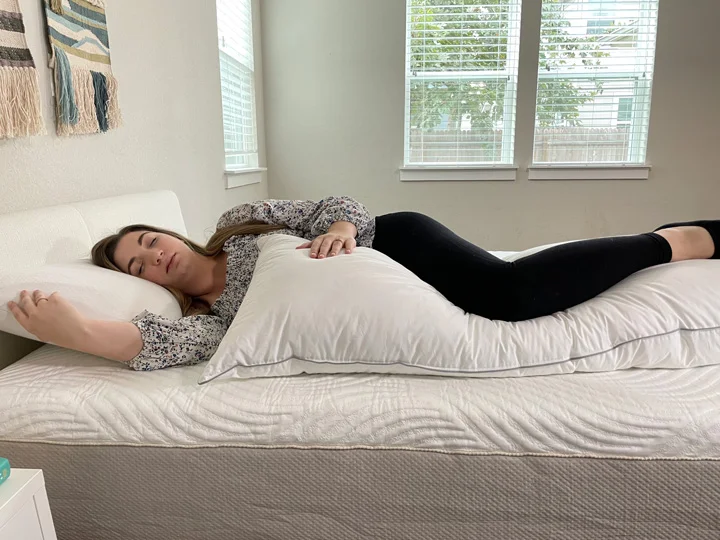
With lower back pain in particular, you’re going to want to try to further align your spine while reducing the arch in the lumbar (lower) spine region. This can help to alleviate inflammation. However, the way to do this will depend on your sleeping position.
- For back sleepers: Consider placing a pillow under your legs to reduce the arch in your lumbar spine, or using a rolled-up towel or a very small pillow under the lumbar region to make it flatter.
- For side sleepers: Place a pillow between your legs, and focus on keeping your shoulders and hips aligned.
- Stomach sleeping: Should be avoided if possible, as it is considered the worst position for lower back pain.
- The fetal position: While it has some drawbacks, sleeping in it helps flex and open your spine. This may allow muscles to decompress more.
How to Sleep With Upper Back Pain
Maintaining consistent head, neck, and shoulder alignment should be part of a postural awareness when you try to fall asleep, which may help prevent or alleviate muscle strains, especially in the back. The straighter the line between your ears, shoulders, and hips, the more relief your spine will likely experience when you rest. Potentially, helping to further ease upper back pain.
Pillow height is also important because it can affect your cervical spine’s alignment, leading to upper back pain. For example, back sleepers would want a slimmer pillow that supports their head without straining the spine’s alignment. And side sleepers will want a thicker pillow to fill the gap between their head and shoulder. Always ensure your pillow keeps your cervical spine aligned with the rest of your spine to determine if it’s right for you.
How to Sleep With Sciatica Pain
Sciatica results explicitly from compression of the sciatic nerve, causing radiating pain down the leg. Individuals who frequently engage in heavy lifting, have poor posture, or experience age-related changes in the spine are more susceptible. While low back pain can affect people across various demographics, sciatica tends to be more prevalent in individuals aged 30-50 and during pregnancy.
Similar to lower and upper back pain, the best sleeping positions for Sciatica are properly supported side, back, and reclined sleeping positions, where the spine is aligned. Stomach sleeping is best avoided when trying to achieve better sleep with Sciatica-related pain.
Moreover, it’s important to also avoid engaging in things that will trigger or further nerve pain. For example, when the pain is severe, it’s important to avoid heavy lifting, long periods of sedentary time on soft surfaces without lumbar support, or unsupportive mattresses.
How to Sleep With Back Pain During Pregnancy
If you’re pregnant and struggling with back pain, you will want to avoid sleeping on your back despite the benefits it has for others with back pain. Sleeping on your back when you’re pregnant may reduce blood flow to the uterus and fetus. It’s recommended that pregnant women try to sleep on their sides.
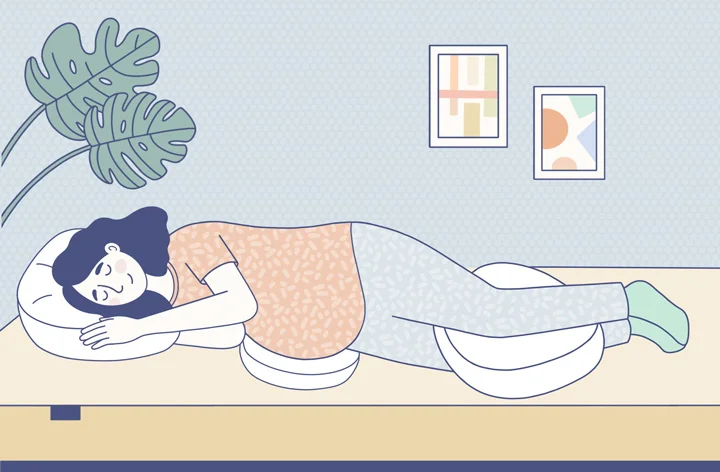
Furthermore, using specialized pregnancy pillows to help ensure your spine is aligned when sleeping on your side can be an additional tool in fighting back pain while staying healthy during pregnancy. Consider taking a look at our best pillows for pregnancy review for some potential options.
Best Pillows for Back Pain
- Side sleepers: If you sleep on your side, you’ll want a firm pillow that fills the gap between your ear and shoulder to maintain cervical spine alignment and keep your head parallel to your hips.
- Back sleepers: Medium-loft pillows that elevate the head and neck to maintain a straighter line between the head and lumbar spine will offer optimal alignment when sleeping on your back.
- Stomach sleepers: If you’re struggling with back pain, it’s suggested to try not to sleep on your stomach. But if you’re struggling to change that, thin or low-loft pillows work best. You will want minimal loft so your head stays aligned with your broader spine, and you can use a small pillow to help keep your hips elevated and maintain spinal alignment.
Best Mattress Types for Back Pain
Memory Foam
Memory foam offers enhanced cushioning and adapts to your body’s profile. It’s known for offering a “quicksand” type of comfort that can deliver excellent pressure relief.
Who Should Get
- Light and average-weight side sleepers
- Couples
- People who need enhanced pressure relief
Who Should Skip
- Heavier and stomach sleepers
- Hot sleepers
Hybrid
Hybrid mattresses use both foam and coils to offer a balance of cushioning comfort and sturdy additional support.
Who Should Get
- Combination sleepers
- Couples with different sleeping positions
- Hot sleepers
Who Should Skip
- Budget-minded shoppers
- People who prefer a deep “sink-in” foam feel
Latex
Latex mattresses are more natural and eco-friendly than other mattresses because they use natural latex as the main component of their construction. These mattresses tend to offer great responsive support, but lack the softer cushioning associated with memory foam beds.
Who Should Get
- Eco-conscious shoppers
- Couples
- Heavier combination sleepers
Who Should Skip
- Budget-minded shoppers
- People with latex allergies
Innerspring
Innerspring mattresses use primarily coils with minimal comfort-focused layers in their build. They are known to offer excellent spinal support, but may lack comfort for some. Furthermore, the beds tend to become noisier over time, especially cheaper versions.
Who Should Get
- People who want firm support over comfort.
- Back and stomach sleepers
- People looking for cheaper mattresses
Who Should Skip
- Lightweight side sleepers
- People who prioritize cozy comfort and pressure relief.
Firmness Levels
| Medium-Firm | Soft | Firm |
| Who should get: Back Sleepers Side Sleepers Combination Sleepers | Who should get: Side Sleepers Lightweight Back Sleepers | Who should get: Heavier Back Sleepers Stomach Sleepers |
| Pros Accessible firmness to different types of sleepers. Medium-firm mattresses help prevent problematic sinkage for back sleepers. Offers a quality blend of comfort and support. | Pros Helps cushion side sleepers’ joints and prevent inflammation buildup due to uneven weight distribution. Offers lightweight sleepers more comfort. Soft mattresses provide great pressure relief. | Pros Firm mattresses can mean sturdier support for your spine. A firmer bed can help prevent spinal misalignment, strains, and pain for stomach sleepers. Heavier sleepers can find comfort without sinking too much into the bed. |
| Cons May not offer enough cushioning or added support for heavier side sleepers. Stomach sleepers may find it too soft. | Cons If a bed is too soft, you may sink too much into it, disrupting your spine’s proper alignment. Most stomach sleepers will feel misaligned. | Cons Some may experience a lack of pressure relief or comfort. Beds that are too firm may increase joint pain for non-heavy side sleepers. |
7 Tips to Sleep Better With Back Pain
- Stretch before bed: Exercise, such as stretching, can help alleviate back pain and improve flexibility.
- Improve sleep hygiene: Getting a full night of restorative sleep can help optimize muscular repair and potentially ease back pain over time.
- Use heat/ice: Icing painful areas in your back can help ease swelling and inflammation. However, it is best used after a sudden increase in pain or inflammation due to heavy lifting or a sudden injury (usually within the first 48-72 hours). Separately, heating pads or hot showers may help relax your back muscles and increase blood flow, which can help with healing chronic back pain.
- Maintain sleep schedule: Keeping a consistent bedtime or sleep routine can help your body to fall asleep faster.
- Reduce inflammation triggers: Avoiding heavy lifting or long periods on the computer without a break can help reduce back pain flare-ups in everyday life.
- Stay active during the day: Daily exercise, or just staying active, can help keep your body stronger and maintain general mobility, plus contribute to a healthy lifestyle.
Simple Nighttime Routine for Back Pain Relief
Step-by-step routine:
- Warm shower: Hot showers before sleep can not only calm the mind, but also increase blood flow throughout the body, relaxing muscles. This is very helpful to do before stretching and is also recommended. I’d also suggest, if you have a handheld shower head, aiming the hot water directly at areas with noticeable stiffness or muscle tension.
- Light stretching: Stretches such as the child’s pose, cat-cow, seated spinal twist, and knees-to-chest can help relieve upper and lower back pain.
- Proper positioning: When getting into bed and arranging your pillows and position, be extra aware of your posture to assess whether your sleeping position keeps your spine aligned in a neutral position and supports you through the night.
- Relaxation technique: Consider keeping your phone out of reach before bed and replacing it with a book, while using a heat pad on your back. Generally, try to create an atmosphere more conducive to sleep, as part of a quality sleep routine and broader sleep hygiene.
When to See a Doctor for Back Pain
If you are taking precautions to alleviate your back pain but symptoms continue to worsen or you have a pre-existing medical condition, it’s important to consider seeking medical attention or consulting your healthcare provider. Numbness, increases in pain, and worsened mobility are all red flags that you may want to consider seeking medical attention.
A healthcare professional can evaluate your condition and recommend appropriate treatment options. This may include physical therapy, chiropractic care, or other interventions tailored to your needs.
FAQs
Is it better to sleep on the floor with back pain?
This depends on your sleeping position. However, in most cases, this would only potentially provide some back pain support for back and stomach sleepers. However, due to the lack of any pressure relief, this may actually worsen back pain for some.
What is the fastest way to relieve back pain at night?
Technically, taking anti-inflammatories or similar medication may offer the quickest relief for back pain. However, stretching and hot showers are two efficient ways to offer fast relief for upper and lower back pain before going to bed at night.
Should I sleep without a pillow?
If you are a stomach sleeper, it may be ok to sleep without a pillow. However, generally, pillows not only provide comfort, but can be used to ease back pain by placing them between your legs if you sleep on your side, or under your knees or lumbar region when sleeping on your back.
Can a bad mattress cause back pain?
Yes, a bad mattress, especially one that sags or lacks spinal support, can worsen back pain. It can also prevent a restful night of sleep which can affect your overall well-being.
References
- “The Best — and Worst — Sleep Positions for Back Pain”. Keck Medicine of USC. Everyday Health. Last updated. October 22, 2025.
- Ballester, Pura., Cerda, Begona., et al. “Effect of Ginger on Inflammatory Diseases. National Library of Medicine (NIH). October 25, 2022.
- Morelhao, Priscilla K., Gobbi, Cynthia., et al. “Bidirectional Association Between Sleep Quality and Low Back Pain in Older Adults: A Longitudinal Observational Study.” National Library of Medicine (NIH). August 2022.
- Anderson, Ngaire H., Gordon, Adrienne., Li, Minglan, et al. “Association of Supine Going-to-Sleep Position in Late Pregnancy With Reduced Birth Weight”. JAMA Network. October 2, 2019.
- Salamon, Maureen. “Is your sleep position helping or hurting you?” Harvard Health Publishing (Harvard Medical School). November 1, 2025.
- Saini, Yashita., Rai, Anushree., Sen, Siddhartaha. “Relationship Between Sleep Posture and Low Back Pain: A Systematic Review”. PubMed. June 23, 2025.