

Dealing with neck pain is bad enough, but things go downhill quickly when a sore neck makes it hard to nod off and affects your overall sleep quality. The simple truth is that pain-related issues stemming from overuse or injury aren’t easy to resolve. But for run-of-the-mill neck pain, adjusting your sleeping position, swapping your pillow, or upgrading to one of the best mattresses for neck pain could prevent a sore neck from worsening.
The Mattress Clarity team, which includes seven certified sleep science coaches, has tested over 500 mattresses in person. It’s the kind of hands-on experience that gives us helpful insights into the beds that meet all kinds of sleep needs — neck pain included. With expert input from our Chief Medical Advisor, Dr. Raj Dasgupta (MD, FACP, FCCP, FAASM), and our Chief Medical Product Tester, Dr. Hannah Habeeb (DPT), we’re explaining how to sleep with neck pain.
If you’re waking up with neck pain, we may have some answers for you.
Editor’s Note: The information provided should not be considered a substitute for professional advice. Please consult a sleep doctor or other medical expert if you have questions related to your own health.]
Step 1: Determine the Cause of Your Neck Pain
Your neck has a big job, and many modern lifestyles aren’t doing it any favors. Working on a computer or even looking at your phone could be the culprit behind neck and shoulder tension.

But before you try to diagnose yourself, it’s a good idea to consult with a healthcare provider. Being clear on the causes of neck pain can help you figure out what’s going on and what might be done to resolve it.
What Conditions Cause Neck Pain?
If you can rule out an injury, here’s what’s often behind neck and shoulder pain:
- Overuse injury
- Chronic conditions like osteoarthritis that affect joint health
- Pinched nerves
- An awkward sleeping position
- An unsupportive mattress
- Sleeping on the wrong pillow
- Poor posture
Can a Mattress Cause Neck Pain?
A mattress can cause neck pain, especially if it doesn’t have the right support and firmness for your sleep style and body type. While the pain tends to announce itself in your neck, the issue usually starts lower, in the spine. When a mattress doesn’t promote spinal alignment, it’s often the neck and shoulders that have to compensate. However, this doesn’t mean that you should just learn how to sleep with a stiff neck.
Like the spine, the neck (or the cervical spine) should ideally rest in a neutral position. That means it’s not drooping or cranked upward. The most important job a mattress has is keeping your spine, hips, and shoulders level, which keeps the neck from angling in one direction all night long. When that doesn’t happen, you’re more likely to wake up with a stiff neck, tight shoulders, the dreaded neck “kink,” or even a tension-related headache.
Can a Pillow Cause Neck Pain?
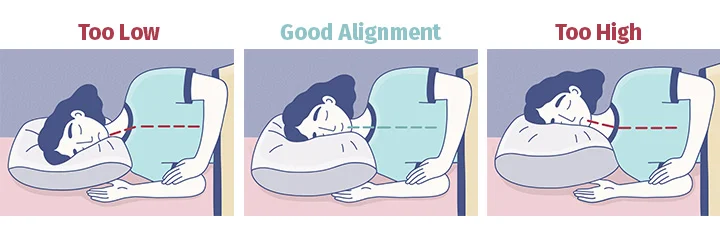
Just like a bad mattress, a bad pillow could be the reason for poor sleep and why your neck hurts when you wake up. Pillows are designed to support your head and keep your neck in neutral alignment. A pillow that’s too soft, too hard, too tall or too flat can miss the mark, leading to neck pain from sleeping. Neck support is the goal, no matter how you sleep.
Read our article for tips on how to get rid of neck pain after sleeping.
Step 2: Find the Best Sleeping Position for Neck Pain
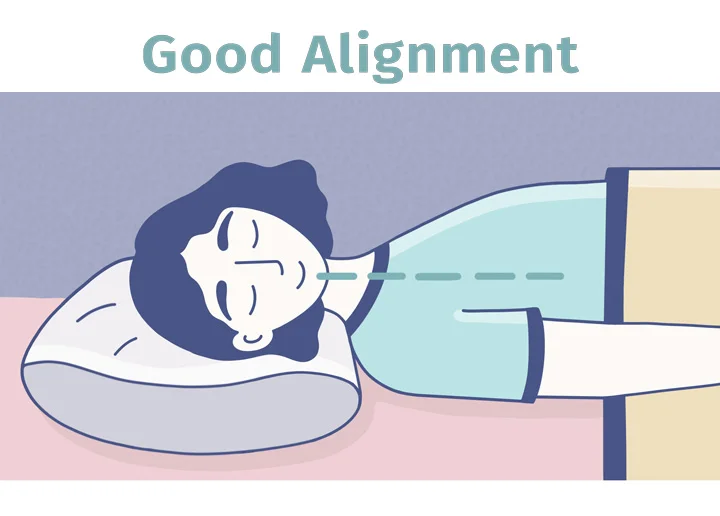
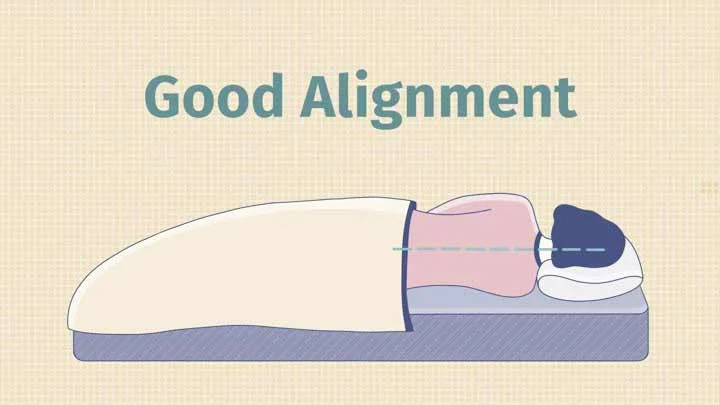
Since the best way to sleep with neck pain is to resolve the issue before it can even begin, start by considering how you sleep. Back sleeping is widely considered the best sleeping position for your health, and it’s a good option for neck pain relief in particular.
Sleeping on your back helps keep the head, neck, and spine stay aligned. That eases strain on the neck muscles and joints, which reduces the risk of pain in both the neck and upper back.
So what about side or stomach sleeping? Do these sleep postures automatically increase the chance of a sore neck from sleeping? It depends. If these are your preferred sleep styles and you’re regularly waking with neck and shoulder pain, the setup may not be working for you.
Many people sleep really comfortably on their sides, but it can put a lot of pressure on the shoulders. A mattress that’s too firm keeps the shoulder from sinking, which means the neck is often pushed out of proper alignment.
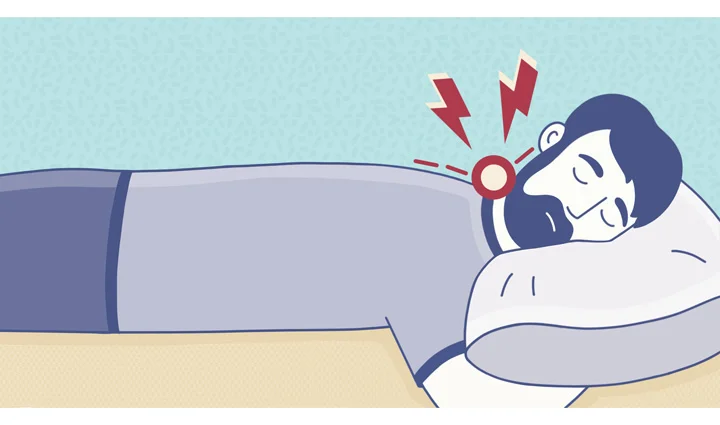
Sleeping on your stomach is usually the worst for neck pain. The position naturally forces the head to turn to one side or the other, often for long stretches at a time, and it’s even worse if you have a lofty pillow. Keeping the neck rotated in this way for extended periods can irritate the joints and lead to tight neck and shoulder muscles by the time you wake up.
Training yourself to sleep on your back isn’t easy, but it could alleviate your neck pain. Another option is to ensure that your pillow and mattress are meeting your needs properly.
Step 3: Change Your Mattress and Pillow as Needed
If switching your sleep position doesn’t do the trick, take a close look at your pillow and mattress. A supportive mattress has a lot to do with your body type and sleeping position.
| Body Type | Sleeping Position | Recommended Mattress Type |
| Lightweight | Side | Softer |
| Lightweight | Stomach or back | Medium |
| Average | Side | Medium to medium-firm |
| Average | Stomach or back | Medium-firm |
| Heavy | Side | Medium-firm to firm |
| Heavy | Stomach or back | Firm |
Lightweight sleepers are usually best supported on softer mattresses, while heavier people over 200 pounds often need a firmer mattress for the best support.
Dr. Hannah Habeeb, our chief medical product tester, recommends these mattresses for those with neck pain:
- Helix Midnight Luxe – This hybrid was designed to accommodate back and side sleepers, offering a comfortably balanced feel with a medium-firm feel. During testing, Dr. Habeeb gave the Midnight Luxe 5/5 for neck pain. She reported that her cervical spine to thoracic spine was in neutral alignment in the back position and her weight felt evenly distributed, with no pressure in her trapezius muscles when she moved to her side. “I don’t foresee it being an issue that would exacerbate neck pain,” she added.
- Nolah Evolution (Luxury Firm Model) – This is a luxury hybrid with three firmness options and upgraded spinal support. We tested the Luxury Firm model, which Dr. Habeeb gave 4.5/5 for neck pain. She found that this medium-firm mattress kept her shoulders from sinking too far, which made her neck just as straight as the rest as her spine.
- WinkBed (Luxury Firm Model) – This is another luxury hybrid with multiple firmness options and zoned support. The Luxury Firm model has a balanced combination of lumbar support and cushioning. According to Dr. Habeeb, there isn’t enough sinkage at the shoulders to cause straining at the neck.”
Neck pain can occasionally be tied to back issues. If you’re dealing with radiating pain, tingling, numbness, or lower back pain, see our guides to the best mattress for herniated discs and the best mattresses for spinal stenosis.
Just like mattresses, a supportive pillow should be chosen based on your sleep style and body type. The right pillow supports the head and the natural curve of the neck in your preferred sleep position.
- Side sleepers usually need a higher-loft pillow that can keep the head properly elevated to maintain alignment in the neck. Those with wide shoulders may need more loft to fill the space between the ear and mattress.
- Back sleepers typically benefit from low-loft pillows that don’t push the head forward or let it tip too far back, both of which affect the neck’s alignment.
- Stomach sleepers also benefit from low-loft pillows to avoid pushing craning the neck upward. Keep in mind that stomach sleeping means neck rotation, so it’s most likely to make neck pain worse.
Your mattress can also play a role in finding the best pillow for you. The more your shoulder sinks in, the less loft you may need.
Wanna hone in on a cervical pillow? pillow recommendations? Check out our guide on the best cervical pillows.
Step 4: Try Gentle Stretching
Instead of trying to figure out how with a stiff neck — or reaching for the heating pad or ice pack — try a few simple exercises to loosen things up before bed. Gentle yoga poses can relieve tension, which could contribute to a good night’s sleep. You might try Cat-Cow to stretch the spine or a standard forward fold to lengthen the spine and neck. Seated neck stretches, like ear-to-shoulder and chin-to-chest, can also feel good and help stretch tight muscles. Pair your stretches with deep, slow breathing to help calm the nervous system, and remember to stay within a comfortable range of motion.
Depending on the precise location of your neck pain, some stretches may be better than others. It may be best to consult with a medical professional, like a physical therapist or a chiropractor, for guidance here.
Step 5: Practice Healthy Posture
Good posture during the day goes a long way at night. Looking down at a phone or laptop can create neck tension that makes it hard to get comfortable — and means you may have to figure out how to sleep with a stiff neck. Instead, try these simple adjustments during the day:
- When you sit or stand, keep your shoulders in line with your hips and ears sitting directly above your shoulders.
- Take breaks throughout the day to stretch. Try rolling your shoulders backwards 10 times, squeezing your shoulder blades together 10 times and gently turning your head to bring your eye toward your shoulder 10 times. Repeat the last exercise on both sides.
- Keep your computer monitor at eye level by adjusting your desk and chair as needed.
- Avoid using your phone in bed. Experts say this places undue stress on your neck.

Sleeping with Neck Pain FAQs
What is the best sleeping position for neck pain?
Back sleeping is usually the best position for neck pain because it helps keep the head, neck, and back in alignment. Side sleeping can work, but make sure you have a pillow that keeps your head properly elevated and your neck in a neutral position.
What kind of mattress helps with neck pain?
The most appropriate mattress for neck pain depends on your sleeping position and body type, but it’s not usually just the mattress — your pillow matters too. The goal is a mattress that keeps your spine aligned, paired with a pillow that has an appropriate loft for your preferred sleep style.
What is the best pillow for neck pain?
It depends on how you sleep. Your pillow should support the natural curve of your neck, which usually means a higher-loft pillow for side sleepers that fills the space between the ear and shoulder and a lower-loft pillow for back sleepers. Shoulder width and mattress firmness can also play a role.